Що таке Cardano?
Cardano — це блокчейн-платформа третього покоління, створена у 2017 році Чарльзом Хоскінсоном, одним із співзасновників Ethereum. Платформа орієнтована на масштабованість, безпеку та енергоефективність. Її ключові переваги:
- Використання експертно перевіреного алгоритму консенсусу proof-of-stake (PoS) Ouroboros, який суттєво зменшує енергоспоживання та вуглецевий слід.
- Унікальна двошарова архітектура, яка розділяє рівень розрахунків і рівень обробки — це забезпечує більшу ефективність мережі та стабільну роботу смарт-контрактів.
- Відкрита модель управління: власники ADA можуть подавати пропозиції та голосувати, сприяючи реалізації ідеї децентралізованого управління.
ADA — нативний токен Cardano. Користувачі сплачують комісії та розміщують ADA у стейкінг, отримуючи винагороди за підтримку безпеки мережі. Загальна емісія токенів обмежена 45 мільярдами — це дозволяє зберігати баланс між сталим розвитком екосистеми та контролем інфляції.
Технологія та етапи розвитку Cardano
Розвиток Cardano відбувається у п’ять етапів:
- Byron: старт платформи, формування базової інфраструктури
- Shelley: запуск процесів децентралізації, мотивація операторів вузлів і учасників стейкінгу
- Goguen: впровадження підтримки мульти-активів і функціоналу смарт-контрактів
- Basho: підвищення масштабованості, застосування сайдчейнів та технології Hydra
- Voltaire: реалізація сучасних механізмів управління, посилення управління на базі DAO
На початку 2025 року очікується повне перетворення Cardano на екосистему для смарт-контрактів та децентралізованих застосунків, що дасть змогу платформі зайняти провідну позицію для впровадження dApps.
Останні оновлення та тенденції ринку
- Ціна та ринкові тренди
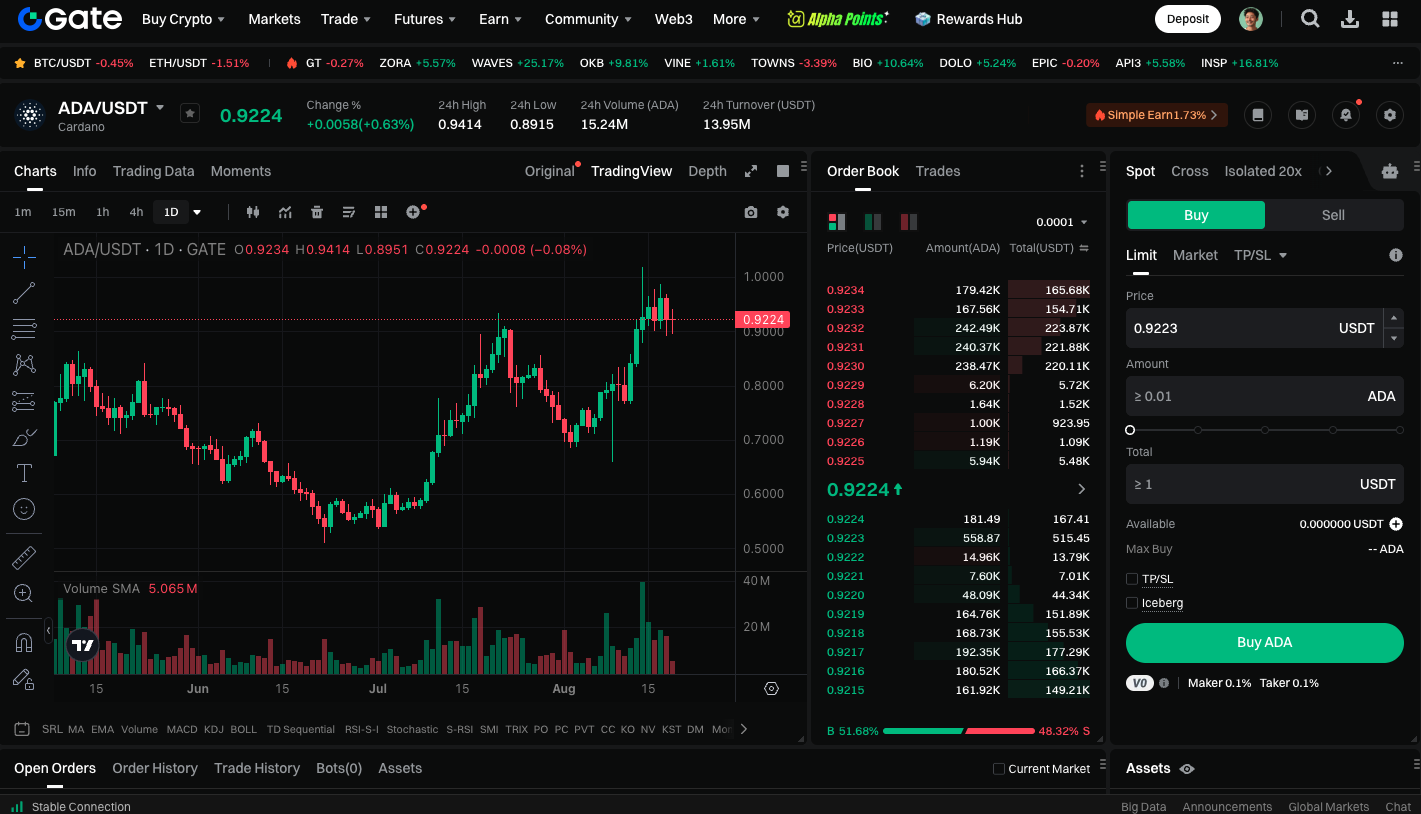
Останнім часом ADA демонструє стійке зростання: приблизно +40% за два тижні, поточна ціна — близько $0,91. Аналітики ринку прогнозують значну підтримку, що може дозволити ADA протестувати діапазон $1–$1,15. CoinCodex та Investing Haven очікують, що у 2025 році ціна ADA перебуватиме між $0,92 і $1,49, з медіаною близько $1,30, що свідчить про виражений оптимізм. У разі посилення ринкового імпульсу окремі прогнози передбачають зростання ADA до $3. - Інституційні продукти
Liqwid Finance запустила ADA Staking ETP (CASL), який торгується на німецькій біржі. Інвестори мають змогу отримувати винагороди за стейкінг без використання криптогаманця, посилюючи інтеграцію Cardano із традиційним фінансовим сектором. - Ринкова динаміка
Крупні інвестори суттєво збільшили свої позиції, і ADA стає одним із ключових токенів для моніторингу у 2025 році. Ця тенденція виражає зростання довіри з боку довгострокових власників ADA до потенціалу її відновлення.
Переваги Cardano
Cardano вирізняється науково обґрунтованою філософією та енергоефективним консенсусом, що робить її однією з небагатьох публічних блокчейн-платформ, розроблених на основі академічних досліджень. Двошарова архітектура управління та модель EUTXO забезпечують баланс між безпекою і масштабованістю. Крім того, активна участь Cardano у соціальних проєктах демонструє її прагнення поєднувати технологічний прогрес із практичним застосуванням — це основа для довгострокового розвитку та зростання платформи.
Виклики та ризики
Екосистема Cardano ще суттєво поступається Ethereum за кількістю застосунків і залученням розробників. Поступовий підхід до оновлення основної мережі гарантує стабільність, але обмежує темпи розвитку порівняно із більш агресивними конкурентами. Cardano також стикається зі зростаючою конкуренцією з боку швидких блокчейнів — рішень Ethereum Layer 2 та Solana. А ще, хоча академічна модель управління надає Cardano додаткову легітимність, вона може стримувати швидкість ухвалення рішень у сучасних інвестиційних умовах, де ключовими є оперативність і ефективність.
Майбутній вектор розвитку
Cardano планує: розвивати екосистему смарт-контрактів і DeFi, поглиблювати міжланцюгову взаємодію, розширювати застосування ADA у держсекторі та освітній сертифікації, і постійно вдосконалювати механізми управління. Якщо платформа зможе підвищити рівень залучення розробників і вдосконалити користувацький досвід, Cardano може стати основою для національної блокчейн-інфраструктури вже у найближчі роки.
ADA/USDT — спотова торгівля
Спотова торгівля ADA/USDT — одна з найактивніших пар на крипторинку та пропонує інвесторам такі переваги:
- Висока ліквідність і стабільні обсяги торгів: підтримується майже всіма біржами, забезпечуючи оперативність виконання угод
- Доступний технічний аналіз: ринкові рухи легко відстежувати через технічні індикатори і ковзні середні
- Простий вхід до екосистеми Cardano: спотова торгівля дозволяє ознайомитися з ADA і брати участь у стейкінгу та DeFi
- Ефективне управління капіталом: швидке конвертування у стейблкоїн USDT для хеджування ризиків або арбітражних операцій
Почніть торгувати ADA/USDT вже зараз: https://www.gate.com/trade/ADA_USDT
Підсумки
Cardano (ADA) — платформа, яка поєднує глибокі теоретичні засади із реальною місією у блокчейн-індустрії. Наразі спостерігається стійке ринкове відновлення й активне зростання інституційного інтересу до ADA. Завдяки досконалій системі управління, технічній перевазі, академічній основі та енергоефективному консенсусу Cardano продовжує відігравати провідну роль у DeFi та фінансовій інфраструктурі майбутнього.