CFTC Approves Spot Crypto Trading, Ushering In a New Era of Digital Asset Regulation
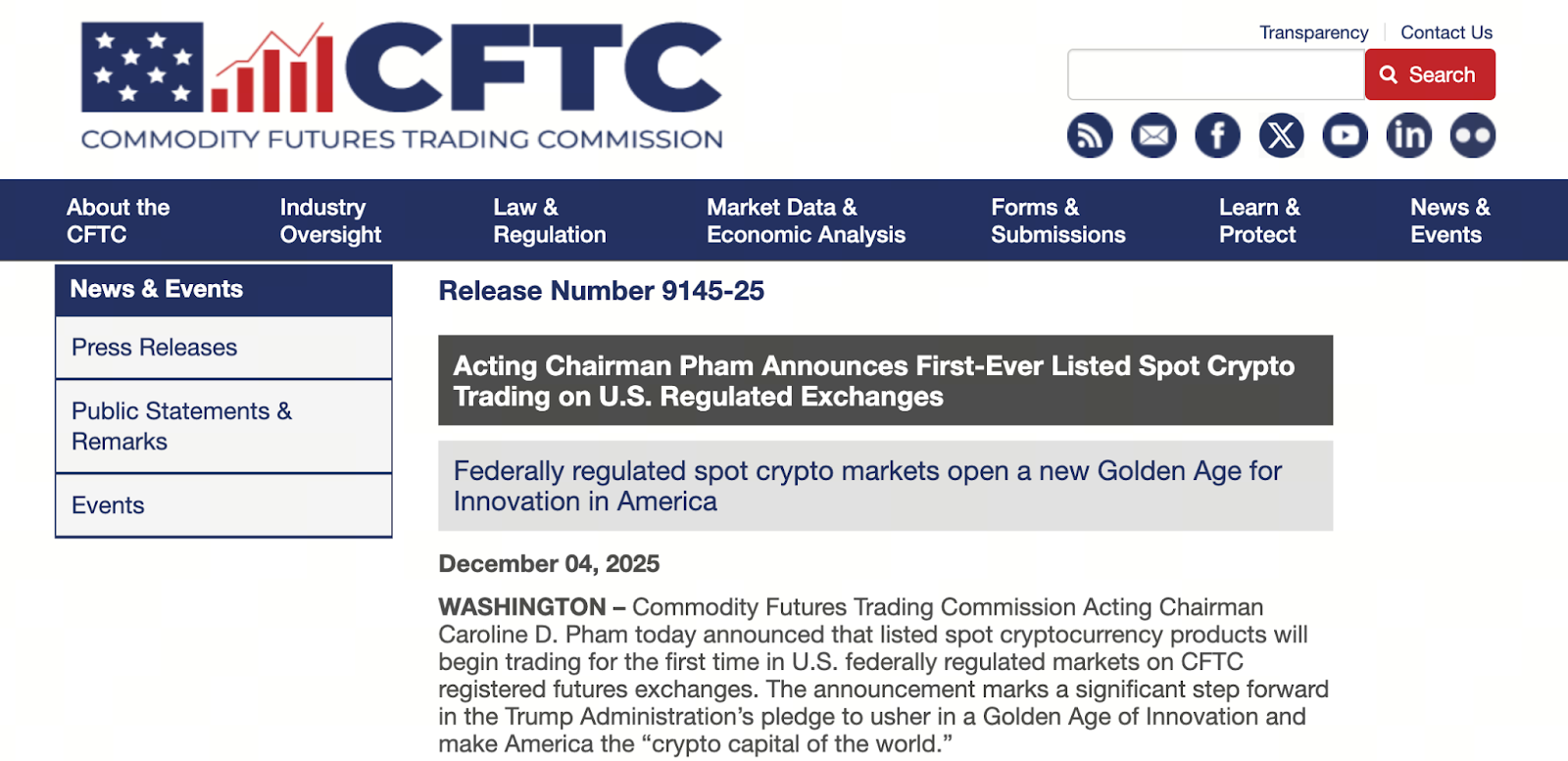
Image source: https://www.cftc.gov/PressRoom/PressReleases/9145-25
The evolution of cryptocurrency regulation in the United States continues to attract worldwide attention. Despite hosting the largest capital market globally, the US has long left cryptocurrencies in a regulatory gray zone, driving significant capital and innovative firms toward Europe, Asia, or offshore exchanges. The spot crypto market, in particular, has lacked clear legal foundations, forcing American investors to trade on unregulated platforms with substantial risks. With the CFTC’s formal approval of spot cryptocurrency trading, the US crypto sector enters a landmark new phase. With this development, regulators officially accept crypto assets and the US market moves toward recognizing crypto as part of the traditional commodity asset class structure.
Why Has the US Delayed Spot Crypto Approval?
US regulators have been divided for years:
- The SEC classifies most cryptocurrencies as securities.
- The CFTC considers Bitcoin and Ethereum to be commodities.
- Congress has failed to establish a unified regulatory framework.
This has resulted in persistent regulatory gridlock, making it difficult to legitimize spot crypto trading.
The CFTC’s latest approval is significant because it establishes a clear regulatory classification for spot crypto assets for the first time and provides a practical roadmap for future legislation.
Key Implications of CFTC Approval
- Spot crypto assets now receive federal regulatory status. US-based exchanges can offer spot trading for Bitcoin, Ethereum, and other cryptocurrencies without relying on offshore platforms.
- Investor protection mechanisms are formally integrated into the crypto market, including transparency, auditing, fund security, and anti-manipulation protocols—hallmarks of traditional finance.
- Barriers for institutional investors are eliminated. Hedge funds, pension plans, and asset managers previously avoided spot crypto due to compliance risks. Now, entry requirements are significantly lowered.
- This move strengthens America’s bid to become a global crypto financial hub. With Europe’s MiCA regulations and Japan’s robust framework, the US had lagged behind. The CFTC’s approval is seen as a pivotal step in closing the gap.
Impact on Investors, Exchanges, and the Market
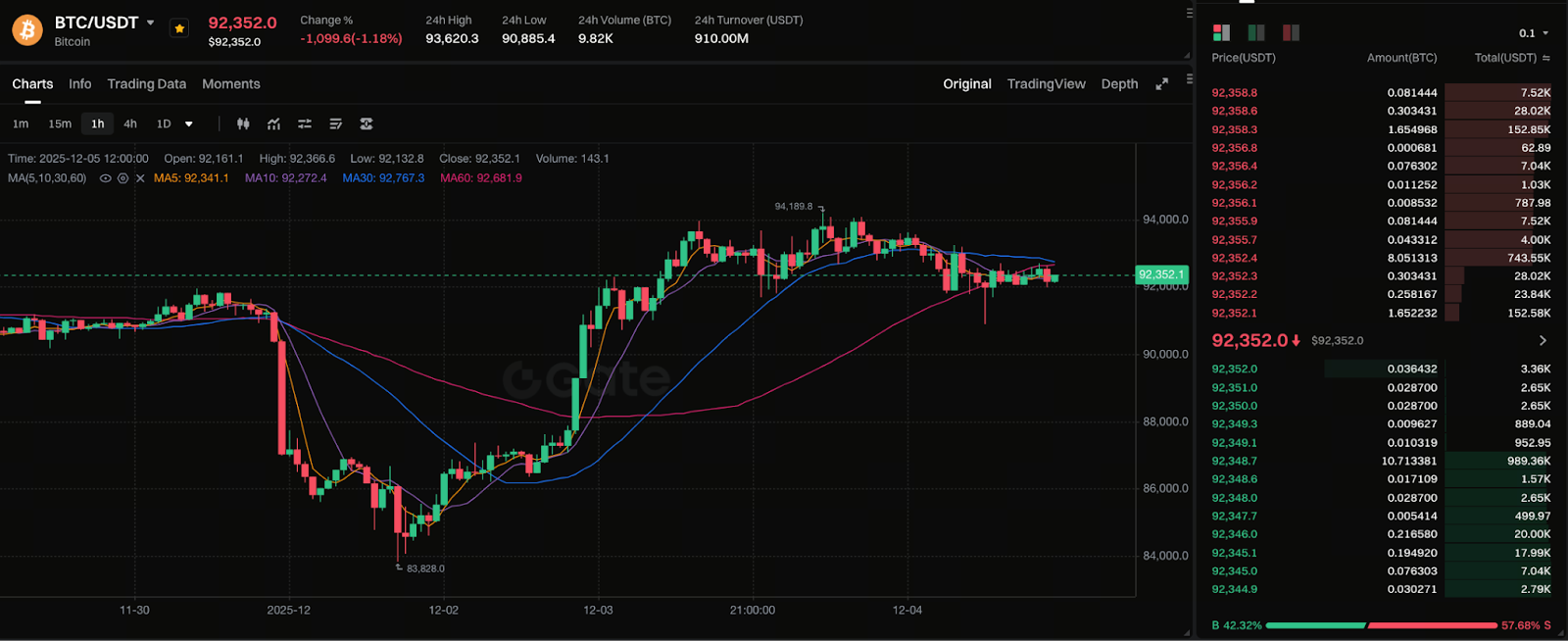
Image source: https://www.gate.com/trade/BTC_USDT
1. Investor Confidence Strengthens
With regulated trading channels now available, investors can use regulated platforms. This dramatically reduces risks of bankruptcy or asset misappropriation.
2. Exchanges Enter a New Growth Phase
Qualified exchanges are poised for rapid expansion in the coming months:
- Trading volumes will climb
- New user registrations will surge
- Institutional participation demand will spike
US trading platforms will benefit from unprecedented growth opportunities.
3. Crypto Prices May See Structural Gains
Greater regulatory clarity typically attracts capital inflows. Following the approval announcement, the crypto market has generally seen:
- Rising trading activity
- Improved market sentiment
- Major cryptocurrencies trending upward in the short term
More importantly, institutional investors favor long-term “buy and hold” strategies, potentially providing the market with more stable upward momentum.
Potential Risks Remain
Despite regulatory progress, risks persist:
- Prices remain highly volatile. Compliance does not guarantee stability—short-term market sentiment can still swing sharply.
- Regulatory details need further refinement, including custodial solutions, manipulation monitoring, and asset classification frameworks.
- Investor education remains insufficient. Retail participants need better understanding of crypto asset risks and value.
- Regulatory overlap between agencies may continue. The boundaries between the SEC and CFTC could require years of legislative clarification.
Long-Term Outlook: Crypto Market Enters the Mainstream
The CFTC’s approval will likely turn the tide for the US and global crypto industry:
- Institutional capital inflows will accelerate
- Crypto assets will be included in additional financial products, such as ETFs and custody accounts
- Innovative companies will be more inclined to establish US operations
- Global regulatory policies will have a new benchmark to reference
For investors, this marks a shift. Cryptocurrencies shed their reputation as “high-risk speculative products” and move toward becoming “regulated, investable asset classes.”
Share
Content


Related Articles

2025 BTC Price Prediction: BTC Trend Forecast Based on Technical and Macroeconomic Data

Pi Coin Transaction Guide: How to Transfer to Gate.com

Flare Crypto Explained: What Is Flare Network and Why It Matters in 2025

How to Use a Crypto Whale Tracker: Top Tool Recommendation for 2025 to Follow Whale Moves

What is N2: An AI-Driven Layer 2 Solution