SpaceComputer Raises 10M to Build Space Based Blockchain Infrastructure

Beginner
Quick Reads
Last Updated 2026-03-27 09:38:23
Reading Time: 1m
SpaceComputer secured $10 million in seed funding, with Maven11 and Lattice as lead investors. Major institutions including the Arbitrum Foundation and HashKey also participated. The initiative aims to launch the first SpaceTEE satellites, creating in-orbit Trusted Execution Environments (TEE) to manage blockchain encryption, identity authentication, and private data storage.

SpaceComputer: Pioneering Space-Based Computing Power
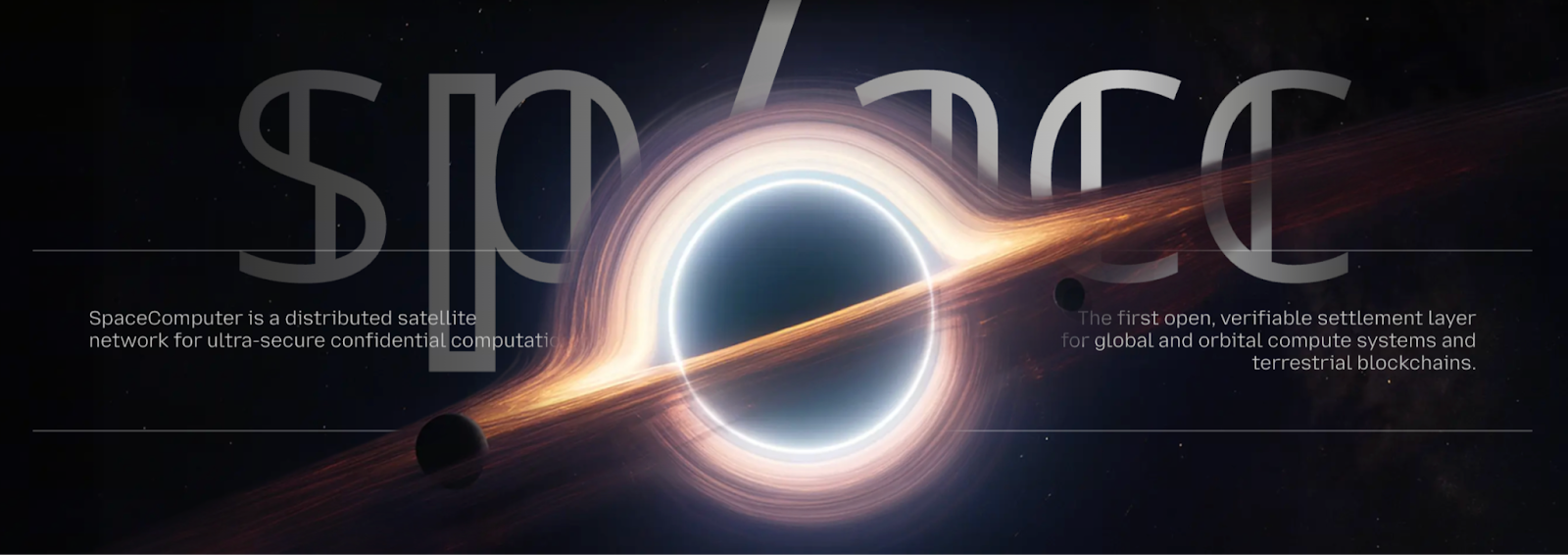

(Source: SpaceComputer)

SpaceComputer, a startup, has secured $10 million in seed funding. It plans to deploy its own satellites to create the first secure network capable of executing blockchain and cryptographic computations in space. The project aims to build a highly secure computing system that operates independently of terrestrial infrastructure. This allows on-chain operations to run free from ground-based interference.

Robust Investor Participation

Maven11 and Lattice co-led the round, with additional support from Superscrypt, Arbitrum Foundation, Nascent, Offchain Labs, Hashkey, and Chorus One. Prominent figures in the crypto and tech sectors, including Marc Weinstein, Jason Yanowitz, and Ameen Soleimani, also participated as individual investors. Primitive Ventures led the pre-seed round, which highlights strong investor confidence in this emerging sector.

Developing SpaceTEE Satellites

The new capital will be used to manufacture, deploy, and test the company’s first satellites, known as SpaceTEE (Trusted Execution Environment). Key functions include:

  • Processing blockchain cryptographic tasks in space
  • Delivering high-security, distributed computing nodes
  • Handling sensitive operations, including identity verification and maintaining records
  • Building a comprehensive space-based computing network

SpaceComputer is developing network management software that coordinates operations among multiple satellites, and supports new services, including confidential computing and secure data storage.

Major Financial Institutions Explore Blockchain in Space

SpaceComputer is not alone in its interest in space-based computing. JPMorgan, a leading financial institution, previously conducted the world’s first blockchain-based transaction in space, leveraging a blockchain network on low Earth orbit (LEO) satellites to execute smart contracts. Such initiatives demonstrate the practical application of space-based blockchain technology.

Challenges and Risks in the Space Environment

Space infrastructure faces several mounting challenges, including:

  • Rapid growth of space debris: In 2023, the FAA warned that the reentry of LEO satellites poses risks to ground safety.
  • Satellite interference with astronomy: Studies show that large satellite constellations can obstruct astronomical telescope observations.

Beyond technical hurdles, SpaceComputer must ensure safe and permanent orbital operations.

To learn more about Web3, register here: https://www.gate.com/

Conclusion

SpaceComputer’s vision is not just to enhance blockchain security, but to redefine the boundaries of decentralization. As satellites become the next generation of computing nodes, space-based blockchains could soon mark a major milestone for Web3 infrastructure as these technologies transition from concept to reality.

Author: Allen
Disclaimer
* The information is not intended to be and does not constitute financial advice or any other recommendation of any sort offered or endorsed by Gate.
* This article may not be reproduced, transmitted or copied without referencing Gate. Contravention is an infringement of Copyright Act and may be subject to legal action.

Related Articles

What is Fartcoin? All You Need to Know About FARTCOIN
Intermediate

What is Fartcoin? All You Need to Know About FARTCOIN

Fartcoin (FARTCOIN) is a representative meme coin within the Solana ecosystem based on an AI-driven narrative. Its core concept originated from an experiment aimed at exploring the "boundaries between AI Agents and humor." More than just a digital asset with social attributes, the project deeply couples absurd humor culture with on-chain financial logic by integrating autonomous AI interaction models.
2026-04-04 22:01:19
Gold Price Forecast for the Next Five Years: 2026–2030 Trend Outlook and Investment Implications, Could It Reach $6,000?
Beginner

Gold Price Forecast for the Next Five Years: 2026–2030 Trend Outlook and Investment Implications, Could It Reach $6,000?

Analyze current gold price trends alongside authoritative five-year forecasts, integrating an evaluation of market risks and opportunities. This gives investors insight into the potential trajectory of gold prices and the main drivers expected to shape the market over the next five years.
2026-03-25 18:13:30
Aster vs Hyperliquid: Which Perp DEX Will Prevail?
Beginner

Aster vs Hyperliquid: Which Perp DEX Will Prevail?

Aster and Hyperliquid are the two representative protocols of the "purpose-built L1 path" within the current decentralized perpetual exchange (Perp DEX) sector. As a pioneer in the field, Hyperliquid has built a deep liquidity moat through its highly mature order book architecture and strong community consensus. Conversely, Aster, as a rising challenger, seeks to leapfrog the competition in high-performance trading through more aggressive multi-chain aggregation logic, private transaction modules, and an underlying execution environment optimized for 2026 market demands.
2026-03-24 11:58:33
AI-Native Settlement Layers: How United Stables Is Building the Next Financial Rail
Beginner

AI-Native Settlement Layers: How United Stables Is Building the Next Financial Rail

Stablecoins were originally designed as dollar substitutes within exchanges, primarily used for asset pricing and trade settlement. As on-chain financial ecosystems have matured, their role has expanded beyond simple payments to include collateral assets, cross-chain liquidity mediums, and unified settlement units. In particular, as AI systems and automated agents begin to participate directly in economic activity, demand has risen sharply for programmable value units capable of instant settlement. This shift is pushing stablecoins toward the role of foundational financial infrastructure.
2026-03-25 03:16:17
Aerodrome Tokenomics: How ve(3,3) Powers Base's Most Profitable DEX
Beginner

Aerodrome Tokenomics: How ve(3,3) Powers Base's Most Profitable DEX

AERO is the native token of Aerodrome Finance, a core decentralized exchange and liquidity protocol in the Base ecosystem. It is primarily used for liquidity incentives and ecosystem operations. veAERO is a governance NFT that users receive by locking AERO, representing both voting power and the right to share protocol revenue. Through a dual track structure of AERO as a utility token and veAERO as a governance credential, Aerodrome separates liquidity usage value from long term governance power, allowing participants to act as liquidity providers, governance decision makers, and revenue sharers within the same system.
2026-03-25 06:40:31
The ve(3,3) Flywheel Explained: How AERO Tokenomics Powers Aerodrome’s DeFi Economy
Beginner

The ve(3,3) Flywheel Explained: How AERO Tokenomics Powers Aerodrome’s DeFi Economy

In the competition for DeFi liquidity, high-inflation mining alone is no longer enough to build lasting advantages. Aerodrome applies the ve(3,3) economic model to redesign token emissions, voting mechanisms, and revenue distribution, creating a liquidity flywheel centered on governance and cash flow. This article examines AERO tokenomics, the veAERO locking mechanism, and protocol revenue models to explain how Aerodrome builds a sustainable DeFi economic system.
2026-03-25 06:41:58





