With the expansion of blockchain technology and Web3 ecosystems, cryptocurrencies have evolved from purely digital stores of value into assets with broader utility. However, most merchants still operate within fiat-based systems, creating a gap between crypto ownership and practical spending.
Crypto cards address this gap by enabling seamless conversion and payment, allowing users to interact with traditional financial systems while holding decentralized assets. This reflects an ongoing shift toward hybrid financial models that combine elements of both systems.
What Is a Crypto Card?
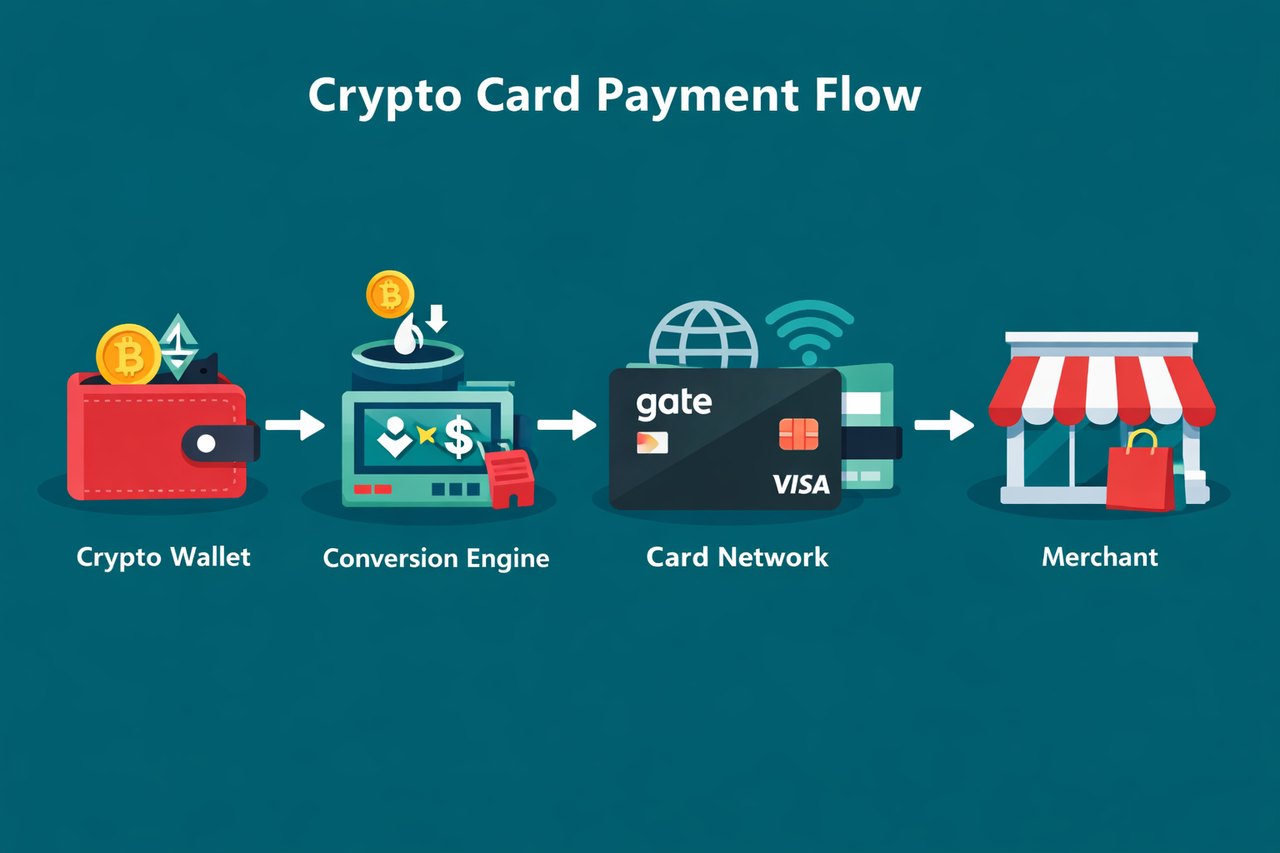
A crypto card is a payment card that allows users to spend cryptocurrency by automatically converting it into fiat currency during a transaction.
It typically connects to a crypto wallet or exchange account. When a payment is made, the system calculates the required amount in fiat currency, converts the corresponding value from the user’s digital assets, and completes the transaction through established card networks.
This approach allows cryptocurrencies to function as a usable medium of exchange in everyday scenarios, even in environments that do not directly support digital assets.
Types of Crypto Cards
Crypto cards can be classified based on how they manage funds and execute transactions.
| Type of Crypto Card |
How It Works |
Key Characteristic |
| Prepaid Crypto Card |
Users deposit crypto in advance |
Controlled spending with preloaded balance |
| Debit Crypto Card |
Linked to crypto wallet or account |
Real-time conversion during payment |
| Credit Crypto Card |
Provides a credit line |
Repayment may involve crypto or fiat |
| Custodial Model |
Provider manages funds |
Easier to use but relies on intermediary |
| Non-Custodial Model |
User retains control of assets |
Greater control with higher complexity |
This classification highlights differences in custody, spending logic, and user control, which influence how each card fits into financial workflows.
Advantages and Limitations of Crypto Cards
Advantages
Crypto cards provide several practical benefits when integrating digital assets into everyday payments.
| Advantage |
Explanation |
| Global Payment Capability |
Works across international card networks, enabling cross-border transactions |
| No Need for Advance Withdrawal |
Automatic conversion removes the need for manual asset exchange |
| Web3 Compatibility |
Suitable for users operating within decentralized ecosystems |
| Simplified Spending |
Bridges the gap between holding and using digital assets |
Limitations
Despite their utility, crypto cards also introduce constraints that reflect the current state of financial and regulatory systems.
| Limitation |
Explanation |
| Price Volatility Risk |
Crypto value fluctuations can affect spending power |
| Compliance Requirements (KYC) |
Identity verification may be required to access services |
| Regulatory Restrictions |
Availability varies across jurisdictions |
| Conversion Dependency |
Transactions rely on fiat conversion rather than direct crypto transfer |
Mainstream Crypto Cards on the Market: Gate Card
Crypto cards have developed into integrated financial tools offered by digital asset platforms, combining account management with payment functionality.
Gate Card represents one such implementation, designed to connect cryptocurrency balances with global payment systems. It allows users to spend digital assets in everyday scenarios where traditional cards are accepted.
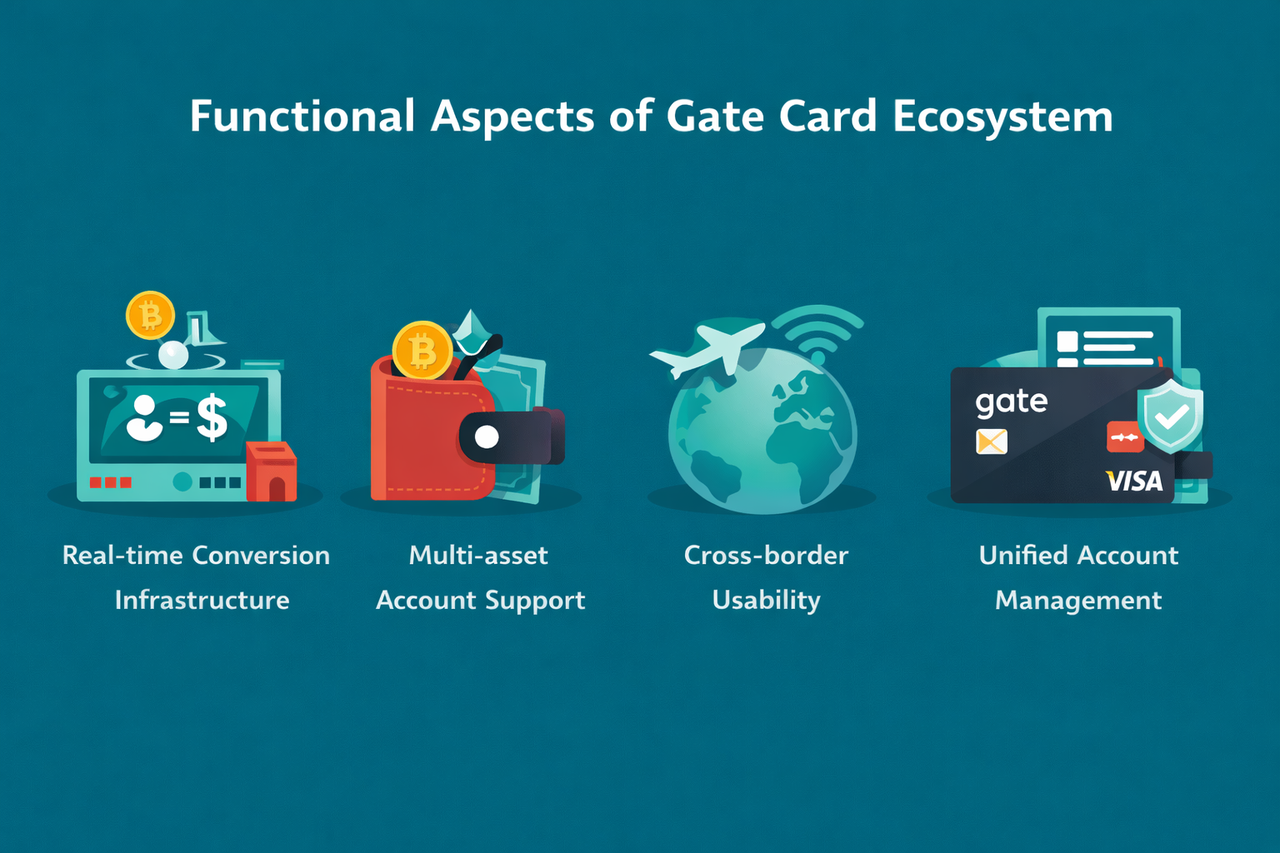
Core functional aspects include:
-
Real-time conversion infrastructure Cryptocurrency is converted into fiat currency at the moment of payment to ensure compatibility with merchants.
-
Multi-asset account support Users can manage and spend different cryptocurrencies within a single account framework.
-
Cross-border usability Integration with established payment networks enables usage across multiple regions.
-
Unified account management The card operates alongside a broader digital asset account, supporting balance tracking and transaction monitoring.
Conclusion
Crypto cards represent a key step in the integration of digital assets into everyday financial activity.
By enabling real-time conversion and compatibility with global payment networks, they make cryptocurrencies more practical for daily use. At the same time, they introduce considerations such as price volatility, regulatory compliance, and reliance on intermediaries.
Understanding crypto cards helps clarify how blockchain-based assets are being incorporated into existing financial infrastructures and how hybrid systems are shaping the future of payments.
FAQs
-
Do crypto cards allow direct crypto payments?
No. Most crypto cards convert cryptocurrency into fiat currency before completing transactions.
-
Are crypto cards globally accepted?
They are widely accepted through existing card networks, though availability depends on regional regulations.
-
Do users need to convert crypto before using the card?
No. Conversion is typically handled automatically at the time of payment.
-
What risks are associated with crypto cards?
Key risks include price volatility, regulatory restrictions, and reliance on custodial service providers.
-
Who are crypto cards designed for?
They are particularly suited for users who actively hold or use digital assets and want to integrate them into everyday spending.