Recently, facilities in the UAE and other regions have been damaged, intensifying oil price volatility. Since the U.S. and Israel launched airstrikes against Iran, many traders have flocked to crypto platforms to buy and sell oil perpetual contracts. While traditional energy investors are counting the days until the futures market reopens, overseas crypto traders have already begun betting on oil price movements.
(Background: Trump considered seizing Iran’s Khark Island, but the Hormuz Strait alliance has zero countries joining, and Wall Street is calling for oil to surge to $150)
(Additional background: Iran is considering “trading oil in RMB” to open passage for oil tankers through the Hormuz Strait! Challenging U.S. dollar dominance)
Table of Contents
Toggle
- Wall Street Journal: Accelerating Integration of Traditional and Digital Finance
- Crossing Asset Boundaries: The 24/7 Wave from Crude Oil to U.S. Stocks
- Opportunities and Challenges in a New Paradigm
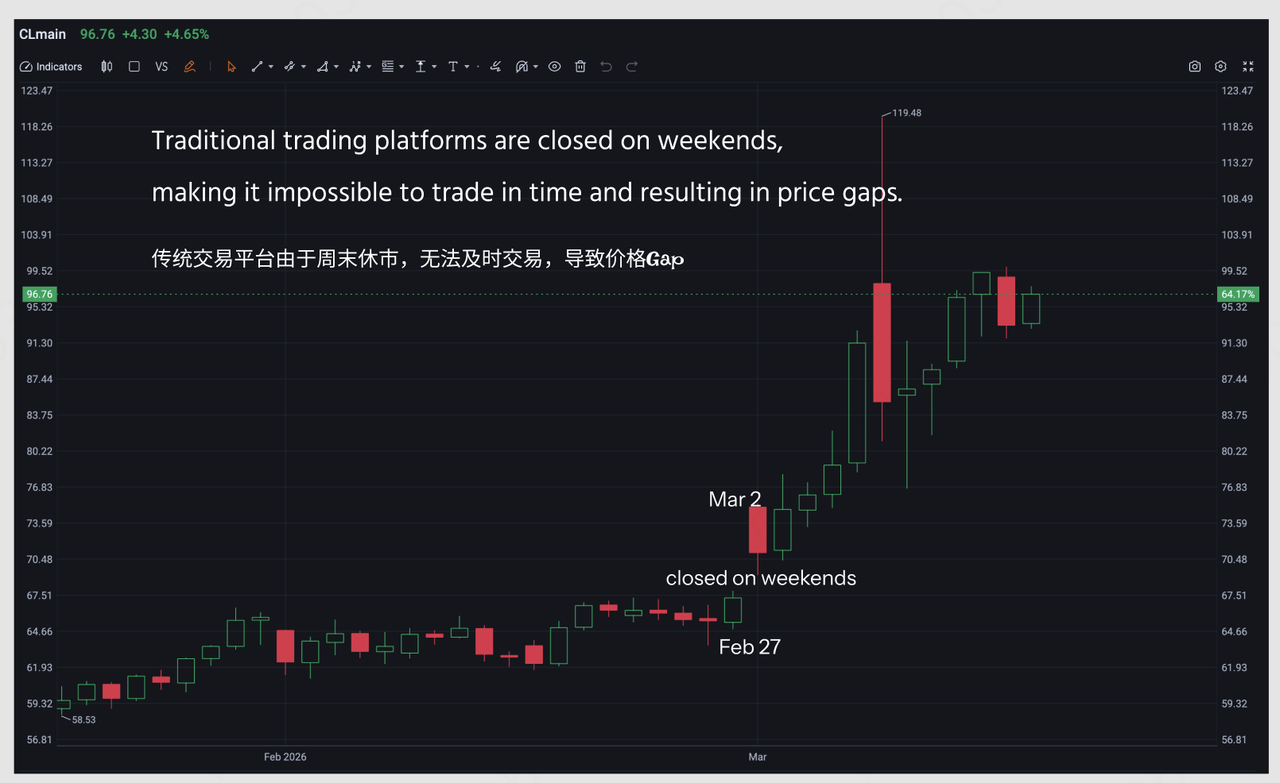
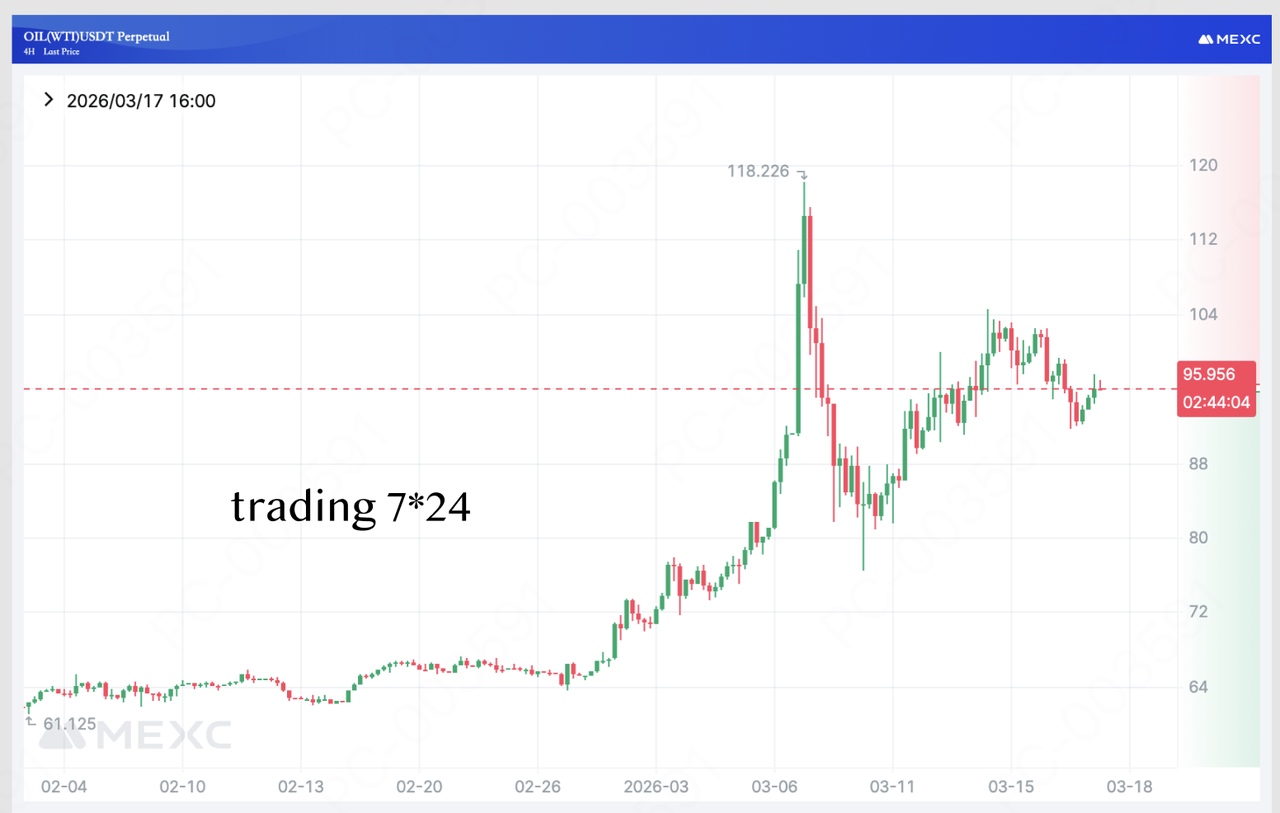
Last Saturday night, about 20 hours before the mainstream derivatives market opened, WTI crude oil perpetual futures on the MEXC platform soared to approximately $96 per barrel, higher than the $90.90 closing price of regular crude futures on Friday afternoon. In this market move triggered by sudden conflict, crypto platforms led the re-pricing of assets, with their seamless operation making the traditional exchanges’ closed-market system appear sluggish.
Wall Street Journal: Accelerating Integration of Traditional and Digital Finance
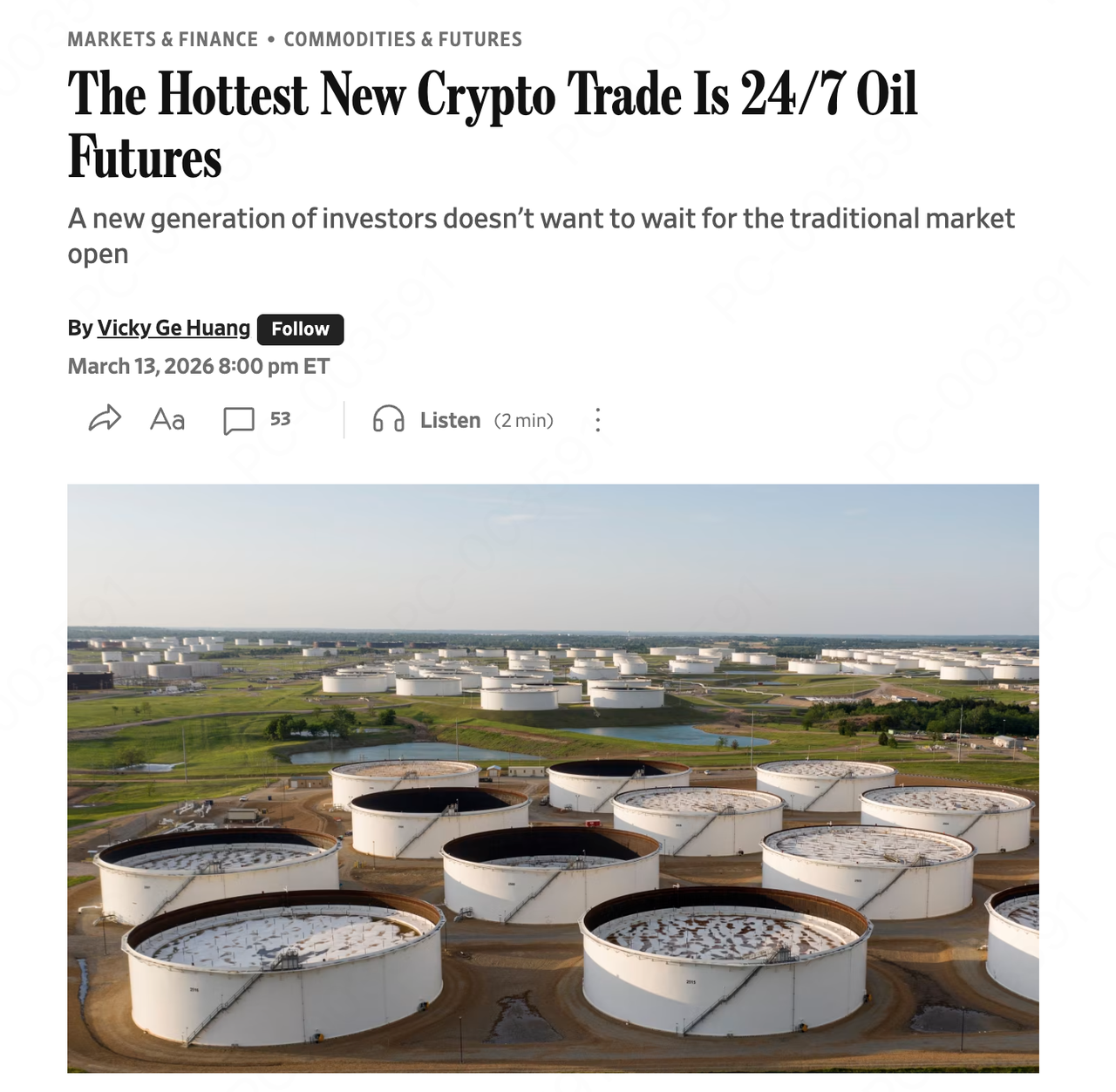
This disruptive market phenomenon quickly drew the attention of the Wall Street Journal. The report pointed out that a new generation of investors no longer wants to wait for traditional markets to open. Currently, crypto platforms offer perpetual futures tracking commodities, which are highly speculative derivatives.
Perpetual contracts never expire and have no strike price (the point at which the contract becomes effective). They also allow traders to use extremely high leverage, amplifying profits but also risking losing their entire investment. Industry insiders say, “You don’t need to wait until Monday’s market open to act.” This is changing the traditional model, enabling real participants to take action during weekend events.
Market data vividly reflects capital’s “foot voting.” In just a few days, the total trading volume of oil futures skyrocketed from $339 million on February 28 to about $7.3 billion by Thursday.
Crossing Asset Boundaries: The 24/7 Wave from Crude Oil to U.S. Stocks
The time arbitrage in the oil market is just the beginning. Around-the-clock trading has long been commonplace for crypto investors. For modern traders, the trading mechanisms offered by crypto platforms are increasingly attractive for trading U.S. stocks and other commodities.
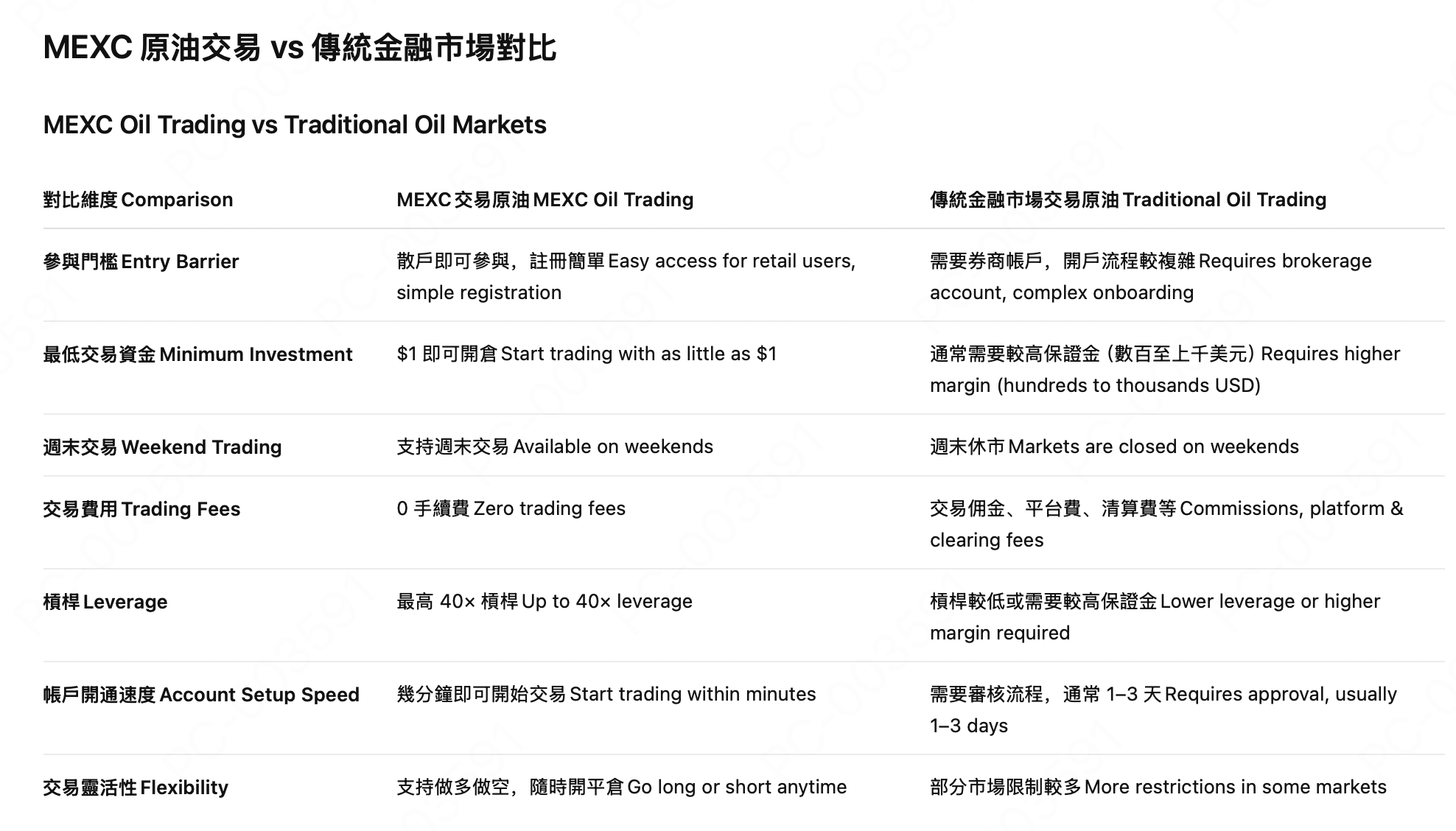
Wall Street is racing to leverage blockchain technology—supporting Bitcoin and other cryptocurrencies—to tokenize stocks and traditional assets. Similar to digital assets and prediction markets, so-called tokenized stocks are increasingly appealing to younger investors who want 24/7 trading and instant reactions to geopolitical events and company news. For example, investors can now trade contracts on hot U.S. stocks like AMD at any time on crypto platforms.
In addition to oil, crypto platforms have recently launched perpetual contracts for gold and silver, which have also experienced abnormal price swings. Both metals’ prices have surged to record highs and then plummeted.
As liquidity and trading habits shift, an irreversible trend is emerging: crypto platforms, with their 24/7 seamless trading, high capital efficiency, and disregard for regional time zones, are continuously capturing market share from traditional trading venues. While traditional finance remains constrained by fixed operating hours, the crypto ecosystem has gradually taken on the trading needs of vast global assets, becoming the new core of pricing power.
Opportunities and Challenges in a New Paradigm
Objectively, this high-leverage, 24/7 trading model is a double-edged sword. I believe crypto traders’ attention spans are short—they seek quick returns and thrive on volatility. On Sunday, I observed that oil prices had reached unsustainable levels and started shorting, which proved correct: on Monday, after President Trump said the Iran war was “almost completely over,” crude futures fell below $100 per barrel.
Such volatility can backfire if problems arise.
For many traders, the ability to leverage-trade these assets around the clock, especially during weekends when traditional markets are closed, is highly attractive. However, leveraging high-volatility assets also introduces real market risks, and I’ve noticed large-scale forced liquidations during sudden price swings.
Despite these challenges, recent launches of oil futures contracts on multiple crypto platforms signal a future where traditional and digital finance will increasingly merge—allowing all asset types to be traded anytime. In this historic process, crypto exchanges are at the forefront of this transformation. For traders eager to stay in control of market movements, a 24/7, non-sleeping trading ecosystem is undoubtedly the most attractive battleground for the future.

Disclaimer: The information on this page may come from third parties and does not represent the views or opinions of Gate. The content displayed on this page is for reference only and does not constitute any financial, investment, or legal advice. Gate does not guarantee the accuracy or completeness of the information and shall not be liable for any losses arising from the use of this information. Virtual asset investments carry high risks and are subject to significant price volatility. You may lose all of your invested principal. Please fully understand the relevant risks and make prudent decisions based on your own financial situation and risk tolerance. For details, please refer to
Disclaimer.


