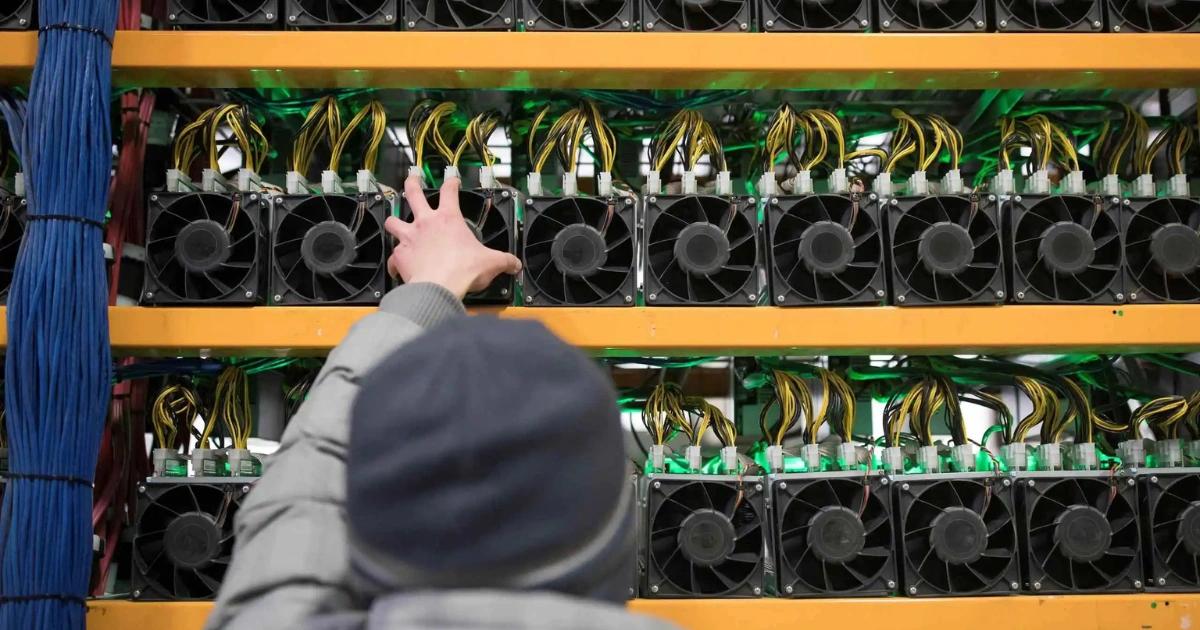
The cost to mine one Bitcoin has surged to $88,000, higher than the current price of $68,000. Slipping hash rates and increasing selling pressure are pushing mining companies to turn to AI for survival.
The Bitcoin mining industry is facing severe challenges. As prices decline, energy costs soar, and geopolitical risks escalate, many miners are caught in a “losing more the more they mine” dilemma.
On-chain data platform Checkonchain’s “Difficulty Regression Model” (which estimates average production costs based on network difficulty and energy input) shows that as of March 13, the cost to mine one Bitcoin has skyrocketed to $88,000.
However, at the time of writing, Bitcoin spot prices hover around $68,000. This means miners are incurring nearly $20,000 in losses per Bitcoin mined; in other words, mining one block results in a 21% loss.
Cost storms and geopolitical pressures: oil prices breaking $100 as a death knell
Since Bitcoin’s peak of $126,000 in October last year, it has plummeted below $70,000, squeezing miners’ profit margins. Recently, the outbreak of conflict in Iran has become the final straw crushing profitability.
International oil prices have surged past $100 per barrel, directly increasing the massive electricity costs required for mining. As a result, about 8% to 10% of global hash power, located in regions highly sensitive to Middle Eastern energy supply, is experiencing the most intense impact.
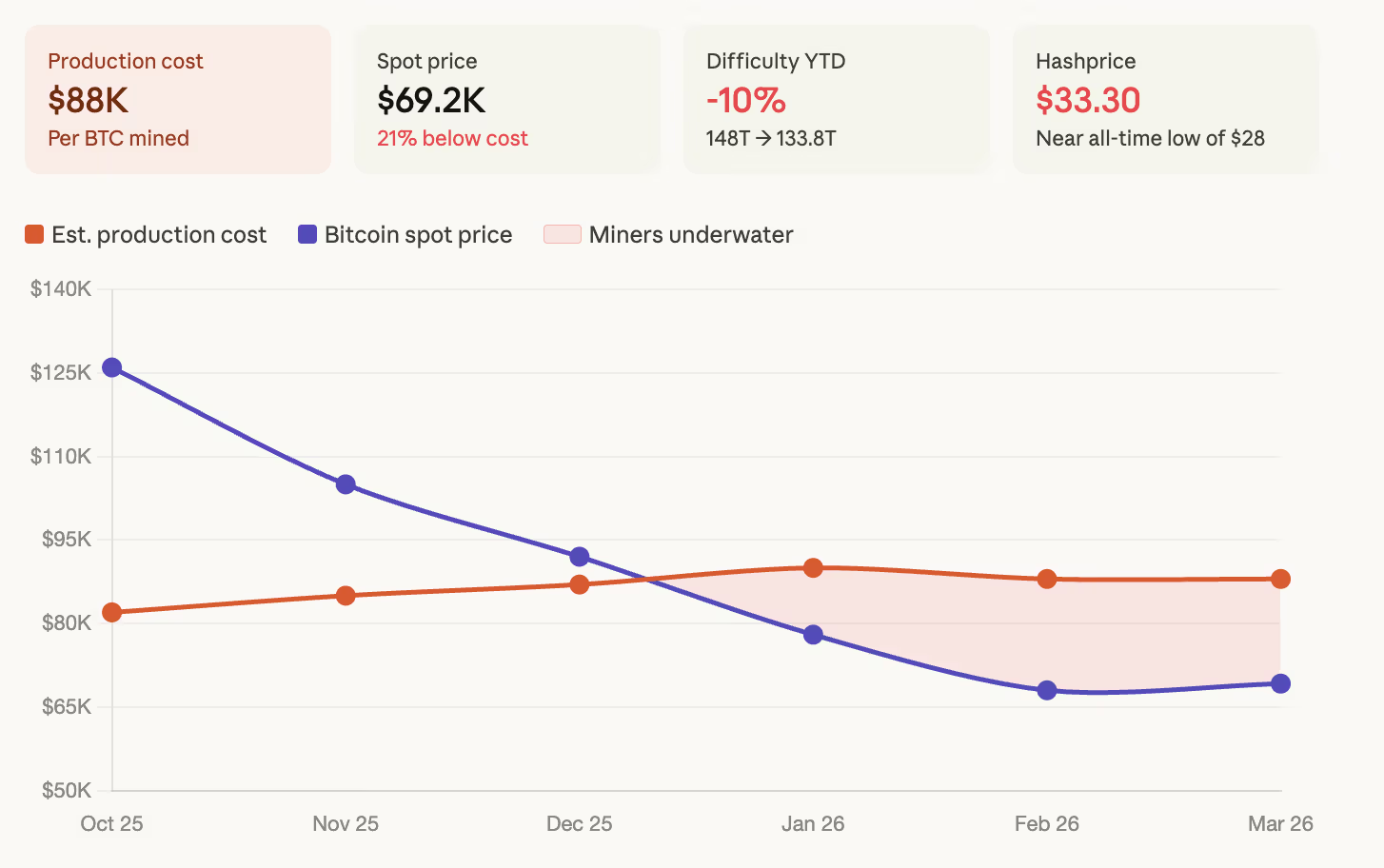
Image source: “BlockTalk”
Adding to the woes, nearly halted commercial shipping through the Strait of Hormuz, which controls about 20% of global oil and gas transportation. Plus, U.S. President Donald Trump issued a “48-hour ultimatum,” threatening to attack Iranian power plants. These chain reactions of geopolitical tensions have made miners’ situations even more precarious.
Online data warns: hash rate loss and delayed block times
Signs of miners exiting the market are increasingly reflected in network indicators.
Bitcoin mining difficulty recently decreased by 7.76% to 133.79 T. This is the second-largest drop of 2026 so far, following an 11.16% plunge in February caused by the “Fern” winter storm. Currently, Bitcoin mining difficulty is down nearly 10% from the start of the year and well below the November 2025 peak of nearly 155 T.
Additionally, total network hash rate has sharply retreated to about 920 EH/s, far below the impressive 1 Zetahash (1,000 EH/s) record set in 2025.
This loss of hash power has led to an increase in average block time during the last difficulty adjustment cycle to 12 minutes and 36 seconds, significantly longer than Bitcoin’s original 10-minute target.
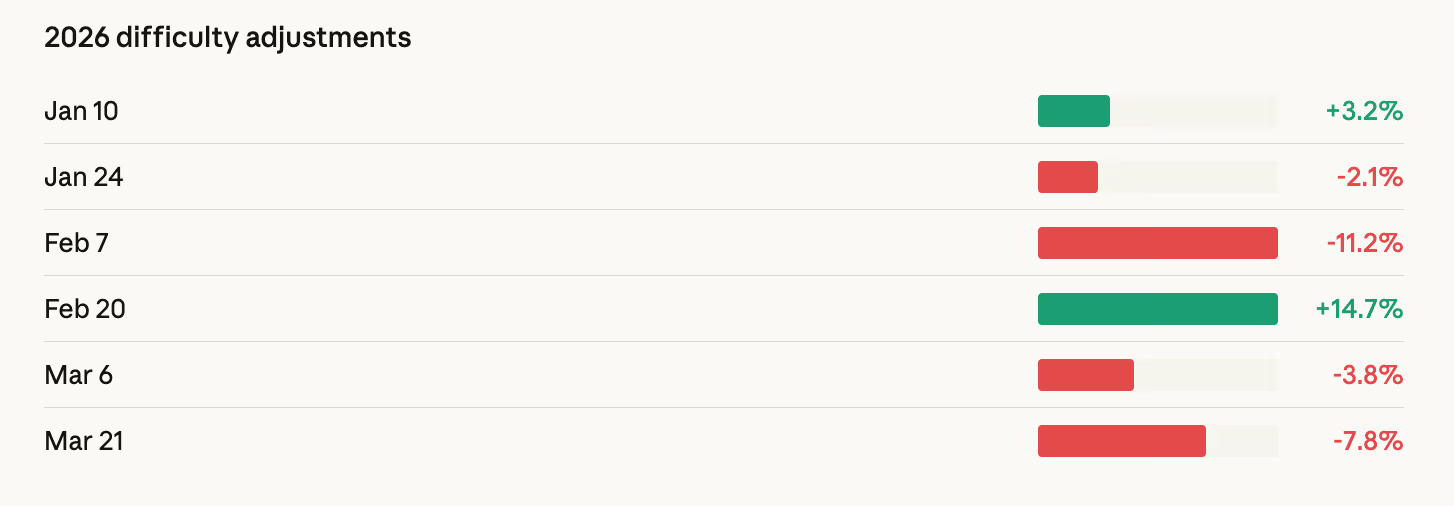
Image source: “BlockTalk”
A Selling Wave Emerges: Not Just Industry Crisis, but Market Structural Risk
According to the Hashprice index released by Luxor Pool, the expected income per unit of hash power, currently around $33.30 per PH/s per day, is nearing the breakeven point for most mining rigs. It is just one step away from the $28 low recorded on February 23, a historic low.
When costs exceed revenues, the only survival strategy for miners is to sell Bitcoin for cash.
This forced liquidation adds heavy selling pressure to an already weak market. Currently, about 43% of Bitcoin holdings are in loss, with major whales selling high during rebounds, and high leverage positions dominating price movements. In other words, miners are facing not only industry challenges but also becoming key variables influencing market structure.
Mining companies fighting for survival: shifting to AI and computational transformation
Faced with the “mining losing money every day” dilemma, publicly listed mining companies are seeking diversification, extending their computational resources into artificial intelligence (AI) and high-performance computing (HPC) sectors to achieve more stable cash flow. Major players like Marathon Digital and Cipher Mining have begun expanding data centers at existing mining sites.
According to CoinWarz data, the next difficulty adjustment is expected in early April, likely to decrease further. If Bitcoin prices fail to return to the $88,000 mining cost threshold, this “miners’ exodus” trend will continue.
Bitcoin’s network was designed with a “self-adjusting” mechanism: when miners exit due to unprofitability, difficulty decreases, making mining easier for remaining miners. However, the pain of transitioning from “losing money” to “significant difficulty reduction and profit recovery” is the most severe test, severely damaging miners’ survival base and forcing the spot market to absorb the massive sell-off they make in desperation.
- This article is reprinted with permission from “BlockTalk”
- Original title: “Losing $20,000 per Bitcoin mined! Miners’ Exodus and 7.8% Drop in Mining Difficulty”
- Original author: Block Sister MEL
Disclaimer: The information on this page may come from third parties and does not represent the views or opinions of Gate. The content displayed on this page is for reference only and does not constitute any financial, investment, or legal advice. Gate does not guarantee the accuracy or completeness of the information and shall not be liable for any losses arising from the use of this information. Virtual asset investments carry high risks and are subject to significant price volatility. You may lose all of your invested principal. Please fully understand the relevant risks and make prudent decisions based on your own financial situation and risk tolerance. For details, please refer to
Disclaimer.


