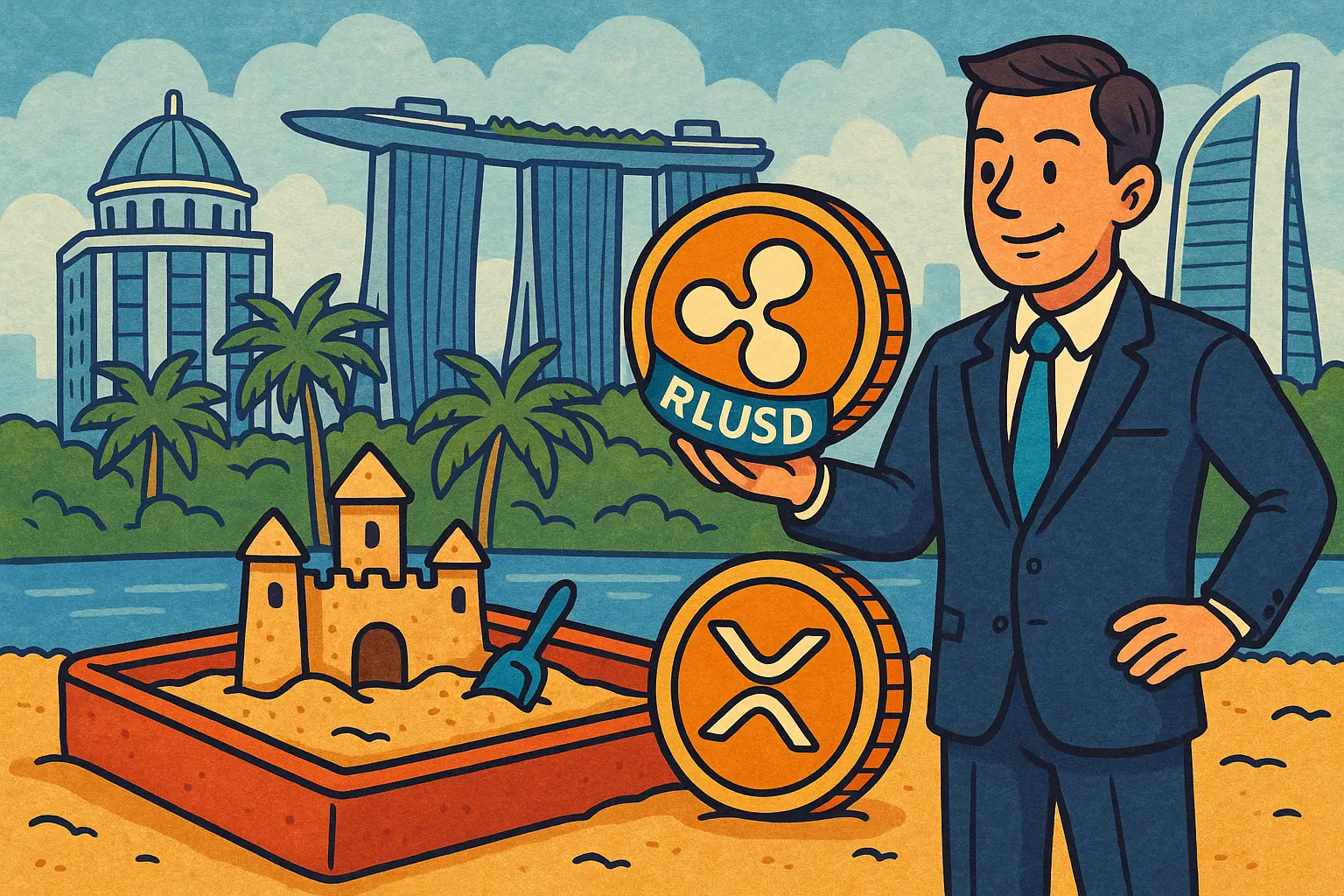
Ripple is testing its RLUSD stablecoin within the Project Guardian regulatory sandbox operated by the Monetary Authority of Singapore (MAS). The aim is to automate cross-border payment processes using blockchain technology, targeting the approximately $32 trillion annual trade finance market, with the potential to reduce costs by up to 40%. XRP is currently trading around $1.41 to $1.42, maintaining the critical technical support level.
Project Guardian Pilot: How RLUSD is Reshaping Trade Finance Processes
Project Guardian is a regulatory sandbox established by MAS to explore how digital assets can integrate with traditional financial systems. Ripple’s pilot builds upon its December 2025 license extension in Singapore, which authorizes Ripple to provide services involving XRP and RLUSD.
The core mechanism of the pilot is “automated payment triggered by cargo verification”: when certain conditions are met (such as shipment verification), RLUSD payments are automatically triggered without manual approval or paper documents. Traditional trade finance processes often rely on multiple intermediaries for verification, which slows settlement and can cause delays of several weeks.
On-chain transparency is another major advantage—participants can track transaction progress in real-time, fundamentally reducing disputes and increasing mutual trust among trading parties.
Key Milestones and Market Opportunities
Main Indicators of Ripple RLUSD Trade Finance Pilot
Target Market Size: The global trade finance transaction volume is estimated at $32 trillion annually, with current systems being inefficient.
Potential Cost Reduction: Early results from similar blockchain pilots show costs can be reduced by up to 40%.
Regulatory Framework: The pilot is conducted under MAS regulation; Ripple holds a Singapore expansion license (December 2025).
Automation Mechanism: Cargo verification triggers automatic settlement, eliminating manual approval and paper-based processes.
Technical and Market Outlook: XRP Holds at $1.42, Next Resistance at $1.51
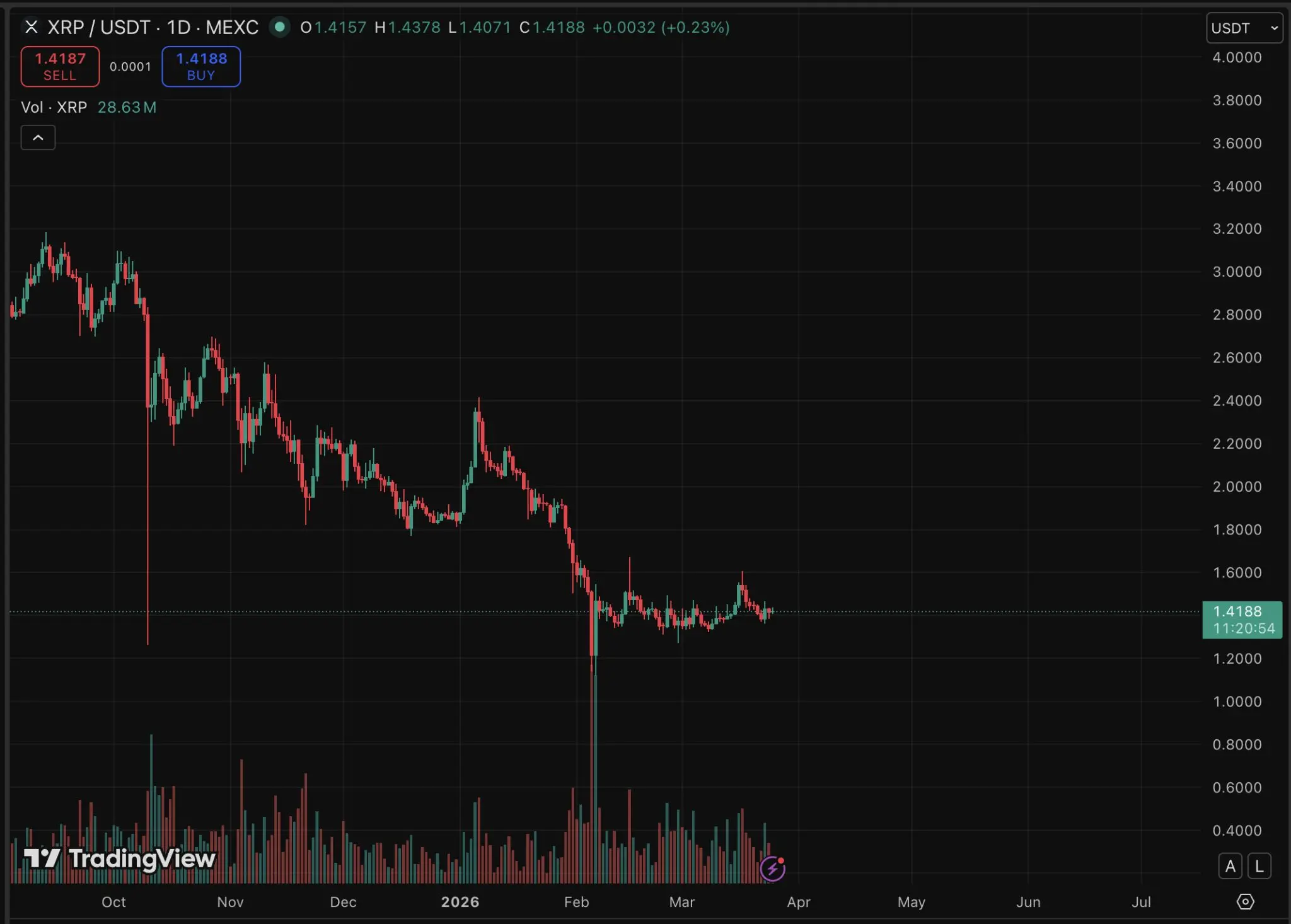
(Source: Trading View)
XRP is currently trading narrowly between $1.41 and $1.42, barely maintaining the key support at $1.27—this level coincides with the 23.6% Fibonacci retracement and serves as the main line of defense preventing further decline toward $1.11. Analysts describe this range as a “surrender zone,” typically where short-term holders exit at unrealized losses to make room for new buying interest.
On the upside, XRP needs to first break through the downtrend resistance at $1.51; the next major obstacle lies in the $1.76 to $1.80 range, where nearly 1.85 billion tokens are stacked.
Some traders reference broader valuation discussions sparked by real estate mogul Grant Cardone, suggesting XRP’s target price could be around $10; optimistic models forecast a price range of $2.45 to $8.00 by 2026. If the XRP Ledger can attract significant transaction volume from traditional finance and SWIFT’s on-chain transformation continues, these targets have a certain long-term logical basis.
Frequently Asked Questions
Why is Ripple’s RLUSD being tested in Singapore’s central bank sandbox instead of other markets?
The Monetary Authority of Singapore is one of the most proactive regulators globally in promoting FinTech and digital asset innovation. Its Project Guardian sandbox provides a controlled and compliant environment for testing. Ripple obtained its Singapore expansion license in December 2025, which offers a legal foundation to provide XRP and RLUSD services, giving this pilot formal regulatory support.
Does the XRP RLUSD trade finance pilot directly impact XRP’s market value?
Some crypto communities remain cautious, noting that Ripple’s past collaborations have not always significantly boosted XRP’s market valuation. Analysts generally believe that whether infrastructure development translates into price increases depends on whether XRP Ledger can scale from the pilot to large-scale real-world transactions.
What are the current key support and resistance levels for XRP?
The most critical support is at $1.27; a break below could test $1.11. On the upside, $1.51 is the first downtrend resistance; breaking through this level would lead to facing the main supply zone between $1.76 and $1.80.
Disclaimer: The information on this page may come from third parties and does not represent the views or opinions of Gate. The content displayed on this page is for reference only and does not constitute any financial, investment, or legal advice. Gate does not guarantee the accuracy or completeness of the information and shall not be liable for any losses arising from the use of this information. Virtual asset investments carry high risks and are subject to significant price volatility. You may lose all of your invested principal. Please fully understand the relevant risks and make prudent decisions based on your own financial situation and risk tolerance. For details, please refer to
Disclaimer.


