Author: Fenrir, Crypto City
Eliminating the disorder of signal trading, the Financial Supervisory Commission plans to use the Financial Consumer Protection Act to enhance regulation
As the popularity of cryptocurrency investment continues to rise in Taiwan, a large number of so-called “crypto gurus” have emerged in the market, forming signal trading groups on social media platforms to conduct teaching and investment advice. Such “signal trading” behaviors involve influencing market prices and misleading investors, attracting high attention from regulatory agencies.
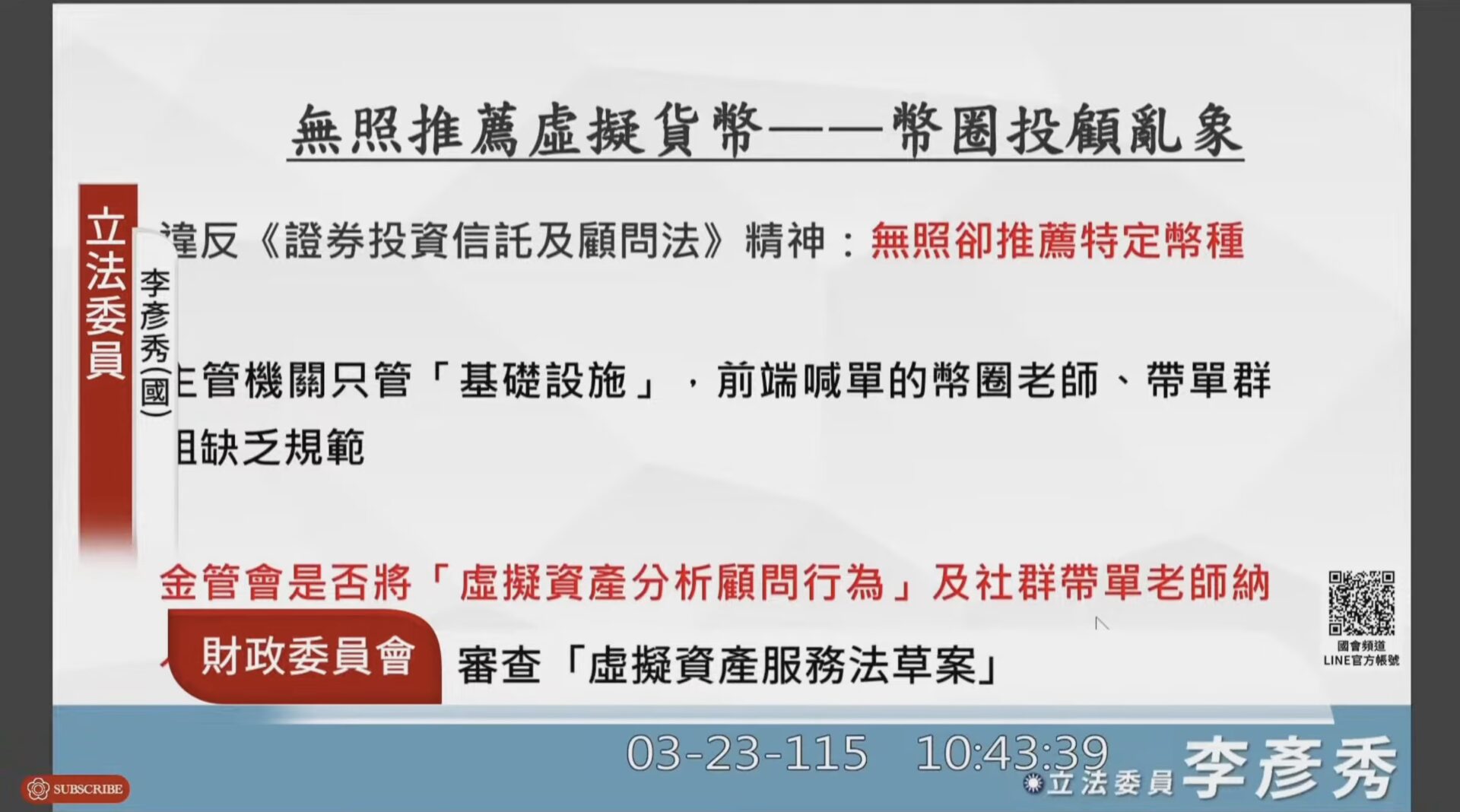
Image source: Legislative Yuan | KMT legislator Lee Yan-hsiu demands the Financial Supervisory Commission clarify the regulation of signal trading in the crypto space
Recently, KMT legislator Lee Yan-hsiu pointed out during a Finance Committee session that although current regulations prohibit operations intended to influence prices, the market is flooded with behaviors that essentially provide investment advice, urging the Financial Supervisory Commission to clarify regulation. The chairman of the Financial Supervisory Commission, Peng Chin-long, stated that in the future, they plan to regulate behaviors such as advertising, solicitation, and promotional activities carried out by the financial services industry through KOLs using the authority of the Financial Consumer Protection Act, striving to establish an orderly virtual asset market.
Peng Chin-long emphasized that similar behaviors already have corresponding regulations in traditional financial markets, and influencers promoting financial products must be subject to specific restrictions. The current regulatory focus is to bring virtual asset analysis and advisory activities under management, ensuring that investors can receive adequate protection when accessing information.
According to the Financial Supervisory Commission’s plans, they will reference the self-regulatory mechanisms of traditional financial markets regarding investment trust and advisory industries collaborating with influencers, potentially requiring virtual asset service providers (VASPs) to sign formal cooperation contracts with KOLs and include them in the operators’ internal control systems. This means that in the future, crypto gurus who wish to publicly promote or provide signal trading services must operate within a compliance framework and cannot continue to exist in a regulatory vacuum.
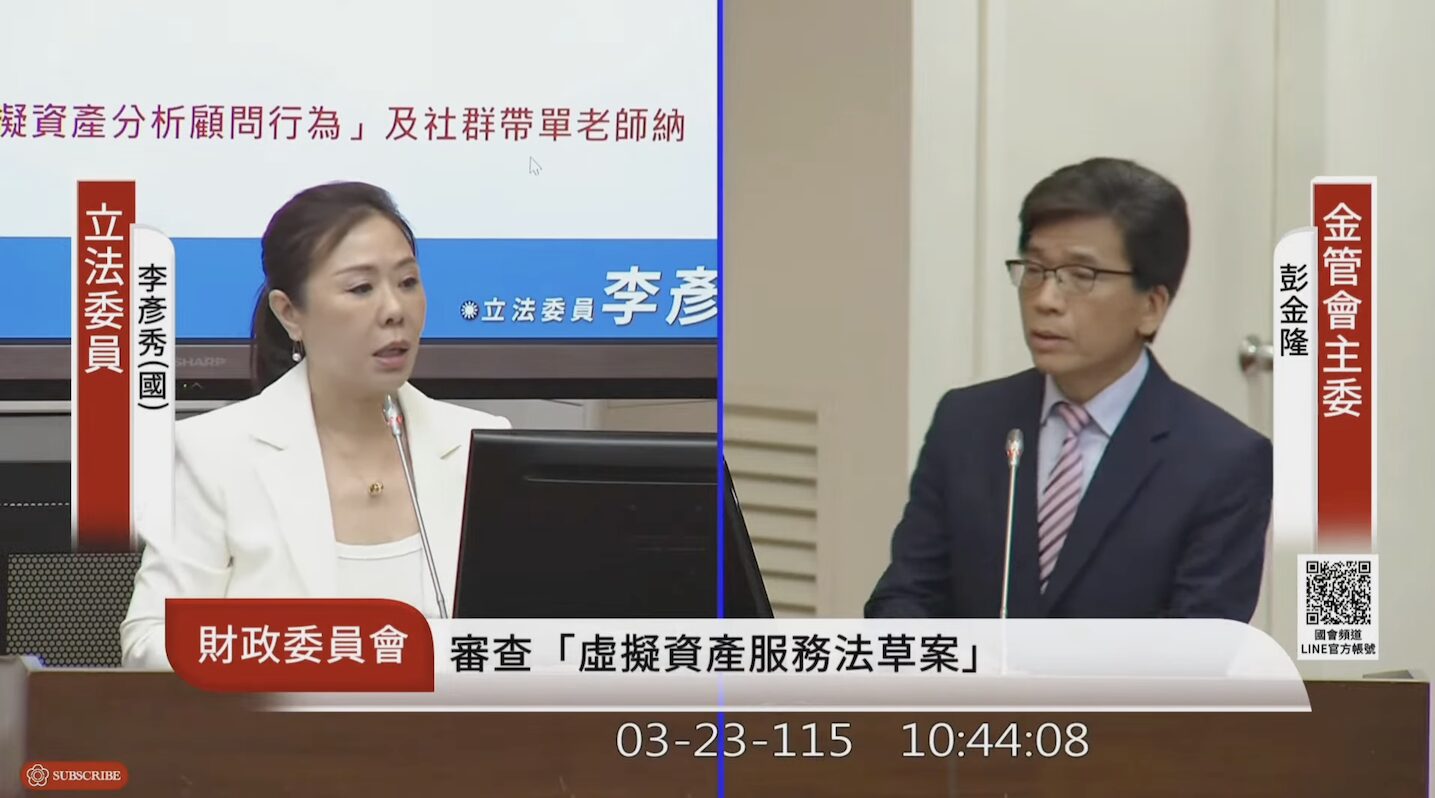
Image source: Legislative Yuan | Peng Chin-long responds emphasizing that similar behaviors already have corresponding regulations in traditional financial markets, and influencers promoting financial products must be subject to specific restrictions
Where is the red line? Examining the illegal solicitation risks from the cases of Crypto Hu Shih and BitMart
Recent cases have shown that the regulatory red lines are gradually becoming clearer. In the past, a well-known virtual currency influencer “Crypto Hu Shih” and their operating company Yangqi Co., Ltd. were warned by the Securities Association of the Republic of China for failing to complete registration under the “Anti-Money Laundering Registration Regulations for Those Providing Virtual Asset Services” and not submitting a compliance statement to the Financial Supervisory Commission.
The announcement explicitly prohibited them from engaging in solicitation activities related to virtual currency, making them the first KOL to be officially named since the virtual asset registration system was implemented. Although Crypto Hu Shih subsequently claimed that the association’s warning had no legal effect, legal personnel from the Financial Supervisory Commission pointed out that operators who fail to register and engage in solicitation or commercial activities related to platforms have, in fact, crossed legal boundaries, especially when these activities are seen as extensions of exchange operations, which carry a high risk of illegality.
Further reading: Opening classes for recruiting trading strategies! Does “Crypto Hu Shih” cross the legal red line?
Another notable case is the overseas exchange BitMart. The Securities and Futures Bureau of the Financial Supervisory Commission officially named this platform as an unapproved operator and specifically mentioned that certain KOLs recruited “trading teams” on the Threads social media platform, requiring participants to register using a designated invitation code. The Securities and Futures Bureau clearly stated that BitMart has not completed anti-money laundering registration and is not allowed to provide services or conduct promotional activities within Taiwan.
The Financial Supervisory Commission reminds the public to refuse to use unapproved overseas platforms and to avoid transferring funds to related accounts. These cases reflect that whether individual KOLs or overseas exchanges, as long as they involve illegal solicitation of Taiwanese citizens, they will face naming and warnings from regulatory authorities, and may even lead to further criminal investigations.
Unveiling the fake performance reports and investment traps, investors must be wary of false performance and investment pitfalls
In addition, when market conditions are bullish, scammers often exploit investors’ FOMO (fear of missing out) mentality, using sophisticated tools to create false appearances. The crypto space also has been popular for a type of “screenshot report generator,” which, by inputting the coin type, leverage, opening price, and name, can generate seemingly impressive profit statements with just one click. These “fake teachers” usually create groups on FB, IG, LINE, or Telegram, using fake accounts and fabricated conversations to create an atmosphere of making big money by following the teacher. Their tactics often begin with free trial trades, allowing investors to make a small profit to build trust, then they require participants to transfer money to a designated fake wallet or an unknown exchange. Once the funds are deposited, the teacher and the group will vanish overnight, leaving investors with significant losses.
In addition to technical fraud, these signal trading groups often attract audiences by claiming to offer “arbitrage formulas” or “professional teaching.” For example, a KOL claimed on Threads that with just 1,000 USDT in capital, one could achieve a trading volume of millions of $USDT, emphasizing that all techniques are taught by the teacher, and students can just copy them. However, such behaviors that promise excessive profits and require using specific overseas platform invitation codes hide enormous compliance and safety concerns. The Financial Supervisory Commission and police have repeatedly reminded that crypto investment should not blindly rely on word-of-mouth from groups, and any “teacher” that requires private transfers or leads to unregulated platforms poses significant risks. Genuine market participants should develop independent risk awareness rather than being blinded by fake profit screenshots.
Regulatory implementation and practical challenges, VASP-specific legislation and self-regulatory mechanisms become key for the future
Currently, Taiwan’s regulation of virtual asset KOLs is at a critical turning point. In terms of legislative direction, the version proposed by the People’s Party clearly suggests regulating key opinion leaders, requiring VASPs to disclose company names and license information in advertising and marketing, prohibit false or misleading promotions, and assert that KOLs must meet certain qualification criteria.
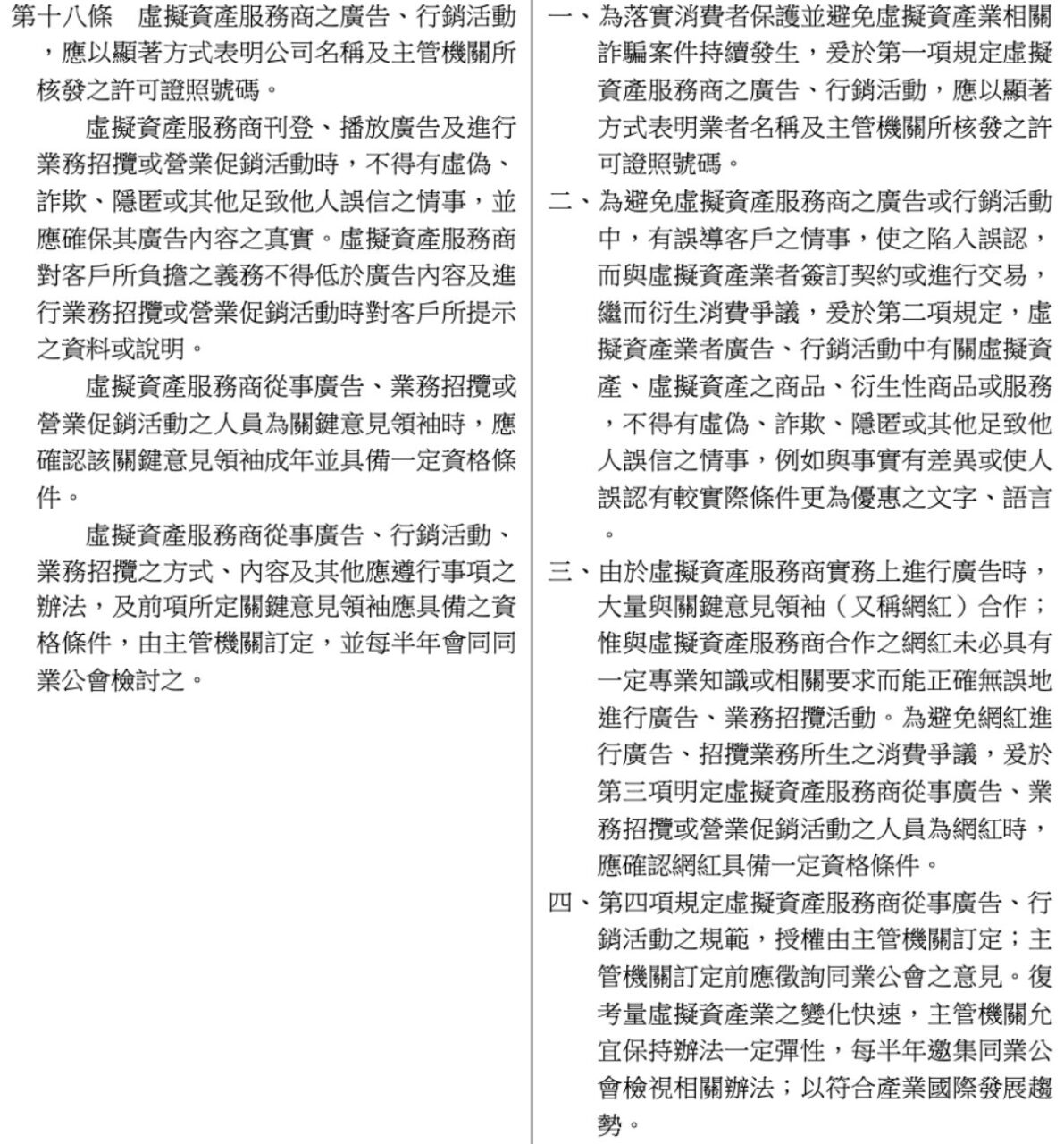
Image source: Legislative Yuan | The People’s Party version of the “Virtual Asset Service Act” requires VASPs to disclose company names and license information in advertising and marketing, prohibiting false or misleading promotions
However, industry practitioners admit that requiring all KOLs to possess specific financial qualifications is extremely challenging. Therefore, the current compromise solution leans toward a model similar to that of the Investment Trust and Advisory Association, where operators conduct regular reviews and compliance management of collaborating influencers, implementing regulatory responsibilities through contractual constraints.
This regulatory action targeting “crypto gurus” is part of the overall process of Taiwan’s “Virtual Asset Service Act” draft. As the VASP registration system is gradually implemented, regulations on signal trading behaviors will fill a crucial gap in the regulatory framework.
Currently, the domestic VASP operators providing services are as follows, sorted by stroke count:
- Hoya Digital Technology (HOYA BIT)
- Zone Digital Technology (ZONE Wallet)
- Modern Wealth Technology (MaiCoin, MAX Exchange)
- KryptoGO
- TWEX
- Chainss
- BitoPro
- XREX Exchange
Chairman Peng Chin-long of the Financial Supervisory Commission stated that the government version of the specific law will be prioritized as a legislative proposal, and guidelines for custody will be established within six months. In the future, investors should prioritize choosing legally registered platforms and be wary of any unapproved solicitation activities to ensure their rights are protected by regulations.
Disclaimer: The information on this page may come from third parties and does not represent the views or opinions of Gate. The content displayed on this page is for reference only and does not constitute any financial, investment, or legal advice. Gate does not guarantee the accuracy or completeness of the information and shall not be liable for any losses arising from the use of this information. Virtual asset investments carry high risks and are subject to significant price volatility. You may lose all of your invested principal. Please fully understand the relevant risks and make prudent decisions based on your own financial situation and risk tolerance. For details, please refer to
Disclaimer.


