Straddle option strategies are classic volatility trading approaches that focus on assessing market volatility rather than simply betting on price direction. By simultaneously holding both call and put options with the same expiration date and strike price, investors can build positions when implied volatility diverges from realized volatility, capturing profits from volatility mispricing.
In practice, straddle strategies allow investors to benefit from volatility premiums when expecting increased market swings. Alternatively, when volatility is overpriced and the market enters a consolidation phase, structured combinations can continuously earn time value, providing a relatively stable and sustainable source of returns.
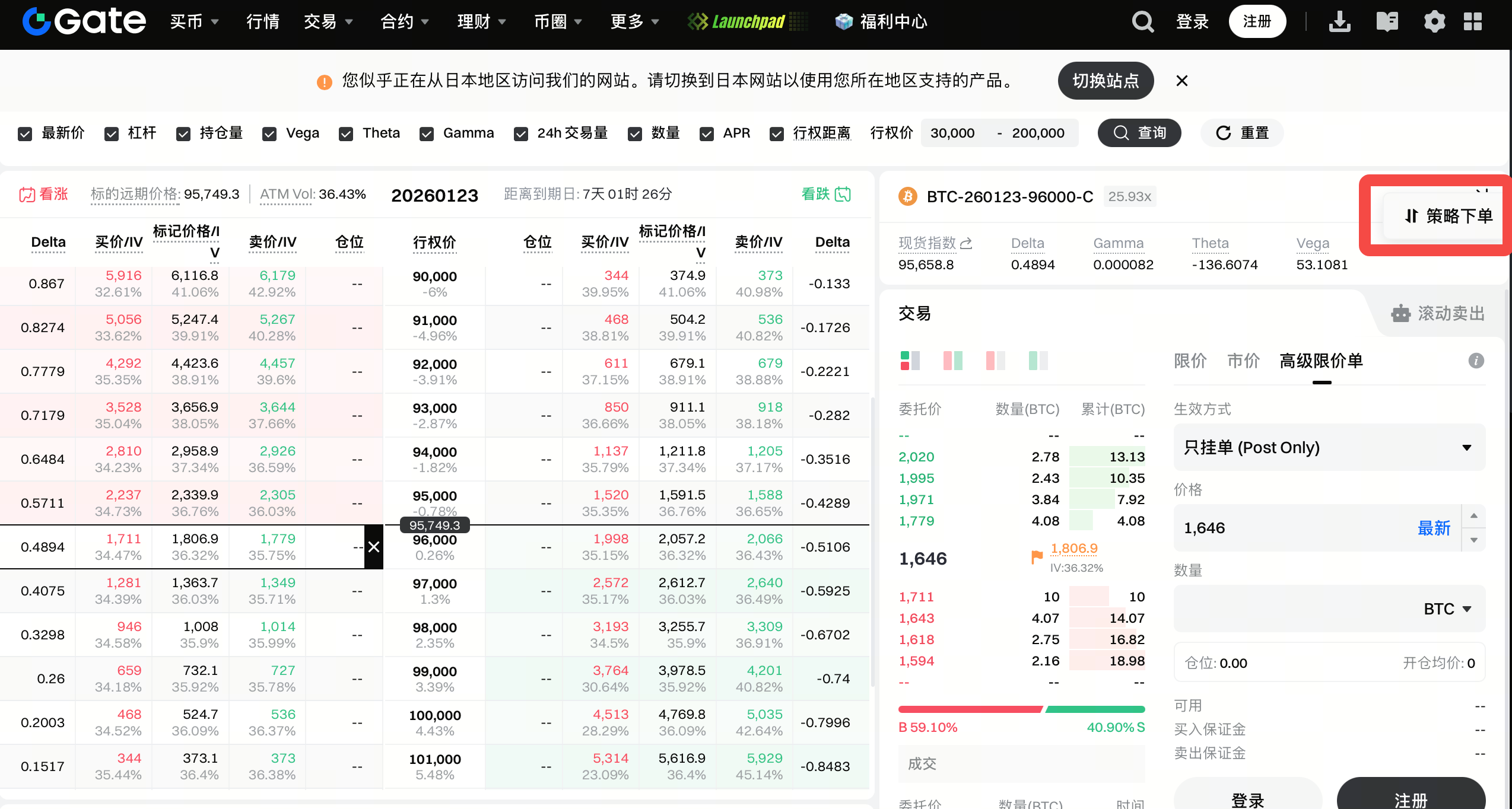
Gate Options has launched a new combo strategy order feature, supporting a variety of multi-leg option strategies. With one click, users can execute straddles and other complex strategies, helping them efficiently respond to range-bound market conditions and consistently earn option premiums.
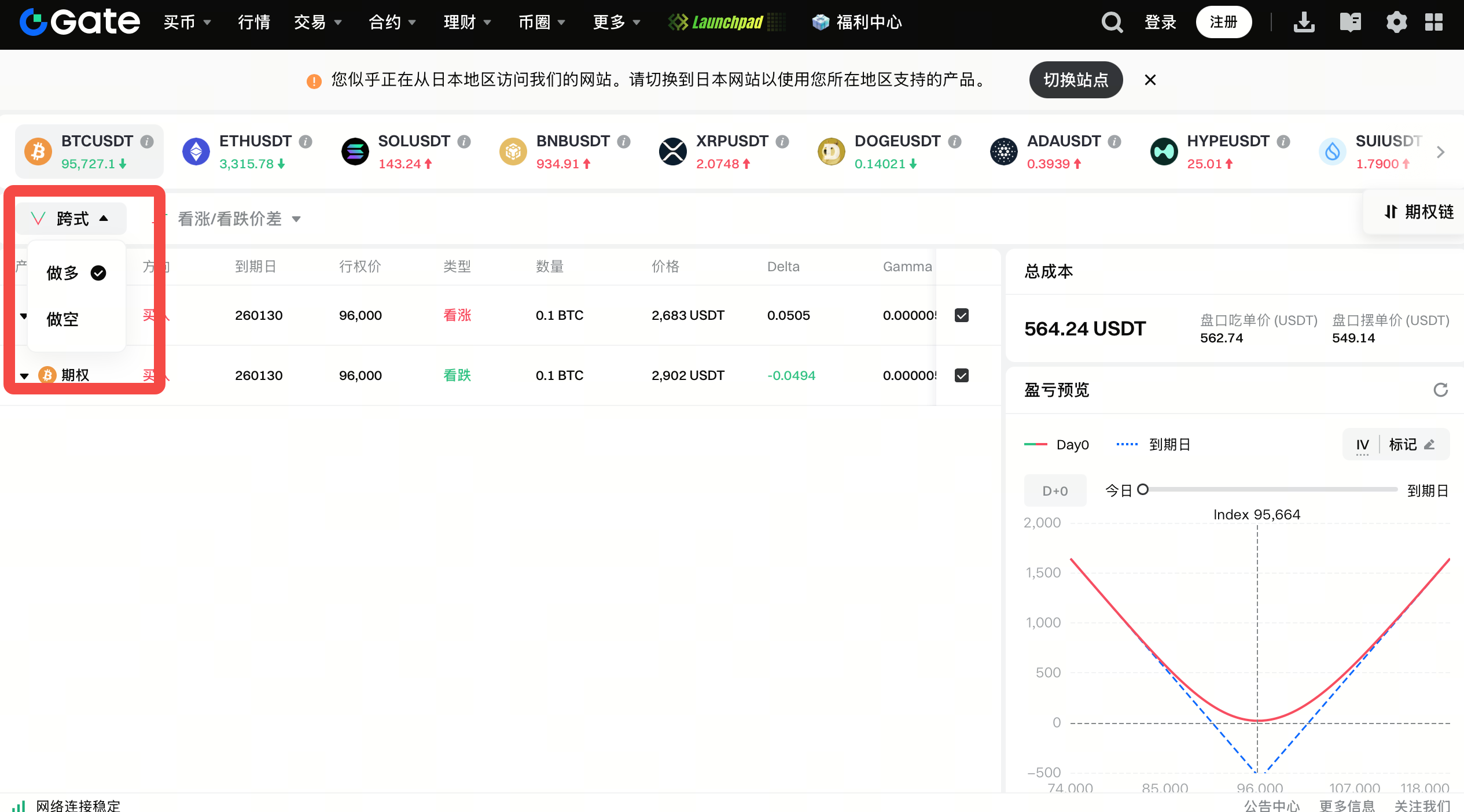
This feature also offers a preview of the overall strategy’s profit and loss.
Straddle Option Strategy
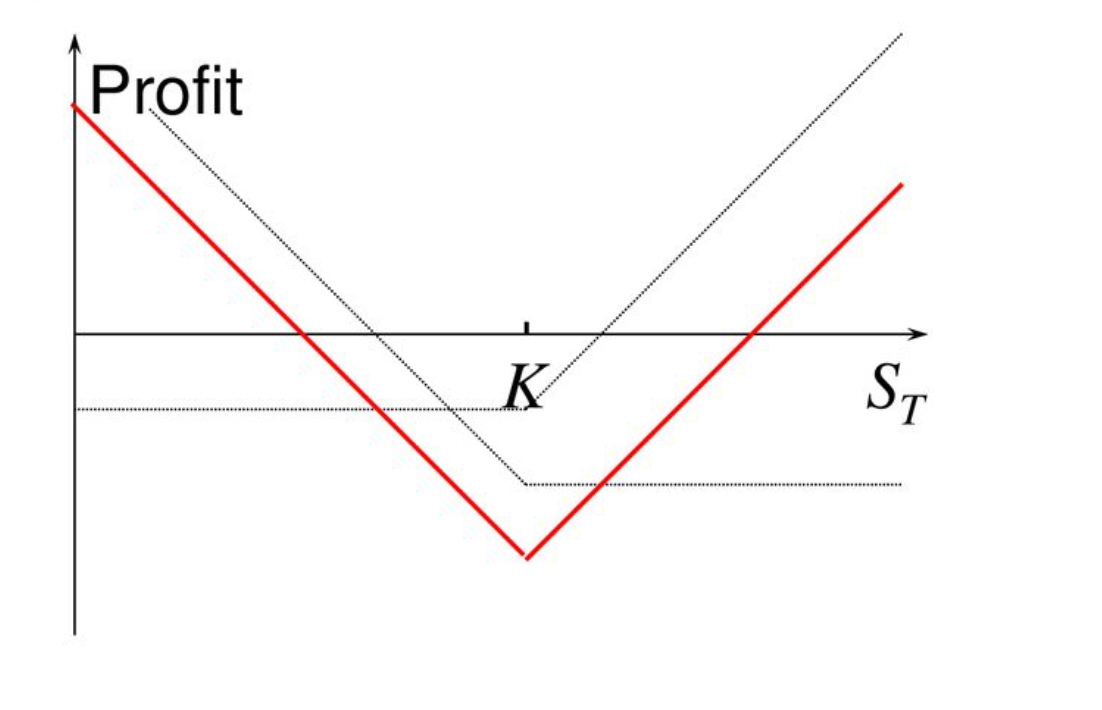
The straddle option strategy involves simultaneously buying a call option and a put option on the same underlying asset, with identical strike prices and expiration dates.
Objective: To profit from significant price movements in the underlying asset, regardless of whether the price rises or falls.
Strategy Highlights:
Dual profit potential: If the price moves sharply in either direction, one side of the options will generate gains that offset the losses on the other.
Suitable Scenarios:
- The straddle strategy is typically used when you expect substantial volatility in the underlying asset over a certain period but are uncertain about the direction. Examples include before company earnings releases, government announcements, or major events.
Strangle Option Strategy
The strangle option strategy is designed for situations where you anticipate significant volatility in the underlying asset but are unsure of the direction. This approach is similar to the straddle strategy but uses different strike prices, usually resulting in lower premium costs.
The main goal is to profit from large price swings in the underlying asset, regardless of direction.
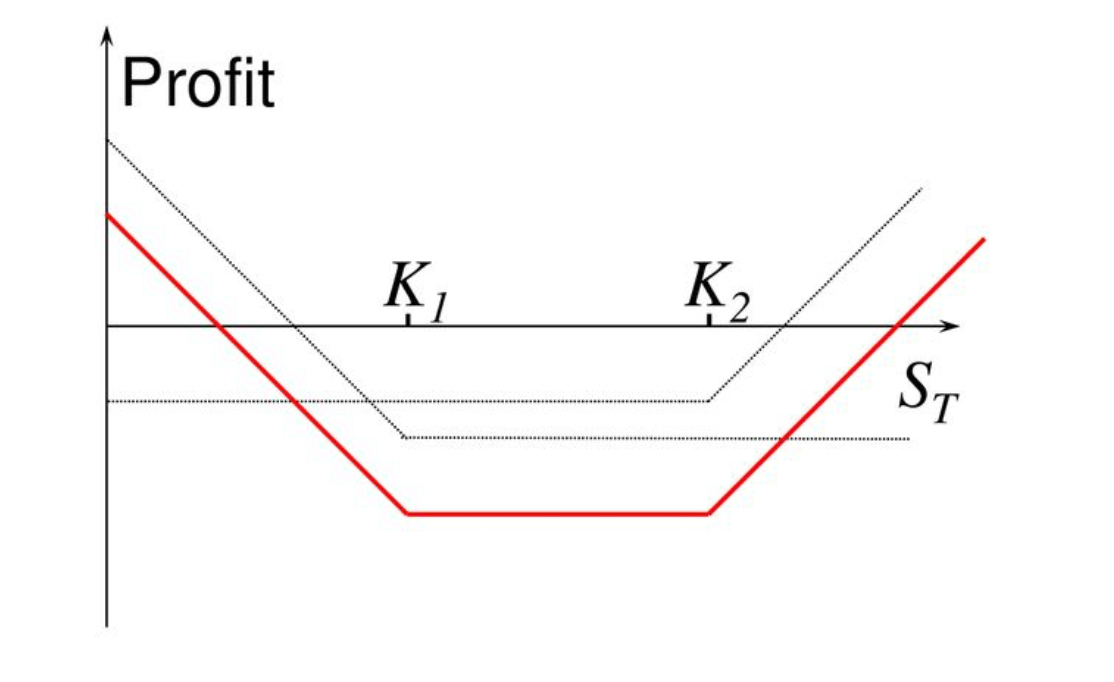
Key Differences from Straddle:
- Straddle: Buy call and put options with the same strike price.
- Strangle: Buy call and put options with different strike prices, typically spaced apart, resulting in a lower total cost.
Suitable Scenarios:
The strangle strategy is ideal when you expect considerable volatility in the underlying asset but cannot predict whether the price will rise or fall.
- For instance: upcoming earnings reports, policy announcements, or major market events.
The biggest advantage of the strangle is its lower premium cost compared to the straddle. While the risk is lower, it requires a larger price movement to become profitable.
Short Strangle Strategy
Definition:
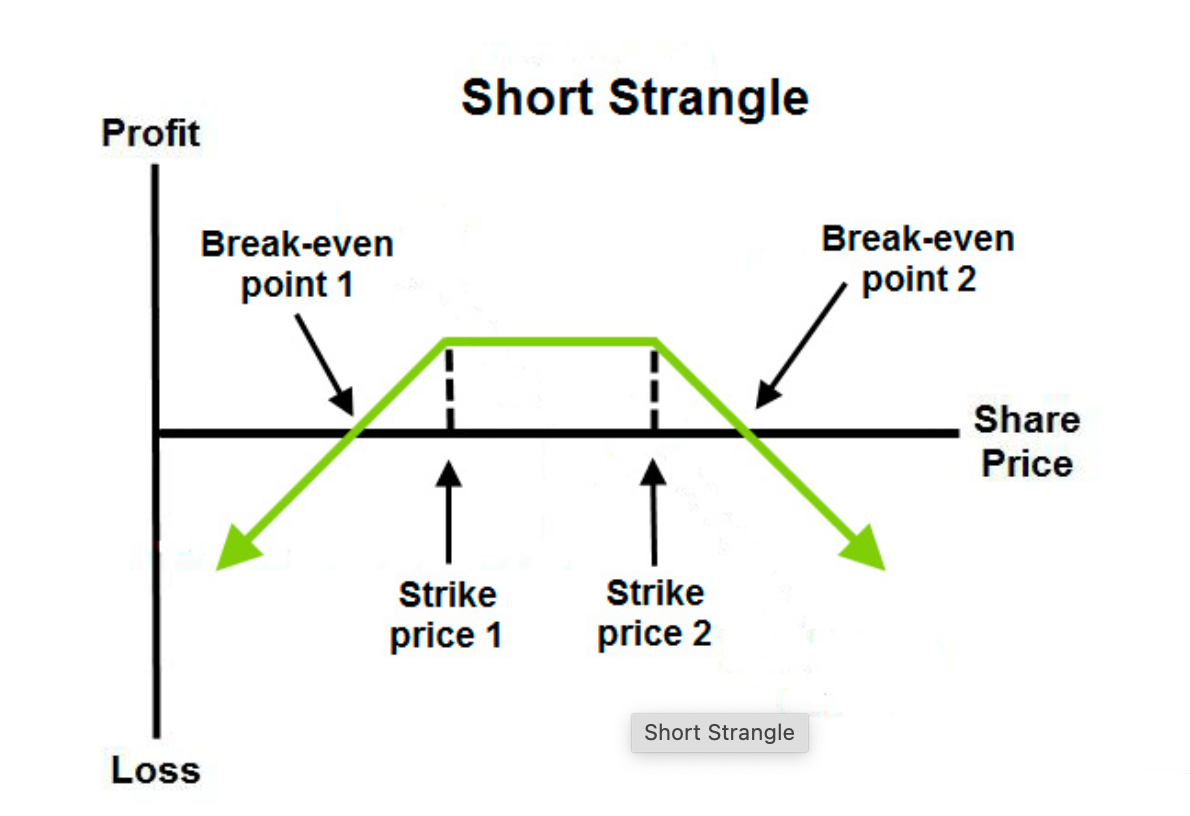
The short strangle strategy involves selling both a call and a put option on the same underlying asset, with different strike prices but the same expiration date.
This strategy is suitable when you expect the market to remain relatively stable and the underlying asset’s price to stay within a certain range.
Objective:
Earn premiums from selling both options, while accepting the risk if the price moves too far in either direction.
If the price remains between the sold options’ strike prices, the seller keeps the full premium income.
Suitable Scenarios:
The short strangle strategy works best when the market is unlikely to experience significant volatility. For example, when you expect the market to be range-bound or when upcoming events (such as earnings releases or economic data) are not expected to trigger major price swings.
The greatest risk with this strategy occurs if the underlying asset’s price moves sharply, far beyond the sold options’ strike prices.
Summary:
The short strangle strategy is suitable for stable market conditions, allowing you to earn option premiums. However, it’s important to note that sharp price movements can result in substantial losses.
Using the Rolling Option Selling Tool to Execute the Short Strangle Strategy
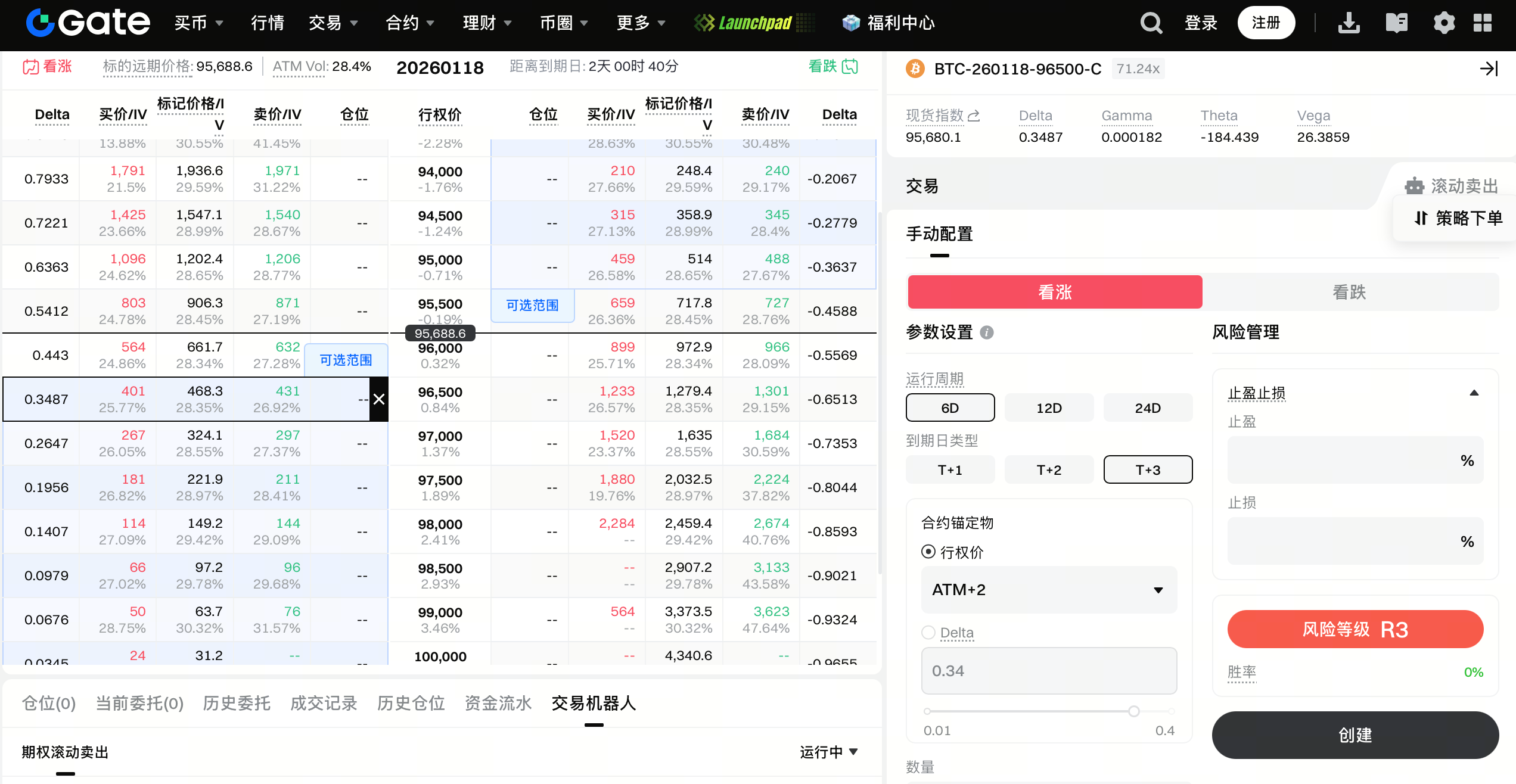
For markets expected to trade within a range and exhibit limited volatility, the short strangle is a common premium-earning strategy. To reduce manual effort and improve execution consistency, Gate offers a rolling option selling tool that helps users implement this strategy more efficiently.
With the rolling option selling tool, users can preset strike selection rules (such as Delta or Strike), choose expiration cycles (T+1, T+2, T+3), set the number of contracts to sell, and add optional take-profit/stop-loss conditions. The system will automatically sell call and put options each trading cycle and seamlessly roll into the next period upon expiration, enabling continuous execution of the short strangle strategy. The tool also provides clear risk indicators, margin estimates, and strategy pathway explanations, helping users manage risk while steadily earning option premiums. This is especially suitable for traders seeking long-term participation in range-bound markets and pursuing automated strategy execution.