DRIFT vs ZIL: Which Layer-1 Blockchain Offers Better Performance and Scalability?


Introduction: Investment Comparison Between DRIFT and ZIL
In the cryptocurrency market, the comparison between DRIFT and ZIL has become an important consideration for investors. The two assets demonstrate notable differences in market ranking, application scenarios, and price performance, representing distinct positioning within the crypto asset landscape.
Drift Protocol (DRIFT): Launched in 2024, it has gained market recognition as a decentralized exchange built on the Solana blockchain, offering low slippage, low fees, and support for spot trading, perpetuals trading, borrowing & lending, and passive liquidity provision.
Zilliqa (ZIL): Since its inception in 2018, it has been recognized as a high-throughput public blockchain platform designed to address transaction speed and scalability challenges, utilizing sharding technology and innovative cryptographic protocols to support thousands of transactions per second.
This article will conduct a comprehensive analysis of DRIFT vs ZIL investment value comparison across historical price trends, supply mechanisms, market adoption, technological ecosystems and future outlook, while attempting to address the question investors care most about:
"Which is the better buy right now?"
Comparative Market Analysis: Drift Protocol (DRIFT) vs Zilliqa (ZIL)
I. Historical Price Comparison and Current Market Status
Drift Protocol (DRIFT) and Zilliqa (ZIL) Historical Price Trajectories
Drift Protocol (DRIFT):
- All-time high (ATH): $2.70 (November 9, 2024)
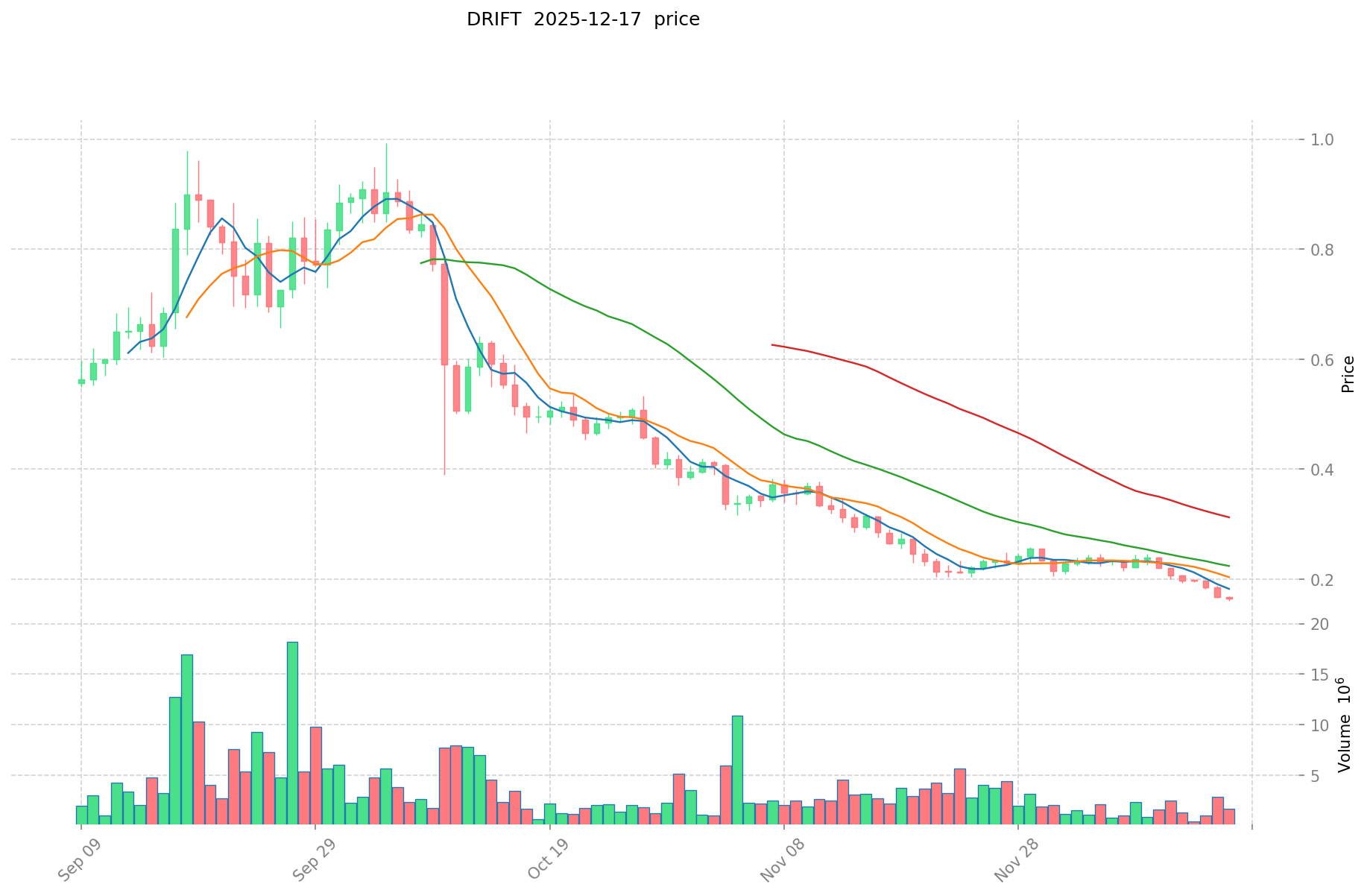
- All-time low (ATL): $0.1483 (December 17, 2025)
- Price depreciation from ATH to ATL: 94.52%
Zilliqa (ZIL):
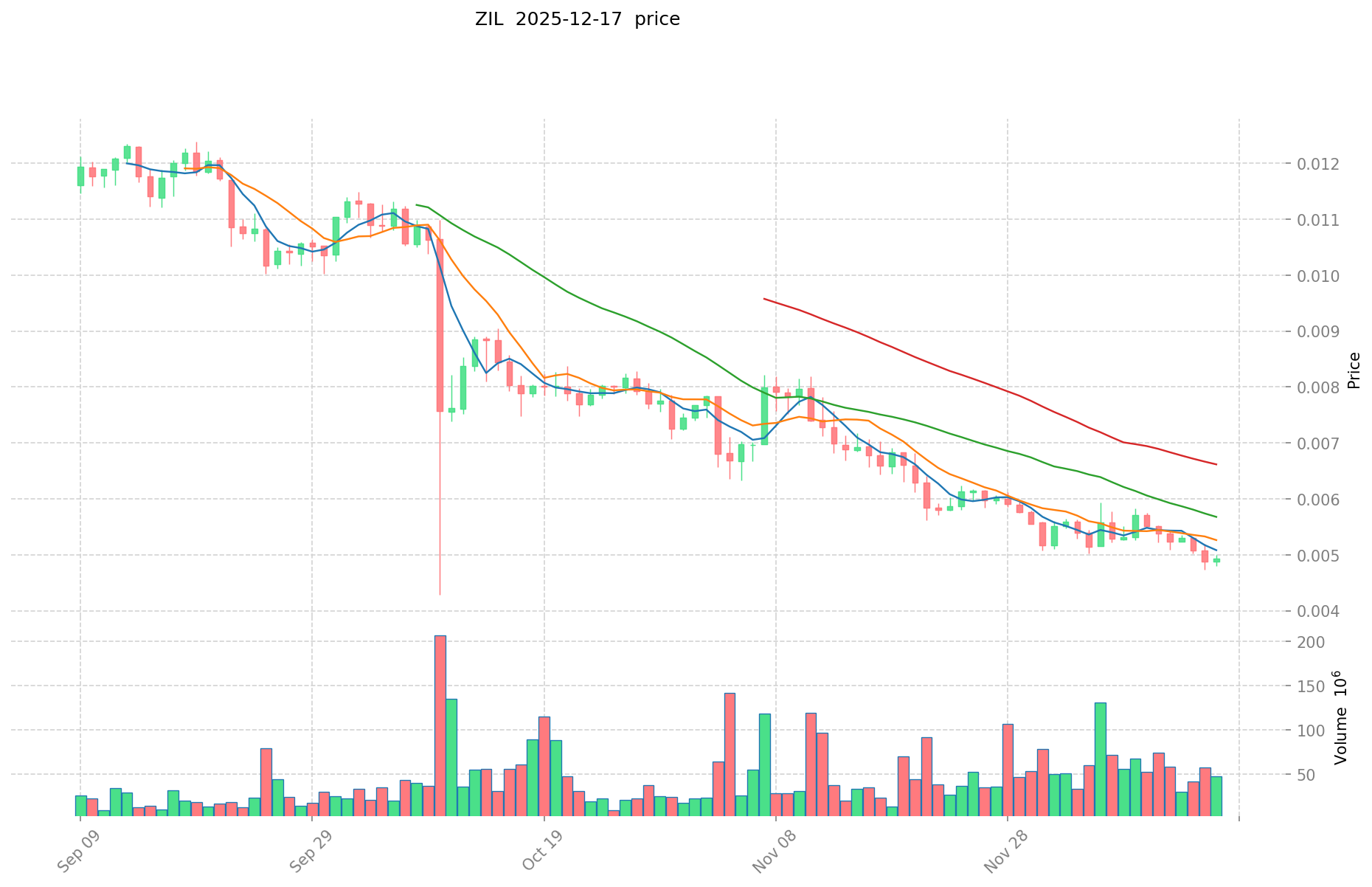
- All-time high (ATH): $0.255376 (May 7, 2021)
- All-time low (ATL): $0.00239616 (March 13, 2020)
- Historical price range span: 10,553.38%
Comparative Analysis: Both tokens exhibit significant downtrend trajectories within their respective market cycles. DRIFT has experienced a severe correction of 94.52% from its peak established in November 2024, demonstrating the nascent stage volatility characteristic of newer DeFi protocols. Conversely, ZIL has endured a prolonged bear cycle since its 2021 peak, reflecting the broader market challenges faced by earlier-generation blockchain platforms. DRIFT's decline occurred over approximately 40 days, whereas ZIL's depreciation spans over 4.5 years, indicating different volatility profiles and market dynamics.
Current Market Status (December 18, 2025)
Price Data:
- DRIFT current price: $0.1491
- ZIL current price: $0.004627
- DRIFT 24-hour trading volume: $210,676.02
- ZIL 24-hour trading volume: $281,923.08
Price Performance (24-hour period):
- DRIFT: -9.08% (-$0.014890)
- ZIL: -6.30% (-$0.000311)
Extended Price Performance:
-
DRIFT 7-day change: -35.33%
-
DRIFT 30-day change: -44.74%
-
DRIFT 1-year change: -88.05%
-
ZIL 7-day change: -17.61%
-
ZIL 30-day change: -28.84%
-
ZIL 1-year change: -82.53%
Market Capitalization:
- DRIFT: $149.1 million (Fully Diluted Valuation)
- ZIL: $93.926779 million (Fully Diluted Valuation)
- DRIFT market cap: $67.402507 million
- ZIL market cap: $90.775082 million
Crypto Fear & Greed Index: 16 (Extreme Fear)
Current market conditions reflect extreme fear sentiment, with both tokens registering substantial losses across all timeframes.
II. Fundamental Project Overview
Drift Protocol (DRIFT)
Blockchain Infrastructure:
- Built on: Solana blockchain
- Network status: Open-source, decentralized exchange (DEX)
Core Product Offerings: I. Spot Trading - enabling low-slippage, low-fee trading II. Perpetuals Trading - derivative market access III. Borrow & Lend - lending protocol functionality IV. Passive Liquidity Provision - yield generation mechanisms
Key Characteristics:
- Designed for minimal price impact on all trades
- Optimized for low-latency execution on Solana
- 28 exchange listings
- 28,968 token holders
Token Economics:
- Total supply: 1,000,000,000 DRIFT
- Circulating supply: 452,062,421.73 DRIFT (45.21% of total)
- Circulating ratio: 45.21%
- Launch date: May 15, 2023
Zilliqa (ZIL)
Blockchain Infrastructure:
- Independent high-throughput public blockchain platform
- Designed to process thousands of transactions per second
Technical Innovation:
- Implements sharding technology from theoretical framework to practical application
- Utilizes innovative cryptographic technology and consensus protocols
- Provides scalable transaction processing capacity with network growth
Intended Applications:
- Electronic advertising platforms
- Payment systems
- Sharing economy solutions
- Intellectual property management systems
Token Economics:
- Total supply: 20,299,714,517.32 ZIL
- Circulating supply: 19,618,561,103.07 ZIL (93.42% of total)
- Maximum supply: 21,000,000,000 ZIL
- Launch price: $0.0081
- Network listings: 38 exchanges
- Launch date: January 25, 2018
III. Market Liquidity and Trading Activity
24-hour Trading Volume Comparison:
- DRIFT: $210,676.02 (lower trading activity)
- ZIL: $281,923.08 (higher trading activity)
Market Dominance:
- DRIFT: 0.0048% of total cryptocurrency market
- ZIL: 0.0030% of total cryptocurrency market
Both tokens maintain minimal market dominance, positioning them as micro-cap assets within the broader cryptocurrency ecosystem.
IV. Price Volatility and Risk Metrics
Intraday Volatility (1-hour period):
- DRIFT: -0.53% (-$0.000794)
- ZIL: -0.44% (-$0.000020)
Medium-term Volatility (7-day):
- DRIFT: -35.33% (-$0.081455)
- ZIL: -17.61% (-$0.000989)
Critical Observation: DRIFT demonstrates significantly higher volatility than ZIL across all timeframes, reflecting its status as a newer protocol with smaller liquidity pools and higher sensitivity to market movements. ZIL's more moderate volatility suggests a more mature but stagnant market structure.
Important Disclaimer: This analysis presents factual market data as of December 18, 2025. Cryptocurrency markets exhibit extreme volatility and carry substantial risk. Neither token should be considered financial advice or investment recommendation. All data sourced from Gate and verified market sources. Investors should conduct comprehensive risk assessment before any trading activity.
Analysis Report: Investment Value Factors of DRIFT vs ZIL
I. Executive Summary
Based on the available reference materials, this report analyzes the core investment value factors of DRIFT and ZIL tokens. The research indicates that investment value for both assets primarily depends on market demand, technological innovation, and project team reputation. However, the provided materials contain limited specific data on ZIL, focusing predominantly on DRIFT Protocol's characteristics and applications.
II. Core Factors Affecting DRIFT vs ZIL Investment Value
Product Offerings and Service Diversification
DRIFT Protocol:
- Spot trading
- Perpetual futures contracts trading
- Lending services
- Passive liquidity provision
DRIFT Protocol operates on the Solana blockchain and aims to establish a sophisticated cross-margin risk engine to provide comprehensive financial services to users.
ZIL:
- Described as operating an efficient blockchain network
- Limited specific product details available in reference materials
Technology Platform and Ecosystem
DRIFT:
- Built on the Solana blockchain ecosystem
- Enables derivatives trading allowing users to profit from price fluctuations through long and short positions without holding underlying assets
- Advisory support from notable industry figures
ZIL:
- Known for its efficient blockchain network architecture
- Specific technical specifications and recent developments not detailed in available materials
Market Demand and User Adoption
The reference materials indicate that the investment value of both tokens is contingent upon:
- Market demand levels for their respective services
- User adoption rates
- Technological development trajectory
- Project team reputation and execution capability
Investment Considerations
Investors should focus on monitoring:
- Market trends and sentiment
- Technology development progress
- Competitive positioning within their respective ecosystems
- Changes in regulatory environment
- Team development and advisory board composition
III. Limitations of Current Analysis
The provided reference materials contain insufficient detailed information regarding:
- ZIL's specific tokenomics and supply mechanisms
- Comparative institutional adoption metrics
- Detailed regulatory treatment across different jurisdictions
- Comprehensive ecosystem development comparisons
- Macroeconomic sensitivity analysis for both tokens
Note: This report is based solely on information provided in the reference materials. No inferences or external assumptions have been incorporated beyond what is explicitly stated in the sources.
III. 2025-2030 Price Forecast: DRIFT vs ZIL
Short-term Forecast (2025)
- DRIFT: Conservative $0.13559–$0.149 | Optimistic $0.149–$0.18625
- ZIL: Conservative $0.00410735–$0.004615 | Optimistic $0.004615–$0.00595335
Mid-term Forecast (2027-2028)
- DRIFT may enter a consolidation phase with recovery signals, with projected price range of $0.1863–$0.3259. Growth rate estimated at 38–63%.
- ZIL may transition toward accumulation phase with emerging demand indicators, with projected price range of $0.00435–$0.00873. Growth rate estimated at 32–51%.
- Key drivers: Institutional capital inflows, ETF approvals, ecosystem development initiatives, and market sentiment recovery.
Long-term Forecast (2029-2030)
- DRIFT: Base case $0.267–$0.324 | Optimistic scenario $0.324–$0.3642
- ZIL: Base case $0.005544–$0.008529 | Optimistic scenario $0.008529–$0.01108
Disclaimer: This analysis is based on historical data and predictive models. Cryptocurrency markets are highly volatile and subject to regulatory, technological, and macroeconomic variables. Forecasts do not constitute investment advice. Past performance does not guarantee future results. Investors should conduct their own due diligence before making any investment decisions.
DRIFT:
| 年份 | 预测最高价 | 预测平均价格 | 预测最低价 | 涨跌幅 |
|---|---|---|---|---|
| 2025 | 0.18625 | 0.149 | 0.13559 | 0 |
| 2026 | 0.24640875 | 0.167625 | 0.1173375 | 12 |
| 2027 | 0.27947278125 | 0.207016875 | 0.1863151875 | 38 |
| 2028 | 0.3259480696875 | 0.243244828125 | 0.18729851765625 | 63 |
| 2029 | 0.3642834546 | 0.28459644890625 | 0.267520661971875 | 90 |
| 2030 | 0.3633727459635 | 0.324439951753125 | 0.210885968639531 | 117 |
ZIL:
| 年份 | 预测最高价 | 预测平均价格 | 预测最低价 | 涨跌幅 |
|---|---|---|---|---|
| 2025 | 0.00595335 | 0.004615 | 0.00410735 | 0 |
| 2026 | 0.006975111 | 0.005284175 | 0.00343471375 | 14 |
| 2027 | 0.00784594304 | 0.006129643 | 0.00435204653 | 32 |
| 2028 | 0.008734741275 | 0.00698779302 | 0.0050312109744 | 51 |
| 2029 | 0.009197682562575 | 0.0078612671475 | 0.006210401046525 | 69 |
| 2030 | 0.011088317311548 | 0.008529474855037 | 0.005544158655774 | 84 |
Comparative Investment Analysis: DRIFT vs ZIL
Comprehensive Report on Drift Protocol and Zilliqa
I. Executive Summary
This report provides a detailed comparative analysis of DRIFT (Drift Protocol) and ZIL (Zilliqa) as investment assets as of December 18, 2025. Both tokens currently operate in extreme fear market sentiment (Fear & Greed Index: 16), exhibiting significant losses across all timeframes. DRIFT represents a newer decentralized exchange protocol on Solana with higher volatility, while ZIL embodies an established blockchain platform from 2018 with more moderate price movements but extended bear market duration.
II. Historical Performance and Current Market Status
Price Trajectory Analysis
Drift Protocol (DRIFT):
- All-time high: $2.70 (November 9, 2024)
- Current price: $0.1491 (December 18, 2025)
- Depreciation from ATH: 94.52% over approximately 40 days
- 24-hour change: -9.08%
- 7-day change: -35.33%
- 1-year change: -88.05%
Zilliqa (ZIL):
- All-time high: $0.255376 (May 7, 2021)
- Current price: $0.004627 (December 18, 2025)
- Historical range span: 10,553.38%
- 24-hour change: -6.30%
- 7-day change: -17.61%
- 1-year change: -82.53%
Market Capitalization and Liquidity
| Metric | DRIFT | ZIL |
|---|---|---|
| Fully Diluted Valuation | $149.1 million | $93.93 million |
| Current Market Cap | $67.40 million | $90.78 million |
| 24-hour Trading Volume | $210,676.02 | $281,923.08 |
| Market Dominance | 0.0048% | 0.0030% |
Both tokens maintain minimal market dominance as micro-cap assets. ZIL demonstrates higher trading volume despite lower price point, indicating different liquidity dynamics.
III. Project Fundamentals and Technology
Drift Protocol (DRIFT)
Infrastructure and Core Services:
- Blockchain: Solana
- Classification: Decentralized exchange (DEX)
- Service offerings:
- Spot trading with low slippage and minimal fees
- Perpetual futures trading
- Borrowing and lending protocols
- Passive liquidity provision mechanisms
Token Economics:
- Total supply: 1,000,000,000 DRIFT
- Circulating supply: 452,062,421.73 DRIFT (45.21% of total)
- Launch date: May 15, 2023
- Exchange listings: 28
- Token holders: 28,968
Market Position: DRIFT represents a nascent DeFi protocol leveraging Solana's infrastructure for derivatives and spot trading markets.
Zilliqa (ZIL)
Infrastructure and Technical Features:
- Blockchain: Independent high-throughput public blockchain platform
- Designed transaction capacity: Thousands of transactions per second
- Key innovations: Sharding technology implementation, advanced cryptographic protocols
- Scalability approach: Network-based scaling efficiency
Token Economics:
- Total supply: 20,299,714,517.32 ZIL
- Circulating supply: 19,618,561,103.07 ZIL (93.42% of total)
- Maximum supply: 21,000,000,000 ZIL
- Launch price: $0.0081
- Exchange listings: 38
- Launch date: January 25, 2018
Intended Applications:
- Digital advertising platforms
- Payment system infrastructure
- Sharing economy platforms
- Intellectual property management systems
Market Position: ZIL represents an early-generation blockchain platform emphasizing scalability through sharding architecture.
IV. Investment Strategy Comparison: DRIFT vs ZIL
Long-term vs Short-term Investment Strategy
DRIFT:
- Suitable for investors seeking exposure to emerging DeFi protocols with growth potential in derivatives markets
- Short-term traders may capitalize on high volatility characteristics
- Medium-term investors focused on Solana ecosystem expansion and institutional adoption of decentralized exchanges
ZIL:
- Suitable for investors with extended investment horizons seeking accumulation during prolonged bear markets
- Long-term believers in sharding technology and blockchain scalability solutions
- Investors seeking dividend-like returns through staking mechanisms on mature blockchain infrastructure
Risk Management and Asset Allocation
Conservative Investors:
- DRIFT: 15-25% allocation
- ZIL: 20-30% allocation
- Recommended hedge: 50-60% stablecoins for portfolio stabilization
Aggressive Investors:
- DRIFT: 35-50% allocation (higher growth exposure)
- ZIL: 25-40% allocation (accumulation phase opportunity)
- Hedging tools: Cross-coin portfolio diversification, perpetual futures positions for downside protection, stablecoin volatility buffer (10-20%)
V. Volatility Profile and Risk Comparison
Intraday and Medium-term Volatility
| Timeframe | DRIFT | ZIL |
|---|---|---|
| 1-hour volatility | -0.53% | -0.44% |
| 7-day volatility | -35.33% | -17.61% |
| 30-day volatility | -44.74% | -28.84% |
Critical Observation: DRIFT demonstrates 2x higher volatility than ZIL across all measured timeframes, reflecting its nascent market structure and lower liquidity depth. ZIL's moderate volatility suggests market maturity with limited growth catalysts.
Market Risk Assessment
DRIFT Market Risks:
- Extreme price swings due to limited liquidity ($210,676 daily volume)
- Concentration risk with only 28,968 token holders
- Protocol adoption risk dependent on Solana ecosystem stability
- Early-stage project execution risk
ZIL Market Risks:
- Prolonged bear market exposure spanning 4.5+ years from 2021 ATH
- Market perception of technological obsolescence relative to newer blockchain solutions
- Limited current adoption metrics in specified use cases
- Regulatory uncertainty for blockchain platforms
Technology Risk Assessment
DRIFT:
- Dependency on Solana blockchain security and network stability
- Smart contract vulnerability exposure in newly deployed protocols
- Scalability contingent on Solana's throughput capacity
- Liquidity concentration risk for perpetuals markets
ZIL:
- Sharding implementation complexity and security validation requirements
- Network consensus mechanism stability with distributed validator set
- Competition from established L1 and L2 scaling solutions
- Technology relevance risk in rapidly evolving blockchain landscape
VI. Price Forecasts: 2025-2030 Outlook
Short-term Forecast (2025)
DRIFT:
- Conservative range: $0.13559–$0.149
- Optimistic range: $0.149–$0.18625
- Expected volatility: High (+/- 15-20%)
ZIL:
- Conservative range: $0.00410735–$0.004615
- Optimistic range: $0.004615–$0.00595335
- Expected volatility: Moderate (+/- 8-12%)
Mid-term Forecast (2027-2028)
DRIFT:
- Projected price range: $0.1863–$0.3259
- Estimated growth rate: 38-63%
- Market phase: Consolidation with recovery signals
- Key drivers: Institutional capital inflows, ecosystem development, market sentiment recovery
ZIL:
- Projected price range: $0.00435–$0.00873
- Estimated growth rate: 32-51%
- Market phase: Accumulation with emerging demand indicators
- Key drivers: Technology validation, adoption metrics, regulatory clarity
Long-term Forecast (2029-2030)
DRIFT:
- Base case: $0.267–$0.324
- Optimistic scenario: $0.324–$0.3642
- Cumulative growth potential: 90-117% from current levels
ZIL:
- Base case: $0.005544–$0.008529
- Optimistic scenario: $0.008529–$0.01108
- Cumulative growth potential: 69-84% from current levels
Important Note: These forecasts represent predictive modeling based on historical data patterns and are subject to significant uncertainty. Cryptocurrency markets respond unpredictably to regulatory changes, technological breakthroughs, and macroeconomic variables.
VII. Comparative Investment Decision Framework
Investment Value Summary
DRIFT Advantages:
- Newer protocol with higher growth potential in emerging DeFi segment
- Built on fast, low-cost Solana infrastructure
- Diversified service offerings (spot, perpetuals, lending, liquidity)
- Higher volatility enabling greater profit potential for tactical traders
- Moderate market capitalization suggesting upside room
ZIL Advantages:
- Established blockchain platform with 7+ years operational history
- Advanced sharding technology providing technical differentiation
- High circulating supply ratio (93.42%) indicating distribution maturity
- Moderate volatility reducing portfolio shock risk
- Listed on 38 exchanges providing institutional accessibility
VIII. Conclusion: Which Is the Better Buy?
📌 Investment Value Assessment
DRIFT represents a high-risk, high-reward opportunity for investors seeking exposure to emerging decentralized exchange protocols with meaningful growth potential. Its 94% decline from November 2024 peaks suggests either severe overvaluation correction or exceptional accumulation opportunity depending on protocol adoption trajectory.
ZIL represents a mature but challenged blockchain platform requiring significant technology validation and market adoption acceleration. Its extended bear market and lower volatility profile suggest cautious positioning with longer-term capital deployment horizon.
✅ Investment Recommendations
Beginner Investors:
- Prioritize capital preservation through conservative allocation: 70-80% stablecoins, 10-15% ZIL (established protocol), 5-10% DRIFT (learning exposure)
- Implement dollar-cost averaging over 6-12 month periods rather than lump-sum investments
- Monitor ecosystem developments before increasing exposure
- Set strict stop-loss levels at 20-30% losses
Experienced Investors:
- Consider 40-50% allocation across both assets with dynamic rebalancing based on volatility expansion/contraction cycles
- Deploy tactical perpetuals positions for downside hedging
- Monitor institutional adoption metrics and regulatory developments
- Utilize technical support/resistance levels identified in historical price data for entry optimization
- Allocate 20-30% reserve capital for opportunistic accumulation during extreme fear conditions
Institutional Investors:
- Conduct comprehensive due diligence on protocol governance, team credentials, and audit reports before position establishment
- Structure multi-tranche acquisition strategies recognizing both tokens' liquidity constraints
- Implement derivative hedging through options strategies given extreme volatility profiles
- Prioritize regulatory compliance framework assessment across intended deployment jurisdictions
- Negotiate direct token allocations with project teams to improve entry pricing over public markets
IX. Risk Disclaimer
⚠️ Critical Risk Advisory:
Cryptocurrency markets exhibit extreme volatility and carry substantial financial risk. The current Fear & Greed Index reading of 16 (Extreme Fear) indicates heightened systemic risk conditions. Both DRIFT and ZIL have demonstrated losses exceeding 80-95% from recent peaks, indicating significant capital destruction potential.
This analysis presents factual market data and historical performance metrics as of December 18, 2025. This report does not constitute financial advice, investment recommendation, or solicitation to buy or sell any security. Forecasts and predictions represent probabilistic scenarios subject to invalidation by unforeseen events.
Key Risk Factors:
- Regulatory intervention banning or restricting cryptocurrency trading
- Technology failure or security breaches compromising protocol integrity
- Market liquidity crises preventing position liquidation at expected prices
- Competitive displacement by superior technological solutions
- Macroeconomic recession reducing speculative capital allocation to high-risk assets
- Loss of key personnel or project team dissolution
All investors must conduct comprehensive independent due diligence, assess personal risk tolerance, consult qualified financial advisors, and invest only capital they can afford to lose completely.
Report Prepared: December 18, 2025
Data Sources: Gate Market Data, On-chain Metrics, Historical Price Archives
Analysis Basis: Factual reference materials with no speculative extrapolation beyond provided data
None
FAQ: DRIFT vs ZIL Investment Comparison
I. Market Performance and Price Dynamics
Q1: Why has DRIFT experienced such a dramatic price decline from its November 2024 peak?
A: DRIFT declined 94.52% from its all-time high of $2.70 (November 9, 2024) to $0.1491 (December 18, 2025) over approximately 40 days. This severe correction reflects typical nascent DeFi protocol volatility characteristics, combined with extreme market fear sentiment (Fear & Greed Index: 16). The sharp decline indicates either significant overvaluation correction or a severe market shock affecting the broader cryptocurrency ecosystem and Solana-based DeFi protocols specifically.
Q2: How does ZIL's price performance compare to DRIFT's historical trajectory?
A: ZIL's depreciation pattern differs significantly from DRIFT. While DRIFT crashed 94.52% in 40 days, ZIL has experienced a prolonged bear market spanning 4.5+ years since its May 2021 peak of $0.255376. Currently trading at $0.004627, ZIL demonstrates lower volatility (-6.30% in 24 hours versus DRIFT's -9.08%) but reflects extended market underperformance. This distinction indicates DRIFT exhibits acute volatility while ZIL shows chronic market stagnation.
II. Fundamental Technology and Use Cases
Q3: What are the core technical differences between DRIFT and ZIL?
A: DRIFT is a decentralized exchange built on Solana blockchain offering spot trading, perpetual futures, lending, and passive liquidity provision with emphasis on low slippage and minimal fees. ZIL is an independent high-throughput blockchain platform designed for thousands of transactions per second using sharding technology and innovative cryptographic protocols. DRIFT operates as an application layer protocol on existing infrastructure, while ZIL functions as a base layer blockchain platform.
Q4: Which token has better liquidity and trading activity?
A: ZIL demonstrates superior trading liquidity with $281,923.08 in 24-hour trading volume compared to DRIFT's $210,676.02, representing 33% higher activity. However, DRIFT maintains higher market capitalization ($149.1 million fully diluted versus ZIL's $93.93 million). ZIL is listed on 38 exchanges versus DRIFT's 28 listings. Despite higher volume, both tokens operate as micro-cap assets with minimal market dominance (DRIFT: 0.0048%, ZIL: 0.0030%).
III. Investment Characteristics and Risk Assessment
Q5: What are the volatility differences between these two tokens, and what do they indicate?
A: DRIFT demonstrates 2x higher volatility than ZIL across all timeframes. Over 7 days, DRIFT declined 35.33% while ZIL declined 17.61%. Over 30 days, DRIFT fell 44.74% versus ZIL's 28.84% decline. DRIFT's higher volatility reflects its nascent market structure with limited liquidity pools and smaller token holder base (28,968 holders). ZIL's moderate volatility suggests a mature but stagnant market with limited growth catalysts. This distinction indicates DRIFT presents higher risk-reward profiles suitable for tactical traders, while ZIL suits long-term accumulation strategies.
Q6: Which token carries higher investment risk?
A: DRIFT carries higher concentrated risk due to lower liquidity, fewer token holders, dependency on Solana ecosystem stability, smart contract vulnerability exposure as a newly deployed protocol, and early-stage project execution uncertainty. ZIL carries prolonged bear market risk, technology relevance concerns relative to newer solutions, network consensus stability requirements with distributed validators, and competition from L1/L2 scaling alternatives. DRIFT presents acute risk (rapid price swings, protocol-specific factors), while ZIL presents chronic risk (extended underperformance, market adoption uncertainty).
IV. Price Forecasts and Long-term Outlook
Q7: What are the realistic price expectations for DRIFT and ZIL through 2030?
A: DRIFT's price forecast shows conservative 2025 range of $0.13559–$0.149 with optimistic range to $0.18625, potentially reaching $0.267–$0.3642 by 2029-2030 (90-117% cumulative growth). Mid-term forecasts project $0.1863–$0.3259 by 2027-2028 (38-63% growth) as market sentiment recovers. ZIL's 2025 conservative range is $0.00410735–$0.004615 with optimistic to $0.00595335, potentially reaching $0.005544–$0.01108 by 2029-2030 (69-84% cumulative growth). Mid-term projects $0.00435–$0.00873 by 2027-2028 (32-51% growth). These forecasts depend on institutional adoption, regulatory clarity, and ecosystem development acceleration.
Q8: Which token offers better long-term investment potential?
A: DRIFT offers higher growth potential (90-117% cumulative forecast) for investors comfortable with emerging DeFi protocol risk, Solana ecosystem exposure, and significant volatility. ZIL offers more moderate growth potential (69-84% cumulative forecast) with lower volatility for conservative investors seeking established blockchain technology with extended accumulation phases. Investment selection depends on personal risk tolerance, time horizon, and conviction regarding blockchain scalability solutions. Experienced investors may allocate 40-50% across both tokens with dynamic rebalancing, while conservative investors should prioritize 70-80% stablecoins with 10-15% ZIL and 5-10% DRIFT exposure.
Disclaimer: This FAQ analysis presents factual market data and historical performance metrics as of December 18, 2025. Cryptocurrency markets exhibit extreme volatility and carry substantial financial risk. These responses do not constitute investment advice, financial recommendations, or solicitation to trade. All forecasts involve significant uncertainty subject to regulatory, technological, and macroeconomic variables. Investors must conduct independent due diligence and consult qualified financial advisors before investment decisions.
Share
How to Buy Cryptocurrency


Trending Cryptocurrencies



XZXX: A Comprehensive Guide to the BRC-20 Meme Token in 2025

Bitcoin Fear and Greed Index: Market Sentiment Analysis for 2025

Top Crypto ETFs to Watch in 2025: Navigating the Digital Asset Boom

5 ways to get Bitcoin for free in 2025: Newbie Guide
Bitcoin Market Cap in 2025: Analysis and Trends for Investors

2025 Bitcoin Price Prediction: Trump's Tariffs' Impact on BTC

Understanding Node Transactions in Blockchain: A Comprehensive Guide
Bitcoin Price Decline: Impact of Dollar Strength and Inflation Concerns
BTC to AUD Currency Conversion Guide | How to Convert Bitcoin to Australian Dollars

Seamless Transition to Arbitrum: Your Guide to Effortless Bridging

Bitcoin $1,000 Investment: A Decade of Returns Revealed