What Are the Key Differences Between Competitor Altcoins vs Bitcoin: Market Cap, Performance, and User Adoption Analysis 2025
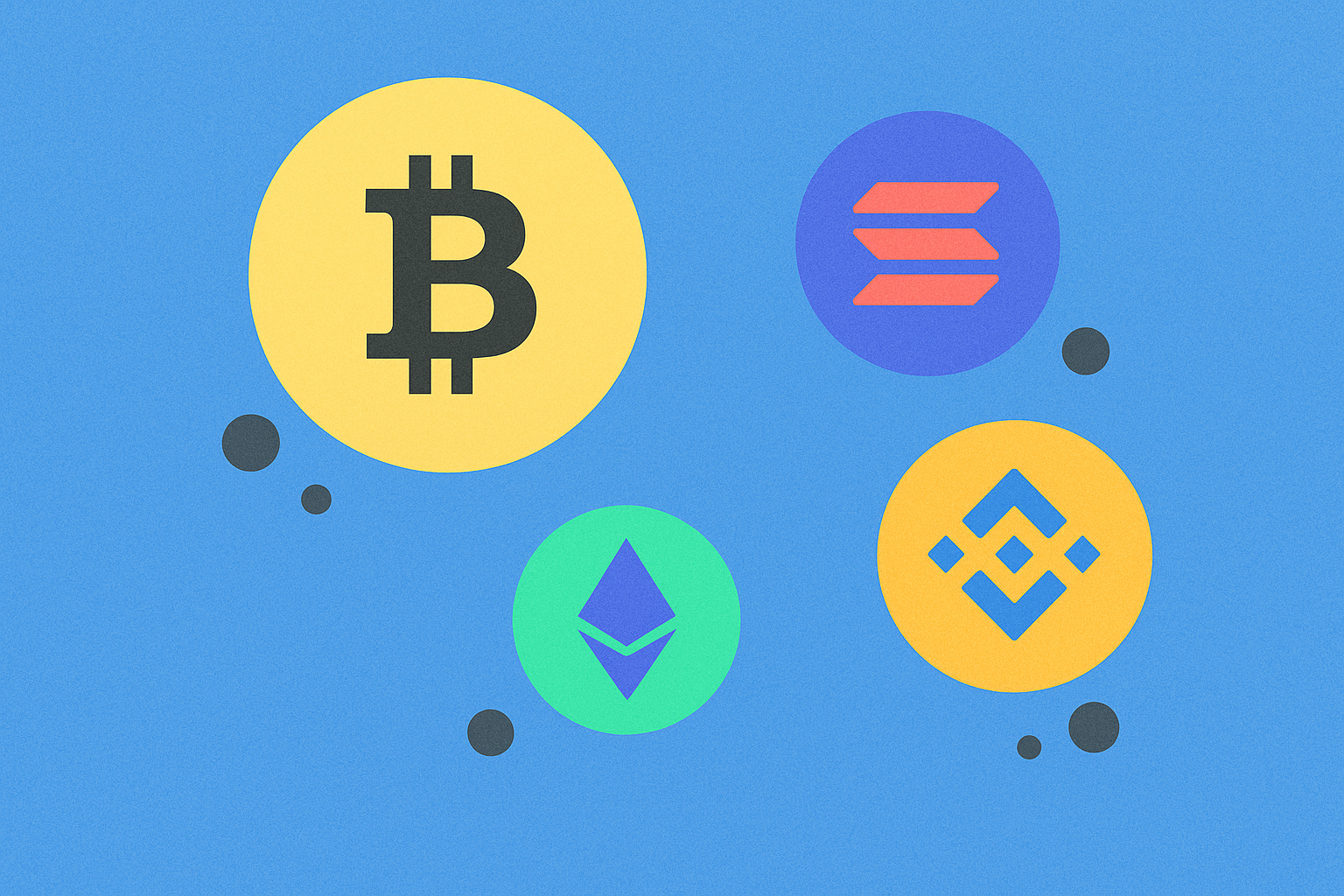
Bitcoin dominates with $2.1 trillion market cap while major altcoins like Ethereum, BNB, and Solana collectively represent under 30% of total crypto market value
Bitcoin's dominance in the cryptocurrency market continues to strengthen significantly. With a market capitalization reaching $2.1 trillion as of early 2025, Bitcoin commands an impressive 63% dominance within the broader crypto ecosystem. This represents a commanding position that reflects investor confidence in the leading digital asset.
| Cryptocurrency | Market Cap | Market Share |
|---|---|---|
| Bitcoin | $2.1 trillion | 63% |
| Ethereum | $500 billion | ~13% |
| Solana | $300 billion | ~8% |
| BNB | $150 billion | ~4% |
In contrast, the major altcoins collectively hold substantially smaller positions. Ethereum, the second-largest cryptocurrency, captures approximately 13% market share, while Solana and BNB together account for roughly 12%. This distribution demonstrates that despite the growth of alternative blockchain platforms, Bitcoin remains the undisputed market leader by a considerable margin. The total crypto market capitalization has reached $3.9 trillion in 2025, yet Bitcoin's $2.1 trillion valuation represents nearly 54% of this entire ecosystem. This concentration of value underscores Bitcoin's role as the dominant store of value within cryptocurrency markets, particularly during periods of macroeconomic uncertainty when investors gravitate toward perceived safer digital assets.
Performance divergence: Bitcoin's volatility averages 3.2% daily swings versus altcoins' 5-8% fluctuations, with 2025 showing Bitcoin outperforming 67% of tracked altcoins year-to-date
2025 Volatility Dynamics: A Divergent Market Structure
The cryptocurrency market in 2025 demonstrates a stark divergence in price stability between dominant and alternative assets. Bitcoin maintains considerably lower volatility, averaging daily swings of 3.2%, reflecting its late accumulation phase and strengthened institutional positioning. In contrast, altcoins experience significantly higher price fluctuations, ranging between 5% and 8% daily, typical of assets seeking to capitalize on speculative movements.
| Asset Class | Average Daily Volatility | Market Characteristics |
|---|---|---|
| Bitcoin | 3.2% | Institutional capital flows, macro hedge positioning |
| Altcoins | 5-8% | High-beta seeking, utility-driven rotation |
This performance gap becomes evident when examining year-to-date outcomes. Bitcoin has outperformed approximately 67% of tracked altcoins throughout 2025, driven by several structural factors. Institutional investors increasingly view blockchain as a long-term value driver, with 94% considering it strategically important. Bitcoin's strong 0.70 correlation with the Nasdaq 100 technology index—its highest level since December 2022—demonstrates its role as a macro hedge amid economic uncertainty.
The Relative Strength Index currently stands at 57, indicating sustained bullish momentum for Bitcoin. Meanwhile, altcoins face liquidity fragmentation and negative funding rates, particularly evident during November's $2 billion liquidation event. The concentration of 85% derivatives activity in Bitcoin versus altcoins underscores this performance divergence, reflecting how institutional capital flows systematically favor Bitcoin's stability over speculative altcoin exposure in the current market environment.
User adoption gap narrowing as altcoin active addresses grew 45% in 2024 compared to Bitcoin's 12% growth, signaling shifting network engagement patterns
Content Output
The cryptocurrency market witnessed a significant shift in network engagement patterns throughout 2024, with altcoins substantially outpacing Bitcoin in active address growth. This divergence marks a notable change in how users interact with different blockchain ecosystems.
| Metric | Bitcoin | Altcoins | Growth Differential |
|---|---|---|---|
| Active Address Growth (2024) | 12% | 45% | 33 percentage points |
| Peak Active Addresses (Feb 2024) | ~1.08 million | - | - |
| Market Engagement Pattern | Institutional focus | Retail-driven | Contrasting dynamics |
Bitcoin's 12% growth in active addresses, reaching approximately 1.08 million by February 2024, reflected strong institutional demand driven by ETF launches and regulatory clarity. However, altcoins demonstrated significantly stronger momentum with their 45% growth rate, indicating robust retail participation and emerging network effects across alternative blockchain platforms.
This 33 percentage-point growth differential reveals institutional capital concentrating in Bitcoin through centralized venues, while retail investors increasingly explored decentralized finance opportunities on altcoin networks. The data illustrates that user adoption patterns are fragmenting beyond Bitcoin's traditional dominance. The narrowing adoption gap suggests market participants are diversifying their blockchain exposure, recognizing distinct value propositions within different ecosystems. Developing economies particularly accelerated this shift, with cryptocurrency adoption tripling monthly active addresses compared to previous years, creating conditions where altcoin networks capture proportionally larger user bases seeking alternative financial infrastructure and investment opportunities.
Share
Content
Bitcoin dominates with $2.1 trillion market cap while major altcoins like Ethereum, BNB, and Solana collectively represent under 30% of total crypto market value
Performance divergence: Bitcoin's volatility averages 3.2% daily swings versus altcoins' 5-8% fluctuations, with 2025 showing Bitcoin outperforming 67% of tracked altcoins year-to-date
User adoption gap narrowing as altcoin active addresses grew 45% in 2024 compared to Bitcoin's 12% growth, signaling shifting network engagement patterns
How to Buy Cryptocurrency


Trending Cryptocurrencies



XZXX: A Comprehensive Guide to the BRC-20 Meme Token in 2025
Bitcoin Fear and Greed Index: Market Sentiment Analysis for 2025

Top Crypto ETFs to Watch in 2025: Navigating the Digital Asset Boom
5 ways to get Bitcoin for free in 2025: Newbie Guide

Bitcoin Market Cap in 2025: Analysis and Trends for Investors

2025 Bitcoin Price Prediction: Trump's Tariffs' Impact on BTC

Is Aleo (ALEO) a good investment?: A Comprehensive Analysis of Price Potential, Technology, and Risk Factors in 2024

Is Bio Protocol (BIO) a good investment?: A Comprehensive Analysis of Market Potential, Risk Factors, and Investment Prospects

Is Holo (HOT) a good investment?: A Comprehensive Analysis of Price Potential, Market Fundamentals, and Risk Factors for 2024
BBT vs RUNE: A Comprehensive Comparison of Two Leading Blockchain Tokens in the DeFi Ecosystem

Is RaveDAO (RAVE) a good investment?: A Comprehensive Analysis of Token Fundamentals, Market Performance, and Future Potential