In blockchain gaming, users typically focus on sources of return, asset circulation, and token value. AXS is the crucial link connecting gameplay and the economic framework. As blockchain game models evolve, a single token can no longer support complex ecosystems, so Axie Infinity implements a dual-token mechanism for balance.
This issue generally centers on three aspects: token functionality, economic structure, and the dual-token model. Together, these define AXS’s central role in the game economy.
What Is the AXS Token
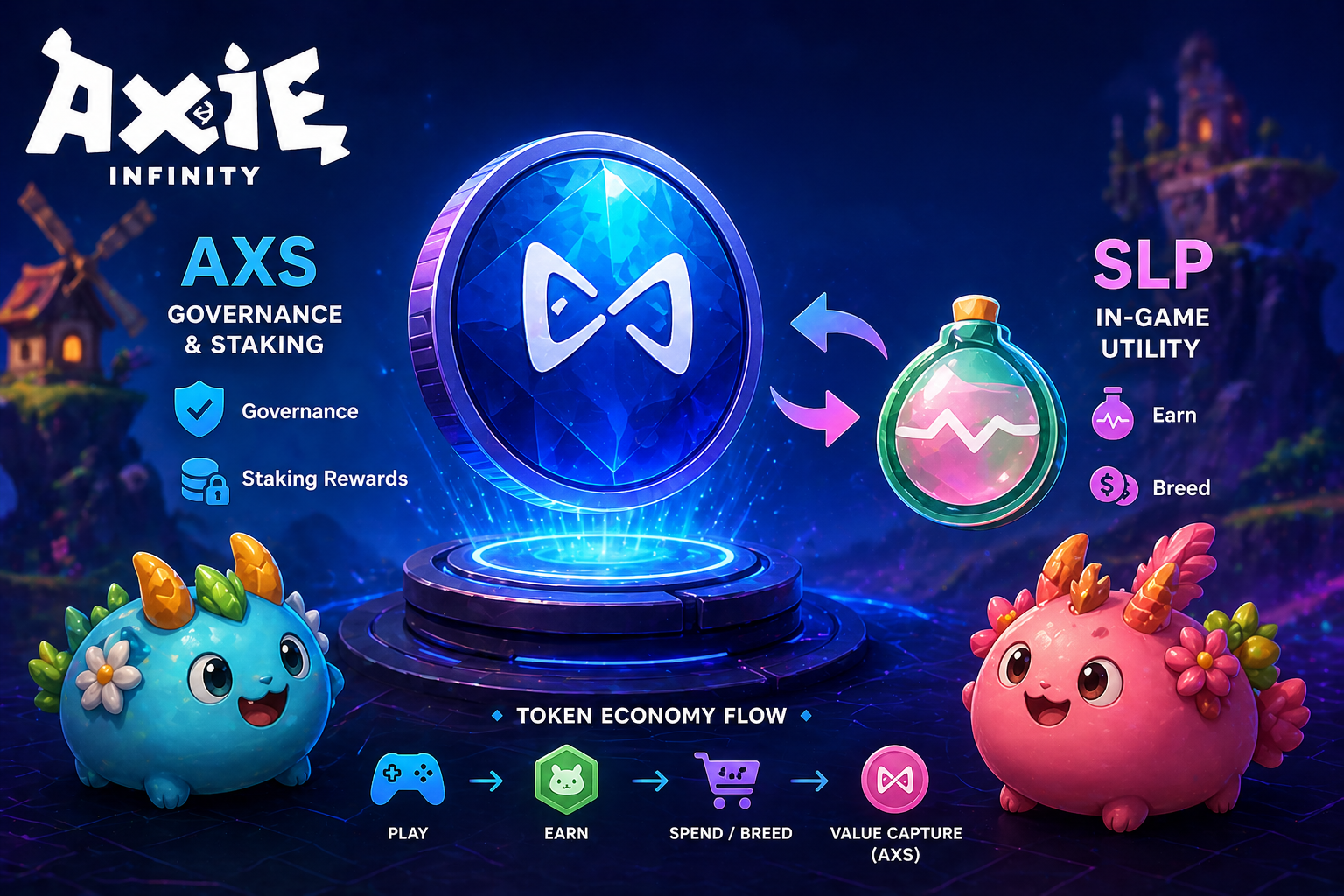
AXS is the governance and value capture token within the Axie Infinity ecosystem. Its core utility lies in enabling holders to participate in the game’s economic system through both holding and staking.
Essentially, AXS does not serve as a daily in-game spending token. Instead, it functions as an “upper-layer value token,” capturing returns driven by ecosystem growth. The total supply of AXS is capped at 270,000,000, released gradually through a long-term emission schedule.
The main allocation of AXS is as follows:
| Allocation Category |
Percentage |
| Rewards and Game Incentives |
About 29% |
| Team and Advisors |
About 21% |
| Private and Public Sale |
About 20% |
| Ecosystem Fund |
About 8% |
| Community and Staking Rewards |
About 7% |
| Reserve and Others |
About 15% |
This allocation strategy relies on long-term vesting to prevent short-term liquidity shocks and support sustainable ecosystem growth.
What Are the Core Functions of AXS
AXS’s core functions are governance, value capture, and ecosystem incentives.
In practice, AXS is not intended for frequent in-game transactions. Rather, it is the primary asset for system control and revenue sharing. Holders can participate in governance, such as protocol upgrades and parameter adjustments. They can also stake AXS to earn rewards, aligning long-term users with ecosystem growth.
This design positions AXS as an “equity-like token,” with its value primarily driven by ecosystem scale and revenue, rather than a single use case.
AXS’s Role in the Game Economy
AXS’s primary roles in the game economy are value feedback and incentive distribution.
The core mechanism is that in-game economic activities ultimately flow back to AXS holders. For example, fees from purchasing NFT assets or breeding are partially included as ecosystem revenue.
The process is as follows: players engage with the game and spend within the ecosystem. These expenditures are collected via fees, a portion of which is distributed as rewards to stakers. Ultimately, AXS holders receive returns through staking.
This structure makes AXS the key hub connecting in-game activity and value distribution, enhancing the sustainability of the entire economic system.
How Is AXS Used for Staking and Governance
Staking is a core mechanism for value capture in AXS.
Staking AXS means locking tokens within the network to earn rewards and governance rights. Users deposit AXS into staking contracts, and the system distributes rewards based on staking ratios. Stakers also gain voting rights for governance. Rewards are paid out in AXS.
The staking mechanism features two key elements:
- Locked tokens reduce circulating supply
- Rewards incentivize long-term holding
This approach stabilizes the token price through “locked liquidity” and increases user engagement via governance participation.
How AXS Circulates in the Ecosystem
AXS’s circulation is clearly differentiated from the SLP game token, which is fundamental to the dual-token model.
AXS is responsible for value storage and governance, while SLP handles daily consumption and issuance. Players earn SLP through gameplay, which is then used for breeding or trading. Some economic activities generate fees that affect the AXS system. Finally, AXS is distributed back to holders through staking and reward mechanisms.
| Dimension |
AXS |
SLP |
| Role |
Governance and Value Capture |
In-Game Consumption Token |
| Usage Frequency |
Low |
High |
| Acquisition Method |
Purchase / Staking Rewards |
In-Game Output |
| Economic Role |
Upper-Layer Value |
Medium of Circulation |
| Inflation Mechanism |
Capped Supply |
Dynamic Inflation |
This dual-token structure reduces inflationary pressure on a single token and enhances economic stability.
How the AXS Economic Model Impacts Game Development
The AXS economic model directly affects user growth and ecosystem stability in Axie Infinity.
The token model determines player returns, asset prices, and participation incentives. Rewards attract new players, token circulation drives NFT trading, and staking stabilizes supply. This creates a closed ecosystem loop.
Key impacts include:
- Excessive inflation reduces player returns
- Insufficient incentives decrease participation
- The dual-token structure helps balance supply and demand
Ultimately, the model depends on a dynamic balance between supply-demand regulation and user behavior.
Summary
As the core token of Axie Infinity, AXS’s value lies in governance rights, staking returns, and ecosystem value capture. The dual-token system with SLP separates value storage from circulation, enhancing economic stability. The capped supply and allocation mechanisms further shape long-term supply-demand dynamics and ecosystem development.
FAQ
What Is the Main Use of the AXS Token
AXS is primarily used for governance, earning rewards through staking, and capturing value generated by the game ecosystem.
What Is the Difference Between AXS and SLP
AXS is a governance and value token, while SLP is used for in-game spending and issuance. Their functions are distinct.
What Is the Total Supply of AXS
The total supply of AXS is 270 million, distributed to the market through a long-term emission schedule.
Can You Earn Money with AXS
AXS is not directly earned through gameplay, but holders can earn returns through staking or ecosystem growth.
What Are the Advantages of the Dual-Token Model
The dual-token model separates value storage from circulation, reducing inflation and enhancing system stability.