Speculation that Bitcoin “whales” are undergoing a large-scale reaccumulation phase has been overstated, indicating that the structure of the digital asset market has not undergone significant changes, according to onchain data from CryptoQuant.
Julio Moreno, Head of Research at CryptoQuant, stated that the common view that large investors are actively accumulating Bitcoin is actually misleading. Most publicly available “whale accumulation” data is influenced by internal exchange activities and does not accurately reflect actual investor behavior.
In reality, cryptocurrency exchanges frequently consolidate assets from many small wallets into larger wallets to facilitate operations and comply with regulations. This process artificially increases the number of wallets holding large balances, causing onchain monitoring systems to mistakenly interpret this as whale accumulation.
When removing exchange-related noise, the data shows that large investors still tend to distribute Bitcoin rather than accumulate it, Moreno said.
As a result, the total holdings of whales continue to decline. Even holdings at addresses with 100 to 1,000 BTC are decreasing, reflecting a continuous withdrawal trend from exchange-traded funds (ETFs).
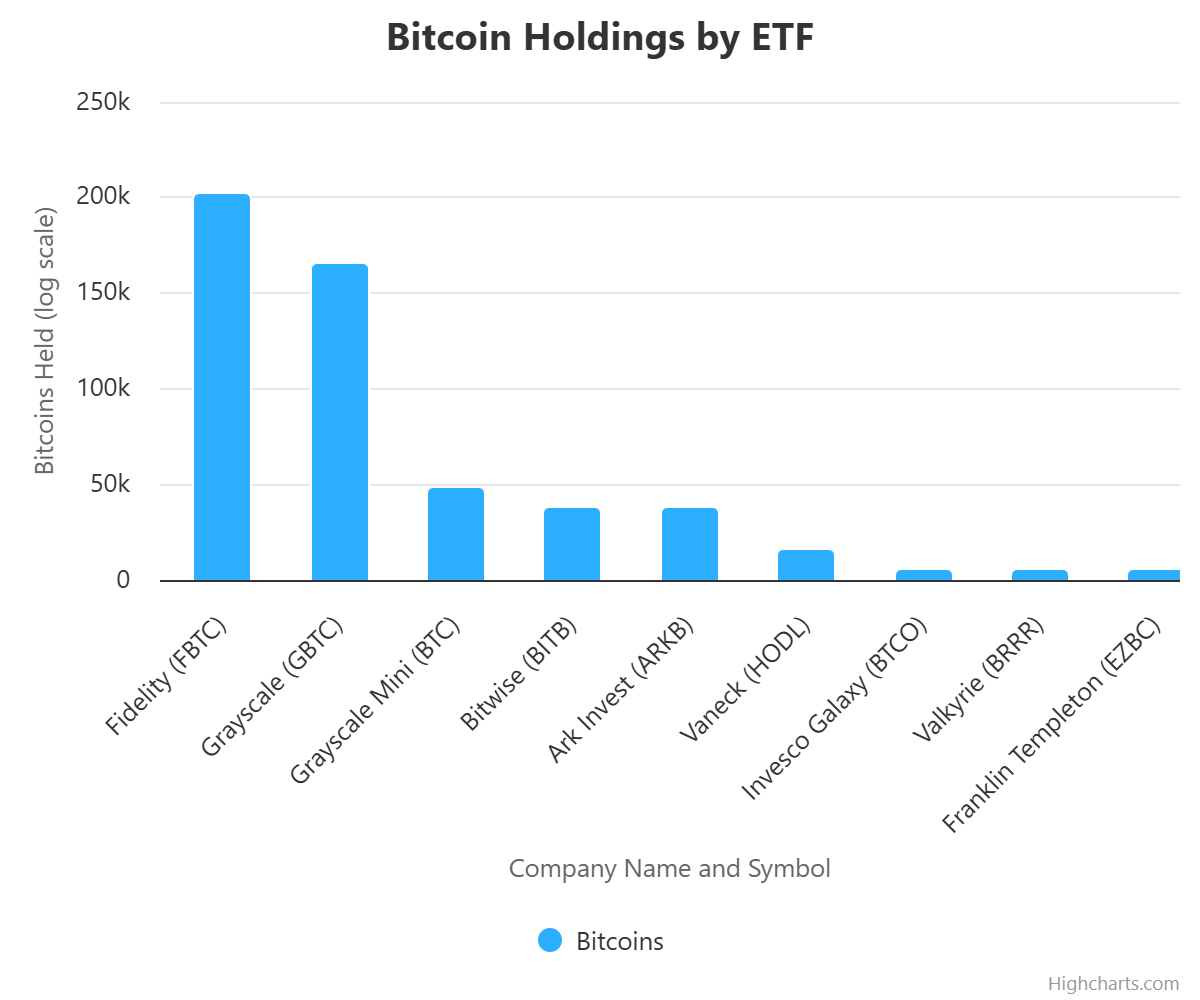 US-based spot Bitcoin ETFs hold nearly 1.3 million BTC, accounting for about 6.2% of the total Bitcoin supply | Source: BitboThis information is particularly important because Bitcoin whales have a significant influence on the market; large-volume transactions often cause sharp price fluctuations and periods of volatility. However, the market structure has shifted since the beginning of 2024, when US spot Bitcoin ETFs emerged and became new major investors in this digital asset.
Bright Spot: Long-term Holders Increasing Accumulation
While debates about whether Bitcoin whales are truly reaccumulating continue, other onchain data shows a positive development among long-term investors.
Matthew Sigel, Head of Digital Asset Research at VanEck, said that in the past 30 days, long-term Bitcoin investors have become net accumulators after their largest sell-off since 2019.
This shift indicates that the recent selling pressure on Bitcoin is easing, at least in the short term.
Although Bitcoin’s price has not yet shown a sustainable recovery, it has avoided falling below the $80,000 level like in November. As of the time of writing, Bitcoin is trading at over $90,000.
Mr. Giáo
Disclaimer: The information on this page may come from third parties and does not represent the views or opinions of Gate. The content displayed on this page is for reference only and does not constitute any financial, investment, or legal advice. Gate does not guarantee the accuracy or completeness of the information and shall not be liable for any losses arising from the use of this information. Virtual asset investments carry high risks and are subject to significant price volatility. You may lose all of your invested principal. Please fully understand the relevant risks and make prudent decisions based on your own financial situation and risk tolerance. For details, please refer to
Disclaimer.
Related Articles
'Bitcoin ETF Performance Pales Next to Gold': Mike McGlone - U.Today
Mike McGlone, a Bloomberg strategist, argues that Bitcoin ETFs may not drive long-term growth for Bitcoin, which has underperformed compared to gold. Despite recent gains, Bitcoin's performance seems capped, suggesting a potential peak in crypto enthusiasm.
UToday2h ago
Nunchuk Launches Open-Source Bitcoin Tools for AI Agents With 'Bounded Authority'
In brief
Nunchuk released two open-source tools designed to let AI agents interact with Bitcoin wallets under strict limits.
The system uses shared wallets and approval policies so agents cannot spend funds beyond defined rules.
The tools aim to support automated financial tasks while
Decrypt3h ago
The U.S. government transferred 2.44 BTC to a certain CEX, worth about $177k
Gate News message. On April 10, according to Lookonchain monitoring, the U.S. government (funds seized involving Glenn Olivio) today deposited 2.44 BTC to a CEX, worth approximately $177k.
GateNews3h ago
BlackRock withdrew 2,700 BTC and 30,000 ETH from a certain CEX.
Gate News, April 10, according to Onchain Lens monitoring, BlackRock withdrew 2,700 BTC (worth $196.87 million) and 30,000 ETH (worth $67.42 million) from a certain CEX.
GateNews3h ago
Bhutan’s Bitcoin reserves are down by more than 70%, with the sovereign wealth fund DHI frequently transferring assets, drawing attention
The Royal Government of Bhutan recently transferred approximately $18 million worth of Bitcoin. Its holdings have decreased from about 13,000 BTC in 2024 to 3,774 BTC, a reduction of more than 70%. The assets are managed by Druk Holding, and the country uses hydropower to mine Bitcoin. The recent transfers may be related to infrastructure financing needs. Bhutan still remains one of the world’s major Bitcoin-holding countries.
ChainNewsAbmedia4h ago
Tom Lee: The market is showing signs of forming a bottom; Ethereum, BMNR, and Bitcoin are recommended.
Gate News message, April 10, renowned market analyst Tom Lee posted that there are increasing signs the market bottom has already formed, even though the overall market still generally remains skeptical. Tom Lee suggested that for investors who are still skeptical, they could consider buying assets that performed ahead during the U.S.-Iran war. He pointed out that Ethereum and BMNR are among his top picks, and Bitcoin is also included among the recommendations. Tom Lee believes that crypto assets have already proven themselves to be a store of value during wartime.
GateNews4h ago


