Author: Chen Xiaomeng
The DeFi era that once loudly proclaimed financial equality has actually already ended.
Years ago, we were still complaining that Ethereum mainnet’s tens of dollars in Gas fees blocked retail investors’ paths. Today, Layer 2 chains have become ghost chains, and even after mainnet upgrades, Gas fees have dropped to nearly negligible levels.
The barriers are gone, and we initially thought this would usher in a retail frenzy. Instead, it has resulted in a silent large-scale retreat.
Why? Because everyone has finally come to their senses:
In this market, we are operating with the mindset of selling white powder, but only earning the money from selling white flour.
1. Low Gas Trap: From Noble Chains to Electronic Factories
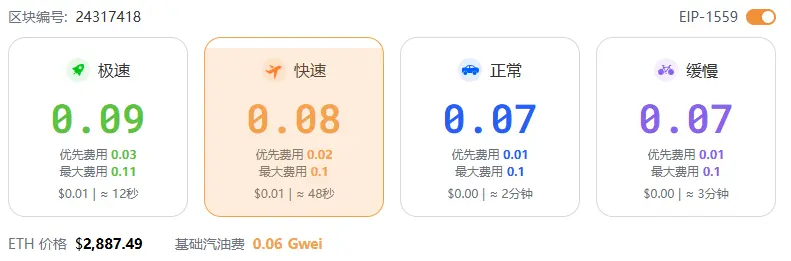 When Gas was expensive, at least it helped filter out some low-quality interactions, forcing you to think carefully about each operation. Now that Gas is cheap, DeFi has turned into a massive electronic assembly line.
With low interaction costs, project teams assume you should engage in massive interactions. So, driven by the tiny potential airdrop, retail investors are forced to become skilled workers on the chain: cross-chain, Swap, stake, form LPs… performing hundreds of repetitive tasks every day.
But this hasn’t brought higher returns. On the contrary, low Gas has become a tool for project teams to infinitely inflate active user metrics.
This is chain labor.
2. The Dictator Who Changes Orders: Code Is No Longer Law
“Code is Law” was once the most captivating narrative of DeFi. However, today’s DeFi protocols not only have backdoors in their code but also project teams wield a sickle that can fall at any moment.
This is the deepest pain point for retail investors now—rule uncertainty.
Current project teams have long learned how to not behave like proper people. They invented unfulfillable “points systems,” dangling carrots in front of donkeys, enticing you to keep investing funds and time. When you’ve painstakingly earned points for half a year, eagerly awaiting redemption, the project suddenly issues an announcement:
- “To ensure community fairness, we will crack down on bot attacks.”
- “Our VE model is being modified.”
- “For community development, we are adding a 45-day cooling-off period.”
Yesterday, you were an early supporter in their eyes; today, because your IP address changed slightly or your funds were only retained for one more day, you are labeled a bot. The interpretation of rules is entirely at the project team’s discretion—they can change them as they please.
 This feels like working a job where the boss originally promised daily pay. After you finish your work, the boss suddenly says, “For the company’s long-term development, your wages will be withheld first. We’ll see your performance next year before paying.”
In traditional business, this is called fraud; in DeFi, it’s called DAO governance.
3. Prisoners of Lock-up: Capital Hunting Under High APY
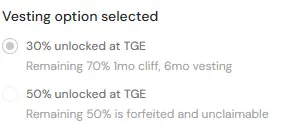 To maintain token prices, DeFi protocols are extremely eager to lock users’ assets. Various Ve models emerge endlessly, often locking for a year, two years, or even four years.
Project teams lure you with extremely attractive APYs. The apparent high returns actually have a pre-written ending:
- Liquidity exhaustion: Your principal is locked and immovable.
- Whales rushing to exit: The tokens held by project teams, early investors, and whales often have special release schedules, or they can hedge off-chain to lock in profits.
- Token price plummeting to zero: When you can finally unlock, you’ll find that although you earned a 50% token-based return, the token price has already fallen 90%.
The essence of lock-up is retail investors using their liquidity to give whales a cash-out cushion. You’re craving that tiny interest, while they’re watching your principal.
4. Extreme Mismatch of Risks and Rewards
Let’s do a realistic calculation.
Apart from those scam projects that could run away at any moment, the stablecoin yields of mainstream top protocols are maintained at around 5% - 10%. This seems higher than banks, but what are the underlying risks?
- Smart contract vulnerabilities: Hackers could drain the pool at any time.
- Front-end hijacking: Phishing sites are hard to defend against.
- De-pegging risks: Algorithmic stablecoins or cross-chain bridge assets could instantly become worthless.
- Project Rug Pulls: Even projects with billions in TVL can run away with funds overnight.
You earn 5% but bear the risk of 100% principal loss. This is a classic case of high risk and low reward. Such yields even fail to cover the mental toll of constant anxiety during operations. Compared to simply buying Bitcoin and holding, or even earning on centralized exchanges, the cost-performance ratio is far superior to messing around on-chain.
Conclusion: Refuse to Become On-Chain Fuel
DeFi’s innovation has stagnated, but the harvesting methods have evolved.
At this stage, for most retail investors with less than $100,000 in capital, DeFi has lost its golden attribute. It is no longer a land of opportunity but a playground carefully designed by whales and unscrupulous project teams.
Every button, every rule, every lock-up suggestion here is designed to induce you to hand over your chips.
So perhaps the best strategy now is simply to admit: DeFi is truly no good anymore. Stop those pointless interactions, stop locking assets for tiny gains. Protect your principal, convert it into truly valuable core assets, and watch coldly as this whale battle unfolds.
Don’t be chain labor anymore; your time and capital deserve better destinations.
Disclaimer: The information on this page may come from third parties and does not represent the views or opinions of Gate. The content displayed on this page is for reference only and does not constitute any financial, investment, or legal advice. Gate does not guarantee the accuracy or completeness of the information and shall not be liable for any losses arising from the use of this information. Virtual asset investments carry high risks and are subject to significant price volatility. You may lose all of your invested principal. Please fully understand the relevant risks and make prudent decisions based on your own financial situation and risk tolerance. For details, please refer to
Disclaimer.


