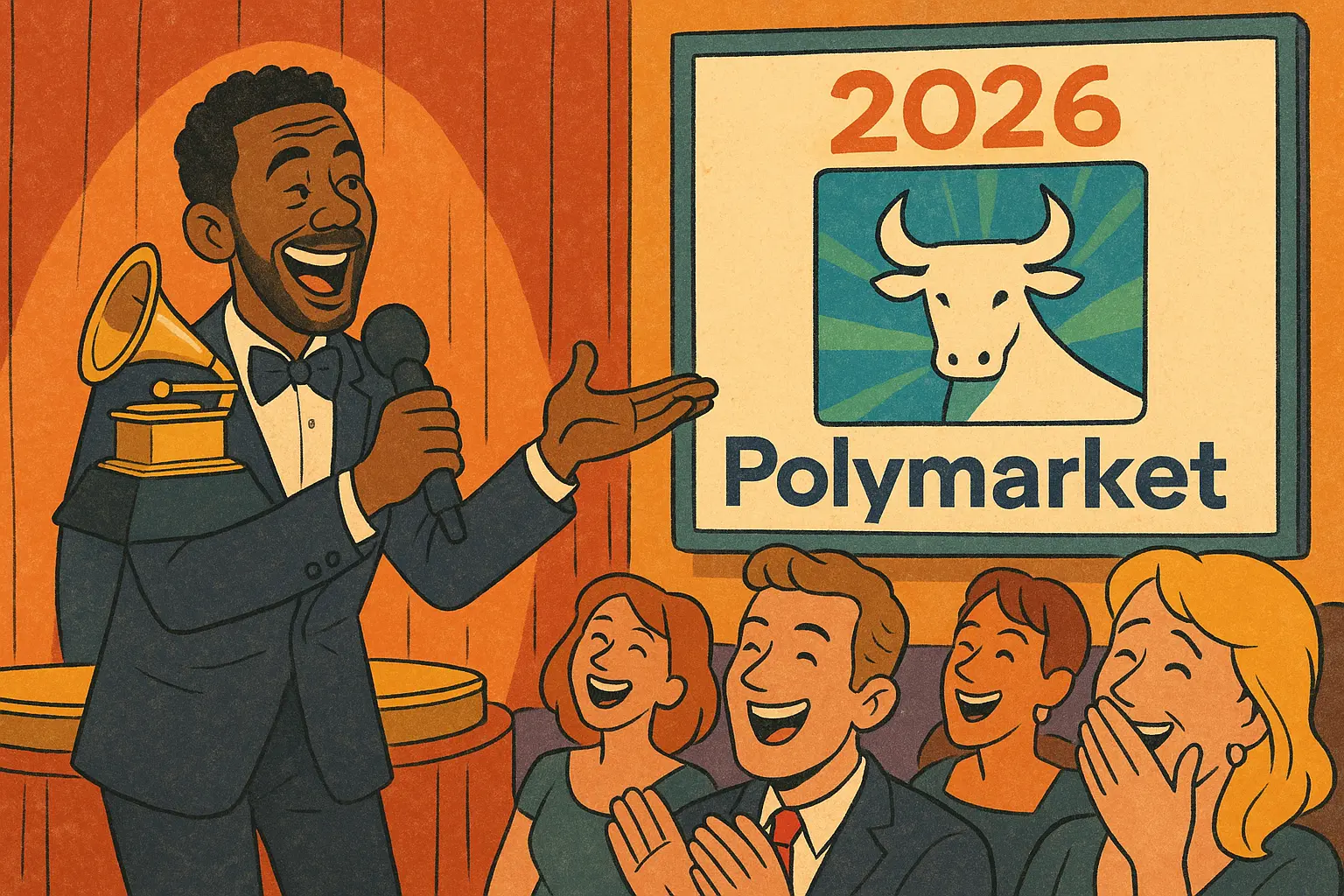
Grammy host Trevor Noah jokes about making a fortune by betting on “potato” on Polymarket; the clip goes viral. But there’s no such option on Polymarket — it’s a marketing stunt. The prediction market has expanded from the 2024 U.S. presidential election to entertainment and sports, with Super Bowl trading volume reaching $1 billion, becoming partners with CNN and Google Finance. However, Nevada’s ban has sparked regulatory discussions.
Viral Marketing Masterstroke on the Grammy Stage
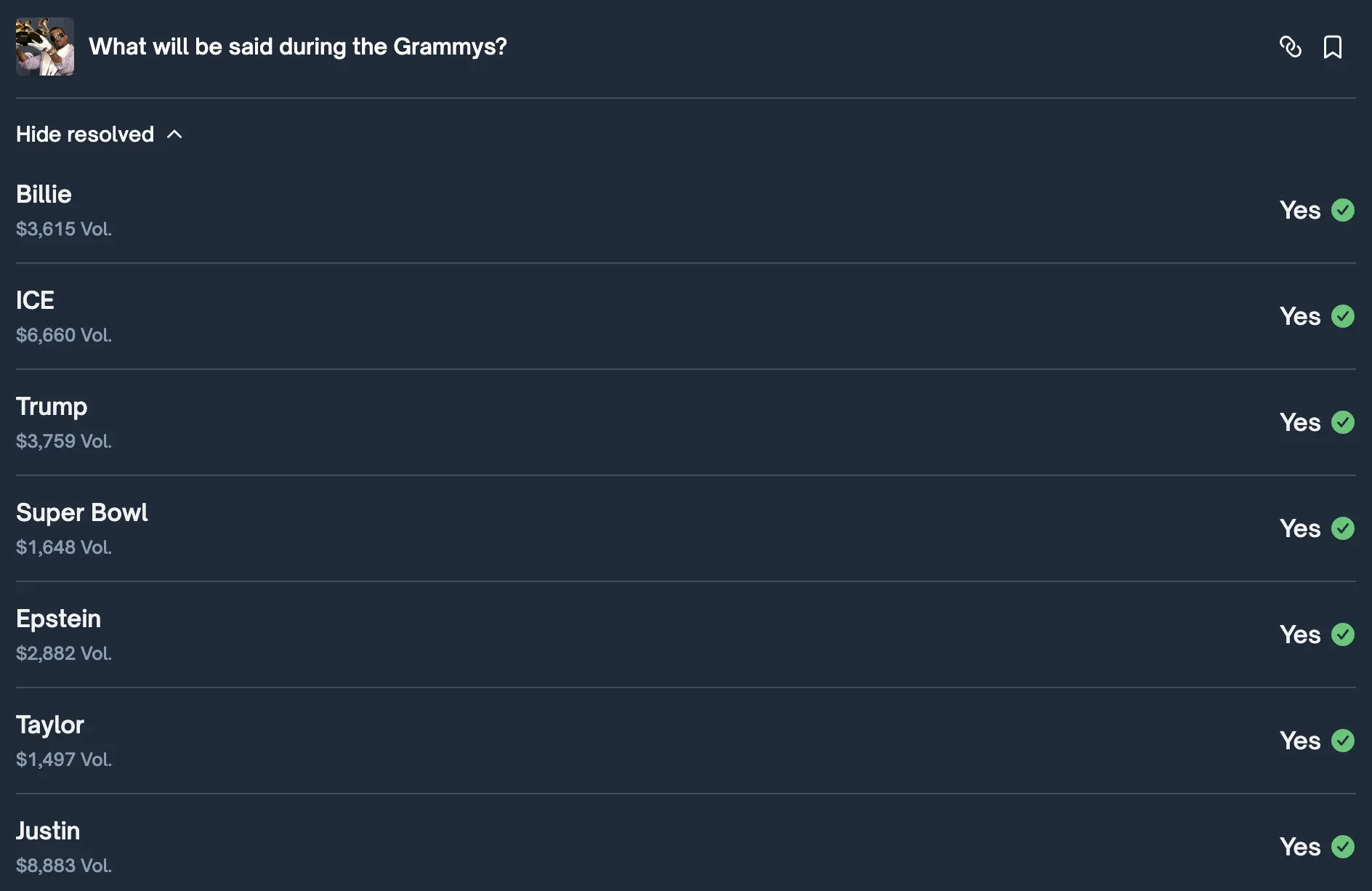
(Source: Polymarket)
At the 2026 Grammy Awards, host Trevor Noah jokingly said that if anyone bets on him saying “potato” on Polymarket, they’d make a huge profit: “Welcome back to the Grammys. Potato — if you bet on me saying ‘potato’ on Polymarket, you’re rolling in it. Congrats to @noah_22, whoever that is.”
This seemingly spontaneous joke quickly spread across social platform X, with Polymarket’s official account reposting the video with the caption “What is happening?” This “official confusion” response further amplified the buzz and also drew some criticism over insider trading. As one of the world’s most important music events, every word on stage attracts tens of millions of viewers. Trevor Noah’s joke essentially provided Polymarket with priceless free advertising.
In reality, there was no “potato” betting option at the Grammy event, and no user named “noah-22” was found — it’s clearly another effective marketing stunt by Polymarket. This “fake event goes viral” tactic is highly clever, leveraging Grammy’s massive traffic and Trevor Noah’s influence to create a viral topic, with costs possibly limited to some collaboration with the host or production team.
The brilliance of this marketing approach lies in its “hard to distinguish real from fake.” Ordinary viewers unfamiliar with Polymarket might think it’s a genuine bet, amused by the host’s humor, thus increasing interest in the platform. Experienced users, meanwhile, recognize it as marketing manipulation, but the “feeling of being fooled” actually boosts the buzz and discussion. Whether true or not, Polymarket becomes the biggest winner, with mainstream entertainment recognition soaring.
Three Key Success Factors of Polymarket’s Grammy Marketing
Top-tier platform: Grammy’s hundreds of millions of viewers maximize dissemination
Celebrity endorsement: Trevor Noah’s charisma and humor boost brand appeal
Controversial topics: The blurred line between real and fake sparks discussion, viral spread naturally
From Political Predictions to Entertainment and Sports Revenue
The rise of prediction markets can be traced back to the 2024 U.S. presidential election, where platforms like Polymarket used “event contracts” similar to binary options, allowing users to bet on elections, policies, and public events, quickly gaining attention. During the 2024 election, Polymarket’s total trading volume exceeded $3 billion, with prediction accuracy surpassing traditional polls, making it a household name.
Recently, prediction platforms have expanded into sports and entertainment, covering NFL MVPs, Golden Globe winners, and more, even partnering with media and financial platforms like CNN and Google Finance. This expansion from politics to entertainment and sports shows that prediction markets are becoming a new “information discovery mechanism,” not just gambling tools but platforms aggregating collective intelligence and market expectations.
For example, the upcoming Super Bowl, despite being held in California where sports betting is prohibited and the NFL stating ads for prediction markets are banned during broadcasts, Polymarket and Kalshi’s Super Bowl winner markets still reached nearly $1 billion in trading volume. This demonstrates the strong appeal of prediction markets; even in legal gray areas, many users are willing to participate.
The $1 billion Super Bowl trading volume is comparable to some traditional betting markets, indicating prediction markets are eating into the traditional gambling industry’s share. For traditional gambling companies, this is a serious threat. Licensed operators like FanDuel and DraftKings pay high licensing fees, face strict regulations, and pay heavy taxes, while crypto-native platforms like Polymarket operate in legal gray areas with lower costs and fewer restrictions. This unfair competition is reshaping the gambling industry landscape.
Meanwhile, NFL’s two official betting partners, FanDuel and DraftKings, say they will run ads during Super Bowl Sunday. This double standard is highly ironic: NFL bans Polymarket ads but allows its official betting partners to promote heavily. Behind this discrepancy are complex commercial interests and regulatory arbitrage.
Regulatory Battles Erupt, Legality Under Threat
The expansion of prediction markets has also raised questions about their legality. Besides sports leagues’ statements, U.S. state regulators are taking action. Nevada recently blocked Polymarket from offering contracts locally; Kalshi faces multiple federal lawsuits alleging violations of state gambling laws.
Nevada, as the center of the U.S. gambling industry,’s decision to ban Polymarket is highly symbolic. With a comprehensive regulatory system and mature industry, Nevada strictly controls gambling activities. Polymarket operating without a Nevada gambling license is considered illegal and was blocked. This regulatory move could serve as a model for other states; if more follow suit, Polymarket’s U.S. operations could be severely impacted.
Kalshi’s situation is more complex. The platform was approved by the U.S. Commodity Futures Trading Commission (CFTC) to offer certain “event contracts,” but several state attorneys general argue that Kalshi’s products are essentially sports betting and should be regulated under state gambling laws, not federal CFTC oversight. This conflict between federal and state regulation is the biggest legal uncertainty facing prediction markets.
From a joke on the Grammy stage to legal disputes across U.S. states, prediction markets have successfully entered mainstream consciousness. But their long-term survival depends on clear regulatory positioning. As trading volume and social influence grow, prediction markets stand at the crossroads of growth and regulation. If authorities ultimately deem them illegal gambling and ban them outright, platforms like Polymarket may be forced to exit the U.S. market or fundamentally change their business models.
Disclaimer: The information on this page may come from third parties and does not represent the views or opinions of Gate. The content displayed on this page is for reference only and does not constitute any financial, investment, or legal advice. Gate does not guarantee the accuracy or completeness of the information and shall not be liable for any losses arising from the use of this information. Virtual asset investments carry high risks and are subject to significant price volatility. You may lose all of your invested principal. Please fully understand the relevant risks and make prudent decisions based on your own financial situation and risk tolerance. For details, please refer to
Disclaimer.


