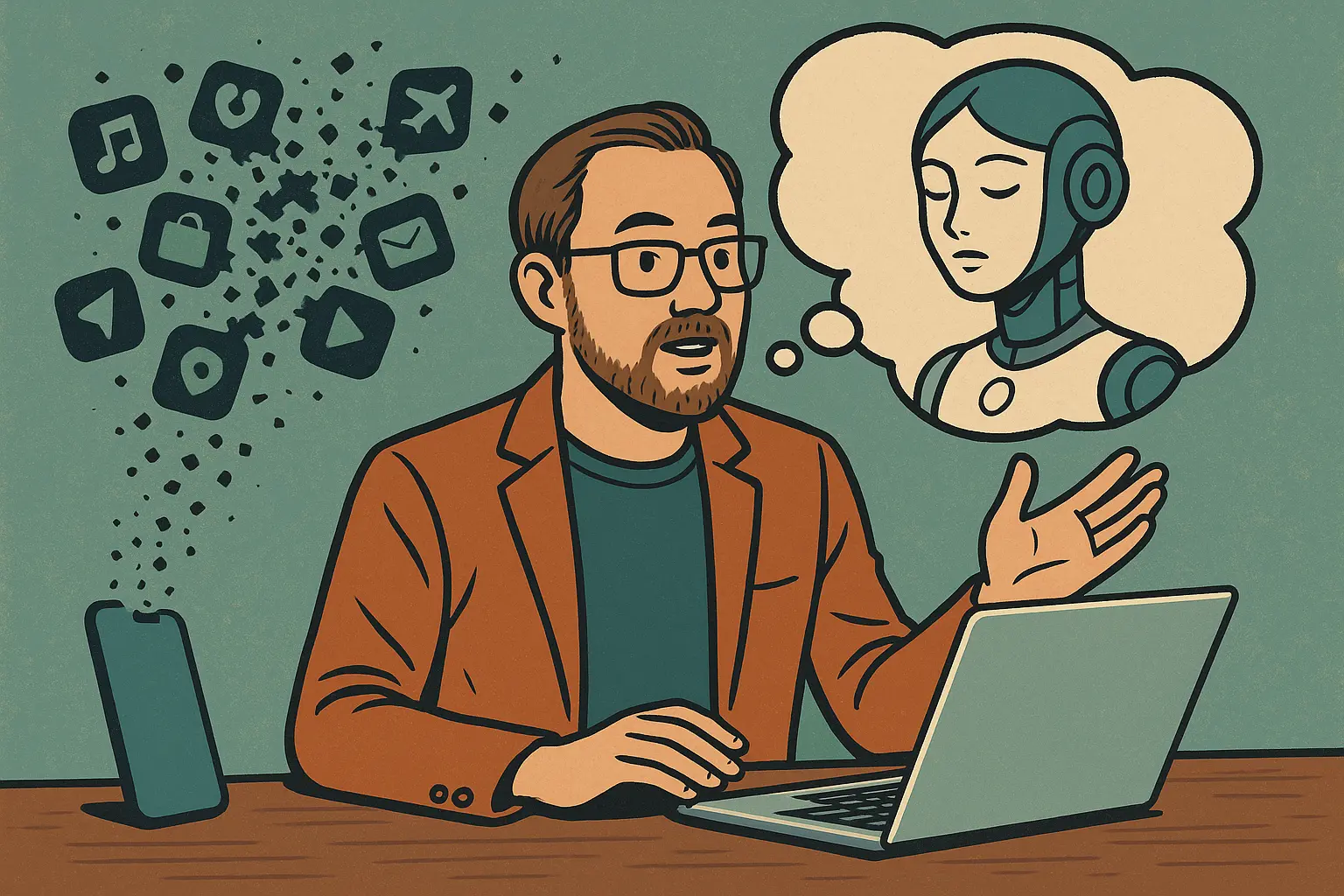
Venture capital firm Y Combinator interviews the viral open-source personal AI agent OpenClaw developer Peter Steinberger, who predicts that about 80% of apps will disappear, as applications that simply manage data can be automated and replaced by AI agents. OpenClaw’s biggest advantage is breaking down data silos by storing data locally to ensure privacy.
The 180,000 Stars Behind the Viral Surge: The Turning Point of 9-Second Responses
(Source: Github)
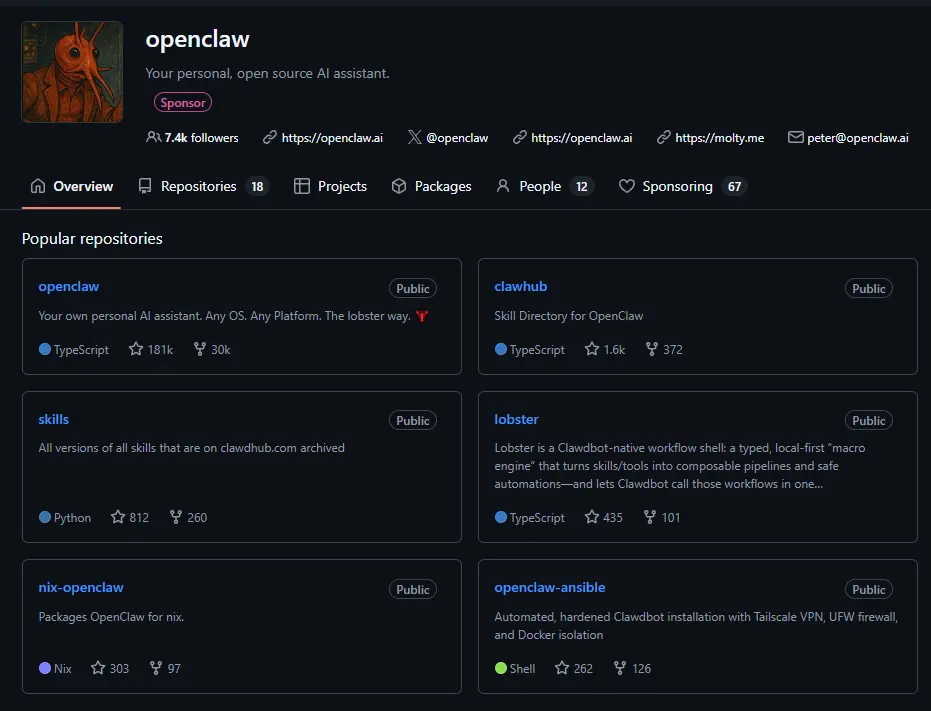
The OpenClaw project’s GitHub repository has garnered over 180,000 stars, and the community has even developed applications where robots communicate with each other or even hire humans, such as Moltbook. This star count is extremely rare in the open-source community; even the well-known deep learning framework PyTorch has only about 80,000 stars. Reaching 180,000 stars in just a few months demonstrates the explosive popularity of OpenClaw among developers.
Faced with OpenClaw’s sudden popularity, Peter revealed that in recent weeks he received a massive influx of feedback and emails, to the point where he felt the need to “hide in a cave” and take a week off to process everything. This sudden attention is a huge pressure for an independent developer, who must respond to technical questions and feature requests, as well as handle media interviews, business collaborations, and community management.
When asked about the development motivation, Peter said it initially started as a way to make computers execute simple commands. He developed an early version in May or June, and later re-engaged in development to meet the need for monitoring computer progress. This “solving personal pain points” motivation is common among many successful open-source projects. When developers personally experience a problem, their solutions tend to be more aligned with real needs.
The real turning point occurred at a party in Marrakech, when he tried to send a voice message via WhatsApp to a robot that did not yet have built-in voice capabilities. Unexpectedly, the robot demonstrated remarkable problem-solving ability, automatically recognizing files, converting formats, and calling APIs, all within 9 seconds. This made him realize that the program model he developed already had the ability to transform abstract problems into practical solutions.
This 9-second response moment was crucial in transforming OpenClaw from an experimental project into a practical tool. When an AI agent can autonomously handle unexpected situations (voice messages), automatically find solutions (file conversion), and execute efficiently (9 seconds), it evolves from a “helper requiring human supervision” to a “self-solving agent.” This qualitative leap marks the practical realization of AI agents.
While developing OpenClaw, Peter did not adopt mainstream Git Worktrees but instead copied multiple folders to handle tasks in parallel, reducing mental load. He advocates providing “tools that humans also like to use,” such as command-line interfaces (CLI), rather than complex protocols only for machines. This “human-centered” design philosophy makes OpenClaw easier for developers to understand and extend.
To prevent OpenClaw responses from becoming overly formulaic, he even created a file called soul.md to define the robot’s values and personality, making its responses more human and humorous. This detail is highly inspiring, revealing that designing excellent AI agents involves not only technical issues but also personality shaping. When an AI agent has a clear “personality,” users are more willing to interact with it, fostering more natural human-machine relationships.
80% of Apps Will Disappear: The End of Data Management Applications
In the interview, Peter boldly predicts that about 80% of apps will vanish. He believes that any application solely used for “data management” can be replaced by AI agents in a more natural and automated way. For example, fitness and diet tracking apps like MyFitnessPal or to-do list apps will no longer be needed.
Peter envisions a disruptive scenario: when a user dines at a burger joint, the agent automatically presets that the user is eating their usual favorite foods and records it, even adjusting future workout plans to increase cardio. The user won’t need to manually input information. This fully automated experience will make traditional fitness and diet tracking apps redundant. Users won’t need to open MyFitnessPal, type in food names and calories—the AI agent will handle all of that in the background.
To-do list apps face similar threats. Peter points out that future interaction patterns will involve simply telling the agent “remind me of this,” and the agent will automatically handle and remind at the right time. Users won’t care where the information is stored. Currently, apps like Todoist and Microsoft To Do require manual creation of tasks, setting times, and categorization. This manual management friction will be eliminated in the AI agent era.
Three Major Categories of the 80% Apps That Will Disappear
Data Entry Apps: fitness tracking, diet logs, financial bookkeeping, and other pure data input applications
Reminder Management: to-do lists, calendars, alarms, and other time management tools
Information Integration: news aggregators, email management, note-taking apps, and other information processing applications
Under this trend, Peter believes only applications that depend heavily on specific hardware sensors will have a chance to survive. For example, professional heart rate monitoring apps that connect to heart rate belts or smartwatches, or camera apps that directly control hardware, will be difficult for AI agents to fully replace. However, even these applications’ user interfaces and interactions might be re-packaged by AI agents.
This prediction poses a survival threat to app developers and tech giants. Apple’s App Store and Google Play Store rely on a vast app ecosystem; if 80% of apps disappear, their revenue and influence will sharply decline. For developers dependent on in-app purchases and ads, transitioning to AI-powered proxy functions may be their only way forward.
Breaking Data Silos: OpenClaw’s Local Storage Revolution
Peter shared his view that OpenClaw’s ability to compete with large language models (LLMs) hinges on its “data ownership” and breaking the “data silos” created by big companies. Currently, large AI firms often build moats by locking user data into closed cloud systems, making it difficult for users to migrate or extract memories. In contrast, OpenClaw runs on the user’s local machine, directly controlling hardware (like Tesla, speakers, lights) and old files, mining forgotten memories.
OpenClaw stores memories as Markdown files locally, meaning users fully own and can access this data at any time. Peter believes that personal AI agents will handle highly private information, similar to Google search history, so local storage and user control are essential for privacy and security.
However, OpenClaw faced security concerns early after launch. Security firm SlowMist pointed out that vulnerabilities in Clawdbot (OpenClaw’s gateway) could lead to data leaks, including Anthropic API keys, Telegram bot tokens, Slack OAuth credentials, and months of private user conversations. As of February 1, Clawdbot (OpenClaw) has been updated to address some security issues.
From All-Powerful AI to Collective Intelligence: The Future of Specialization
Regarding AI’s future development, Peter believes the focus should shift from pursuing a single “all-powerful intelligence” to fostering “collective intelligence.” He compares this to human society’s division of labor, which enabled achievements like landing on the moon. AI should also develop toward specialization. In the future, each person might have multiple specialized robots handling work, personal life, or social relationships.
Peter envisions a future where robots interact with each other—for example, a user’s proxy negotiating reservations directly with a restaurant’s proxy. When encountering traditional businesses or physical queues, robots could even hire humans to complete tasks. This multi-agent collaboration model, composed of specialized proxies, will be a major trend in AI development.
The advantage of this collective intelligence approach is efficiency through specialization. A finance-focused AI proxy will outperform a general-purpose AI in financial tasks. A social relationship management AI will better understand subtle human interactions. This division of labor is similar to human societal roles, with each professional domain having its own knowledge and skills.
From a technical perspective, the collective intelligence model is easier to implement. Training a general AI requires vast data and computing resources and often results in a “jack of all trades, master of none” problem. Conversely, training multiple specialized AIs with smaller models and focused datasets reduces costs and computational demands. These specialized AIs can communicate via standardized protocols, forming collaborative networks, and their combined intelligence may surpass that of a single general AI.


