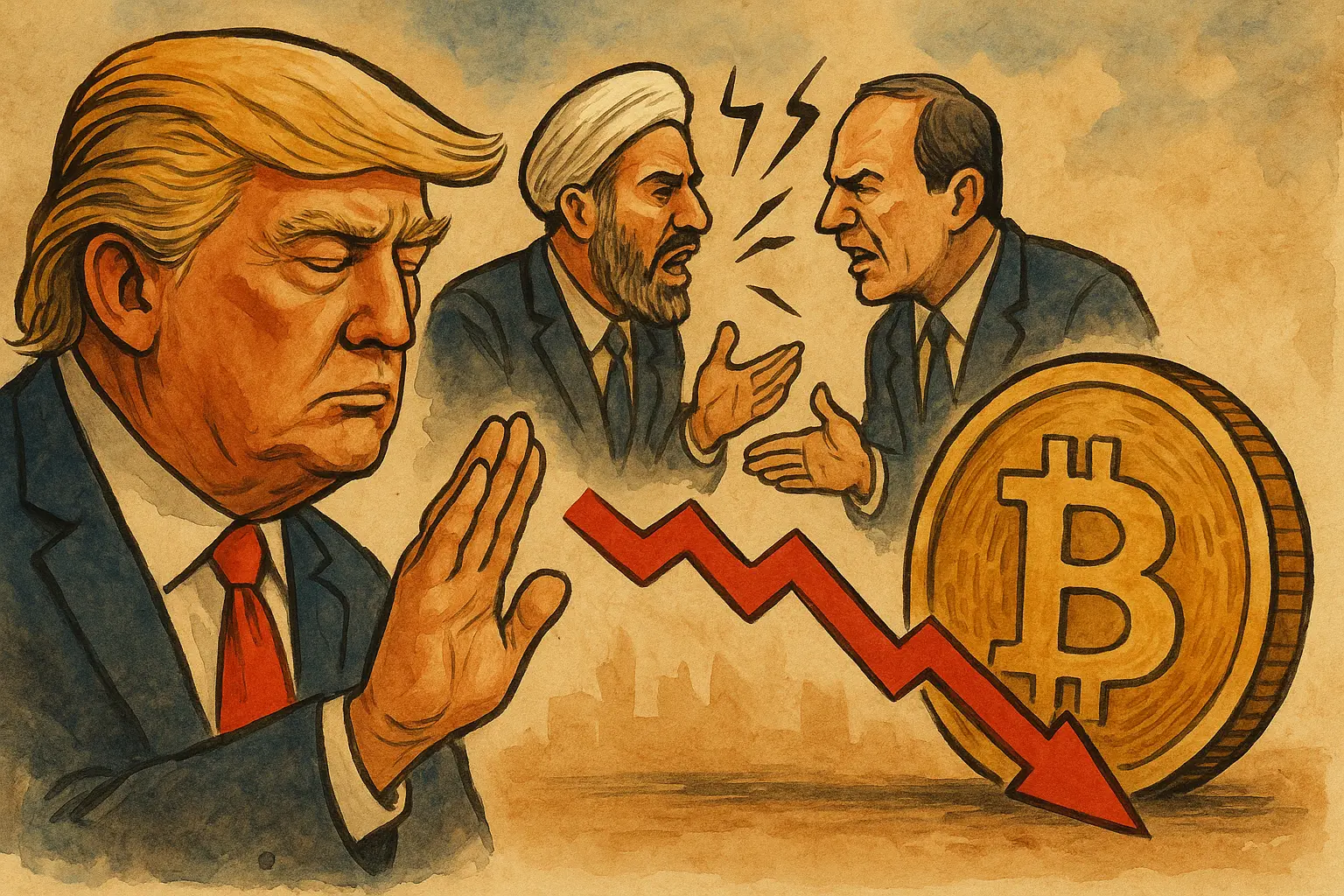
On March 26, U.S. President Trump announced that, at Iran’s government request, the pause in strikes against Iran’s energy facilities would be extended by 10 days to April 6. However, Iranian officials immediately denied making such a request, leaving the prospects for negotiations highly uncertain. As a result, the market did not fully relax concerns about a ceasefire signal; Bitcoin’s trading price on that day approached $68,900, with core pressure coming from liquidity tightening caused by U.S. Treasury yields rising to 4.42%.
Trump Extends Ceasefire: Why Is the Market Still Not Relaxed?
On Thursday, Trump posted on Truth Social: “In accordance with the Iranian government’s request, please consider this statement as my official declaration of the suspension of destruction of energy facilities.” The original five-day pause on strikes against Iranian power plants and energy infrastructure was set to expire on Friday. The extension to April 6 is seen as a diplomatic buffer to prevent further escalation of conflict.
However, Iranian officials immediately denied the request, claiming “We have not made any requests regarding potential U.S. attacks,” creating a clear contradiction between the two sides. The Strait of Hormuz oil transportation remains nearly halted, making it difficult for the market to form a clear expectation of de-escalation timing. Risk sentiment has not materially improved despite the extension of the ceasefire.
Immediate Market Reactions After Ceasefire Announcement
Spot Gold: Short-term rally of over $60, then retraced, with safe-haven demand still dominating gold trends.
WTI Crude Oil: Dropped nearly $5 briefly before quickly rebounding, indicating ongoing concerns about supply disruptions.
U.S. Stock Futures: Briefly surged after the news, but the Nasdaq still experienced its largest single-day decline since the start of the conflict.
Bitcoin: No significant rebound observed, continuing to face selling pressure under macroeconomic headwinds.
Yield and Oil Prices: The Dual Transmission Mechanism Behind Bitcoin’s Drop Today
The underlying reason why the ceasefire signal failed to boost the market lies in the unresolved systemic macro environment pressures. The U.S. 10-year Treasury yield rose to 4.42%, reflecting market expectations of persistent inflation and a decreased likelihood of the Federal Reserve cutting interest rates soon. Rising yields directly increase the opportunity cost of holding volatile assets like Bitcoin, prompting capital to flow toward more certain fixed-income instruments.
Brent crude futures rose over 5.6% on March 26, closing at $108.01 per barrel. High oil prices not only exacerbate inflation risks but also drag down U.S. stocks— the S&P 500 fell 1.74% that day, marking its largest single-day decline since 2026, confirming that Bitcoin is currently operating as a high-risk asset highly sensitive to liquidity tightening.
Derivatives Data: Futures Lead the Rise, Spot Demand Still Weak
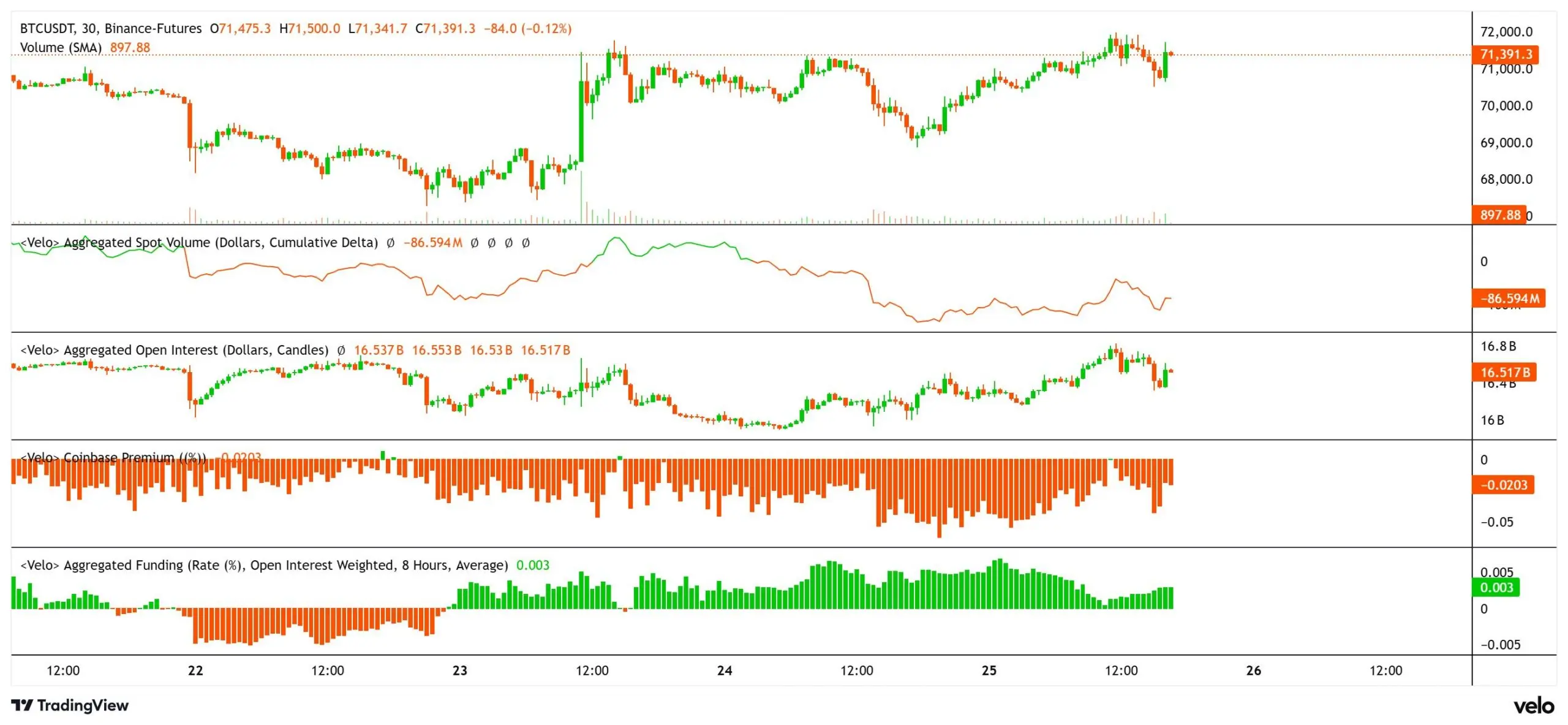 (Source: Trading View)
According to Velo Data, Bitcoin open interest increased by $500 million within 24 hours to $16.5 billion. Funding rates turned positive to 0.03%, indicating long leverage positions are accumulating. However, the Cumulative Volume Delta (CVD) is negative by $87 million, showing order flow remains dispersed. Coinbase premium remains negative, indicating continued weak spot demand in the U.S. market. The analytics platform Skew notes that sustained upward movement requires stronger spot absorption above $71,500.
CryptoQuant data shows that the 7-day standard deviation of realized profit and loss for short-term holders narrowed to 255 on March 24. While selling pressure has eased, there is still no significant capital momentum to push through resistance levels.
FAQs
Q: Why is Bitcoin still declining today despite Trump’s ceasefire extension?
A: Although the ceasefire reduces immediate conflict escalation risk, Iranian officials deny the request, and negotiations remain divided. Plus, Strait of Hormuz transportation remains blocked, preventing clear market expectations of de-escalation. The main driver of Bitcoin’s decline today is liquidity tightening caused by rising U.S. Treasury yields, not the geopolitical event itself.
Q: How does rising U.S. Treasury yields affect Bitcoin prices?
A: Higher yields increase the opportunity cost of holding Bitcoin, prompting capital to flow back into more certain fixed-income assets. Bitcoin is highly sensitive to liquidity conditions and often faces systemic capital outflows during periods of rising yields.
Q: What are the key indicators to watch for Bitcoin’s short-term trend?
A: Focus on three indicators: the trend of the 10-year U.S. Treasury yield, whether Coinbase premium turns positive, and the spot absorption capacity above $71,500. A futures-driven rally lacking spot support risks structural weakening.
Disclaimer: The information on this page may come from third parties and does not represent the views or opinions of Gate. The content displayed on this page is for reference only and does not constitute any financial, investment, or legal advice. Gate does not guarantee the accuracy or completeness of the information and shall not be liable for any losses arising from the use of this information. Virtual asset investments carry high risks and are subject to significant price volatility. You may lose all of your invested principal. Please fully understand the relevant risks and make prudent decisions based on your own financial situation and risk tolerance. For details, please refer to
Disclaimer.


