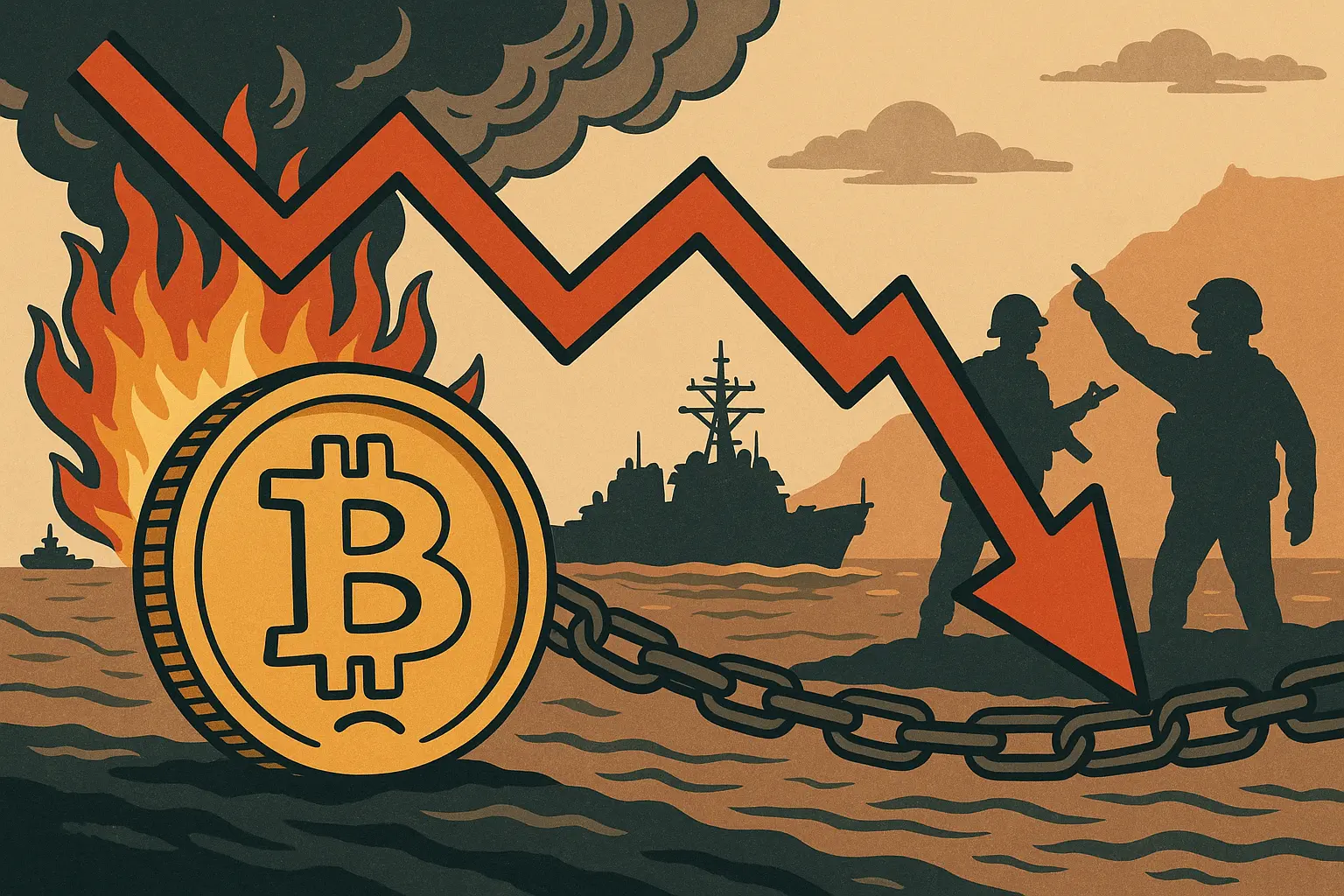
On April 9, Bitcoin is currently trading below $72,000, and the technical picture shows a consolidation pattern awaiting confirmation signals. Less than a day after the U.S.-Iran ceasefire agreement took effect, it already faces a risk of collapse. Iran accuses the U.S. of allowing Israel’s military to continue attacking Lebanon, in violation of the core ceasefire terms, and once again closes the Strait of Hormuz. At the same time, the Federal Reserve’s March FOMC meeting minutes show that more and more officials favor maintaining—or even raising—interest rates, increasing the odds of rate hikes and weighing on risk assets.
Ceasefire agreement backfires: three key provisions are violated, Iran says the negotiation foundation has collapsed
After the ceasefire agreement took effect on April 8, the Israeli military carried out the largest airstrike of this round of clashes against Hezbollah in Lebanon. Immediately afterward, Iran’s parliamentary speaker Ghalibaf accused the U.S. of bad faith, saying that three of the ten-point ceasefire proposal Iran had previously put forward were already undermined:
Israel continues to attack Lebanon: The White House says Lebanon is not a party to the ceasefire agreement; Iran calls this “bad faith”
Drones enter Iranian airspace: Seen as a clear violation of the ceasefire terms
Uranium enrichment rights denied: The U.S. statement is interpreted by Iran as a denial of its right to independent nuclear development
Ghalibaf said, “Under these circumstances, a bilateral ceasefire or negotiations are unreasonable.” Iran’s foreign minister also posted on X, saying the U.S. “must make a choice—either maintain the ceasefire or continue the war through Israel’s hands. You can’t have both.”
The renewed closure of the Strait of Hormuz is the direct trigger for a sharp deterioration in market sentiment. According to S&P Global Market Intelligence data, on Wednesday only 4 ships were approved to pass, the lowest level since April. Iran plans to cut the daily transit quota to about a dozen ships and also charge transit fees, with costs for very large oil tankers reaching up to $2 million. Under normal conditions, the Strait of Hormuz carries about 20% of the world’s oil supply. Disruption to passage directly reignites uncertainty about energy supply and has erased the earlier upside expectations that “a ceasefire would lift market optimism.”
Federal Reserve rate-hike risk: the macro pressure behind Bitcoin’s drop today
The Federal Reserve released the March FOMC meeting minutes on Wednesday, adding macro-level pressure to Bitcoin’s drop today. The minutes show that more and more officials are inclined to include “both-way” interest rate language in post-meeting statements, explicitly mentioning the possibility of rate hikes under certain conditions. Compared with the January minutes, which only mentioned that “a few” officials held this view, the March minutes have been upgraded to “some” officials, indicating that hawkish voices have clearly expanded.
The Fed’s “telltale” Nick Timiraos analysis pointed out that the ceasefire agreement could actually make it harder for the Federal Reserve to cut rates in the near term—while the ceasefire eliminates the worst disinflationary shock, it leaves inflation as the main risk given that oil prices are still above pre-war levels. At the March meeting, the Federal Reserve left the benchmark policy rate unchanged in the 3.5% to 3.75% range, and “the vast majority” of officials believe the pace of easing inflation may be slower than expected.
Technical outlook: consolidating below $72,000, with $75,000 as the key breakout point
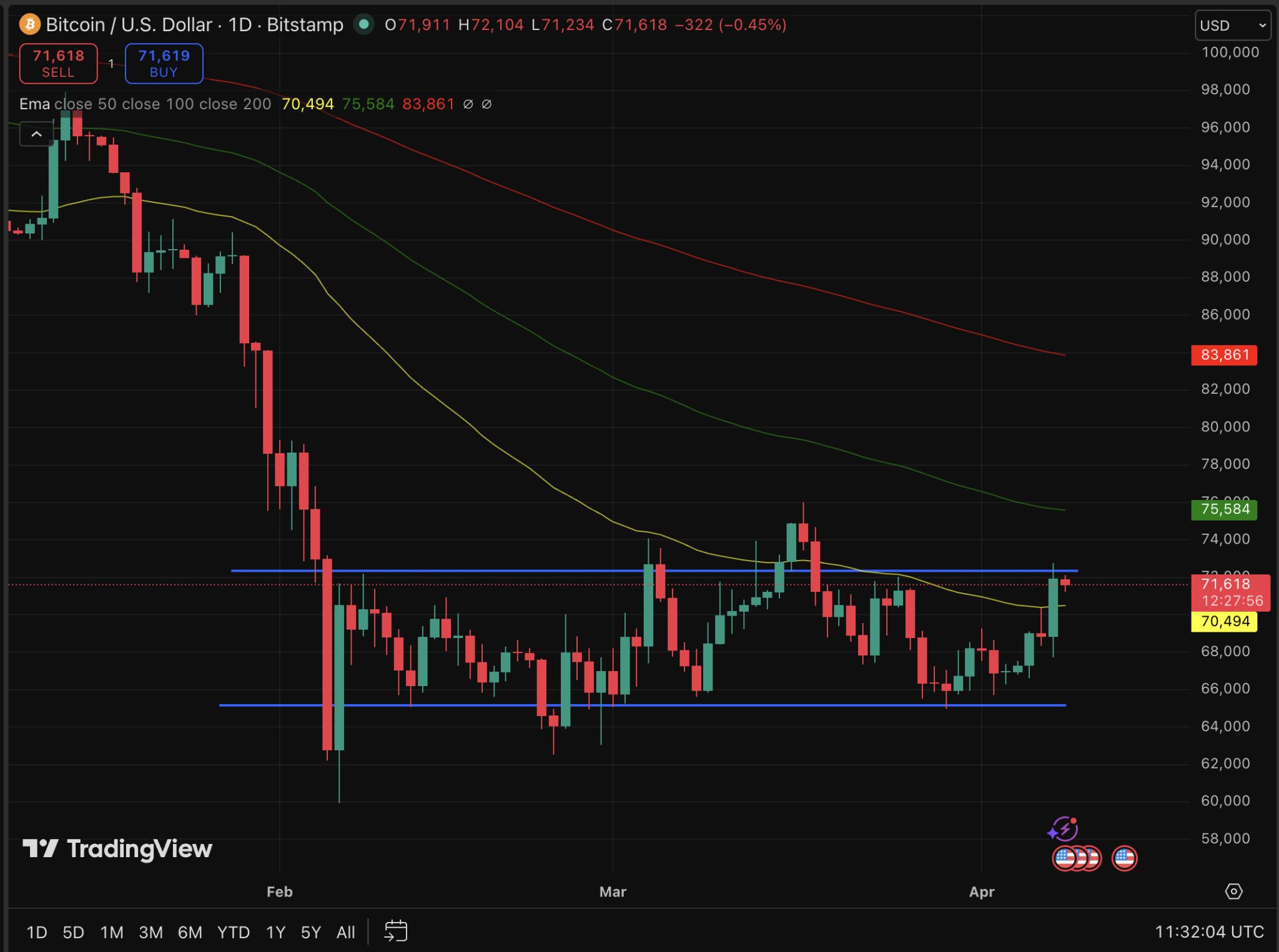 (Source: Trading View)
Bitcoin is currently trading below $72,000, with subdued trading volume and a chart showing a consolidation pattern awaiting directional confirmation. $75,000 is the key breakout level in the near term; once it breaks out, momentum indicators could quickly turn bullish. Below, $68,000 is a key support level—if it breaks, the outlook for overall recovery will be significantly weakened.
With the ceasefire situation still unclear, energy prices continuing to be distorted by geopolitics, and the Federal Reserve’s policy stance staying tight, gold’s price action near the $4,800 resistance level may provide clearer reference signals for Bitcoin’s direction over the next few trading days.
Frequently Asked Questions
Why is Bitcoin down today?
Bitcoin is down today mainly driven by two factors: first, the U.S.-Iran ceasefire agreement faces a risk of falling apart in less than a day after taking effect; Iran accuses the U.S. of violating three core provisions and once again closes the Strait of Hormuz. Second, the Federal Reserve FOMC meeting minutes show that more and more officials tend to maintain—and even raise—interest rates, compressing the valuation space for risk assets.
What is the direct impact of the Strait of Hormuz shutting again on Bitcoin?
The Strait of Hormuz carries about 20% of the world’s oil supply. Disruption to passage directly reignites energy and inflation pressure, increasing the risk of Federal Reserve rate hikes and weighing on risk assets such as Bitcoin. At the same time, the ceasefire agreement falling apart eliminates the earlier “geopolitical de-escalation” expectation that had supported Bitcoin’s rise, creating pressure for long positions to lock in profits.
Where are Bitcoin’s key technical support levels today?
Currently, Bitcoin’s key resistance level is $75,000 (a breakout is needed to confirm bullish momentum), and its key support level is $68,000 (it has repeatedly withstood sell pressure but has not broken). With the ceasefire situation still unclear, the market is showing a consolidation pattern awaiting confirmation signals.
Disclaimer: The information on this page may come from third parties and does not represent the views or opinions of Gate. The content displayed on this page is for reference only and does not constitute any financial, investment, or legal advice. Gate does not guarantee the accuracy or completeness of the information and shall not be liable for any losses arising from the use of this information. Virtual asset investments carry high risks and are subject to significant price volatility. You may lose all of your invested principal. Please fully understand the relevant risks and make prudent decisions based on your own financial situation and risk tolerance. For details, please refer to
Disclaimer.


