April 13, 2026, the U.S. Navy, based on a statement from the U.S. Central Command, officially implemented a maritime blockade of the Strait of Hormuz, prohibiting all vessels from entering or leaving Iranian ports, fully interrupting commercial shipping through the strait in practical terms. On the same day, the UK maritime analytics firm Wärvord confirmed that the U.S. action introduced a second layer of control mechanism for navigation through the Strait of Hormuz, leaving the strait in a “controlled but unstable” state. Affected by this, international crude oil futures opened up by more than 9%; WTI crude briefly broke above $105 per barrel. The crypto asset market also faced simultaneous pressure; as of the time of this writing, the Bitcoin price is temporarily at $70,800, down 1.2% over the past 24 hours.
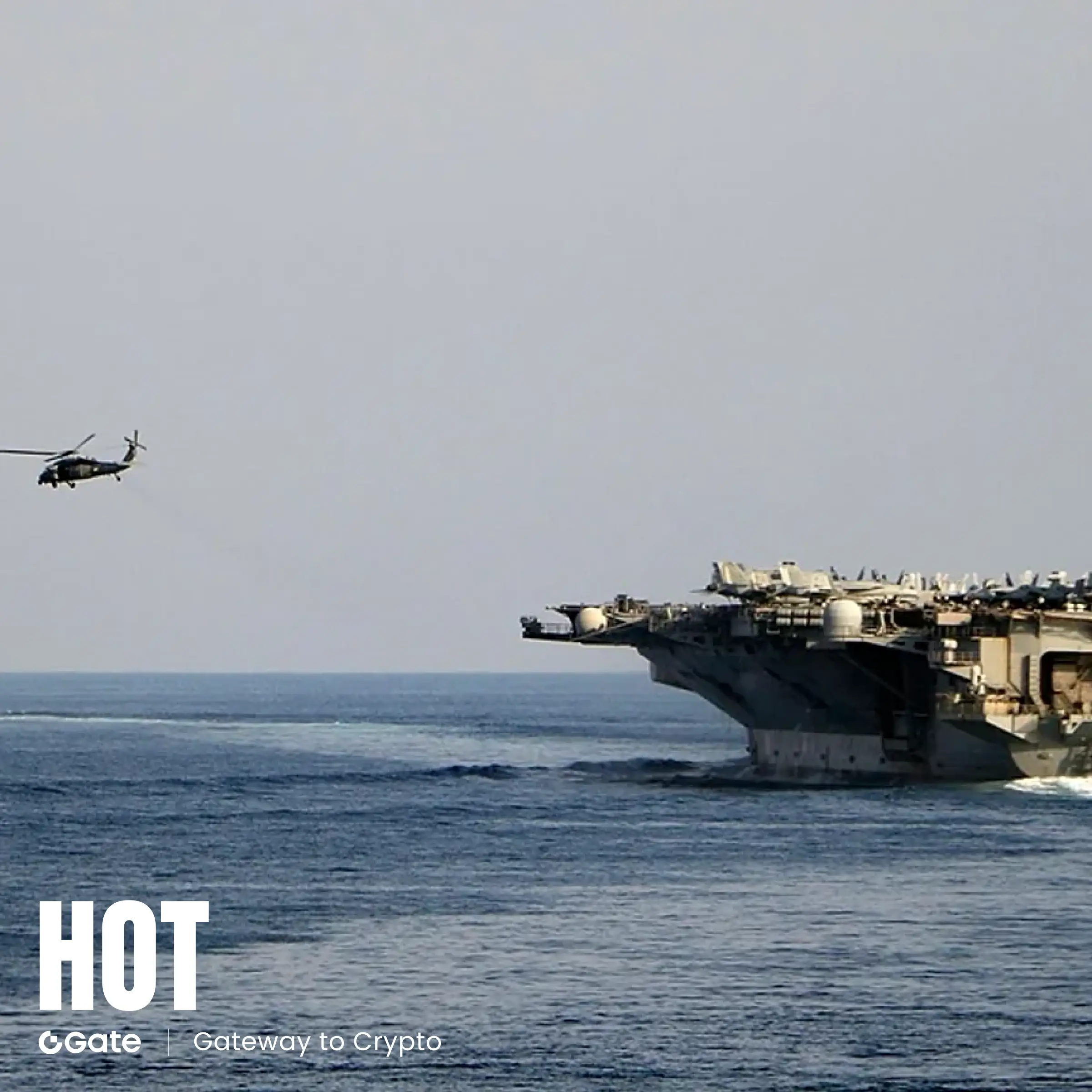
U.S. Central Command Statement and Strait Transit Status
At 10:00 a.m. Eastern Time on April 13, the U.S. Navy’s blockade of the Strait of Hormuz officially took effect. The blockade covers all ships entering and leaving Iranian ports, involving all Iranian port facilities in both the Persian Gulf and the Gulf of Oman. In its statement, the U.S. Central Command said the action would not impede ships traveling to and from non-Iranian ports from transiting the strait; however, UK reports confirmed that after the blockade was announced, “all transit” through the strait had already stopped, and at least two ships originally planned to sail out of the strait turned around and returned.
Before that, on April 12, U.S. President Trump announced on a social media platform that the U.S. Navy would immediately begin blockading all ships attempting to enter or leave the Strait of Hormuz. He also instructed the Navy to intercept and inspect all ships paying transit fees to Iran in international waters and to remove mines laid by Iran.
The backdrop for the blockade action was that a new round of negotiations between the U.S. and Iran, mediated by Pakistan, ended without results on April 12. Iran said the U.S. had shown “excessive ambition,” while the U.S. said Iran “chose not to accept the U.S. conditions.” Within 24 hours after the talks broke down, the situation escalated from a diplomatic stalemate into a military blockade.
As of April 13, the Strait of Hormuz’s actual transit status was completely interrupted. Wärvord reported that the strait is now simultaneously under Iranian control and restricted by U.S. military actions, and the risk of direct conflict between state actors is rising.
Crude Oil Price Fluctuations and Crypto Market Performance
Energy commodity price performance
In the early trading on April 13, major crude oil futures contracts saw significant price volatility. According to publicly available market data, WTI crude oil futures opened at $104.93 per barrel, up about 8.66%, and widened further during the day to more than 9%, briefly touching above $105 per barrel. Brent crude oil futures were $102.77 per barrel, up about 7.95%. As of the time of this writing, Gate market data showed U.S. crude XTIUSDT at $104.2, up 9.1% over 24 hours; Brent crude XBRUSDT at $104, up 7.8%.
After the event, several financial institutions updated their assessments of crude oil prices. Goldman Sachs said that if the Strait of Hormuz were closed for one month, the average Brent crude price for the full year could exceed $100 per barrel. JPMorgan Chase said that if shipping could not fully resume until July, oil prices might retest peak levels around $120 per barrel.
Crypto asset market performance
The cryptocurrency market saw broad declines after the blockade news was released. As of April 13, 2026, according to Gate market data:
-
Bitcoin is $70,800, down 1.2% over the past 24 hours, with a market cap of $1.42 trillion and a market share of 58.8%;
-
Ethereum is $2,190, down 1.1% over the past 24 hours, with a market cap of $14.2k and a market share of 11%.
Meanwhile, traditional safe-haven assets fell in tandem. Spot gold fell about 2.3% to $4,678 per ounce, and spot silver fell nearly 4% to $73.5 per ounce. U.S. stock index futures fell by more than 1% across the board.
Key Event Timeline
-
April 11: Two U.S. destroyers attempted to cross the Strait of Hormuz, retreated after being locked on by Iran’s Islamic Revolutionary Guard Corps; the latest round of U.S.-Iran negotiations began in Islamabad;
-
April 12: The U.S.-Iran talks ended without results; Trump announced the blockade of the Strait of Hormuz, and the U.S. Central Command issued an official blockade order;
-
April 13: The blockade took effect at 10:00 a.m. U.S. Eastern Time, with all transit through the strait stopping; international crude oil prices surged by nearly 10%, while crypto assets such as BTC and ETH generally fell.
Impact of the Strait of Hormuz Interruption on Global Crude Oil Supply
The Strait of Hormuz sees about 120 ships transit per day on average, accounting for about one-fifth of global oil supply and a substantial share of liquefied natural gas transport. After the blockade took effect, global crude oil transport began shifting to alternative routes. According to Wärvord data, a total of 172 tankers are currently diverting to routes along the U.S. Gulf Coast.
This logistics reshuffling reflects two facts: first, the interruption of transit through the Strait of Hormuz is triggering immediate adjustments to global energy trade routes; second, capacity and cost pressures on alternative routes will gradually transmit to terminal energy prices.
Institutional analysis notes that even if the Strait of Hormuz resumes transit in the short term, the energy infrastructure and production capacity in the Gulf region damaged by earlier hostilities still require several months of repair time, meaning the “war premium” embedded in oil prices may remain for a longer period.
Mechanism of the Crypto Market’s Response to Geopolitical Shock
In this event, crypto asset prices fell in sync with traditional safe-haven assets such as gold, indicating that market participants’ response pattern to geopolitical uncertainty was systemic liquidity withdrawal, rather than a shift toward allocating to safe-haven assets.
This phenomenon fits a common reaction logic in financial markets: at the initial stage of extreme uncertainty shocks, market participants tend to move funds away from asset classes with higher volatility (including crypto assets) to cash or short-term bonds, with crypto assets hit first in this process. Price performance in this stage mainly reflects changes in liquidity conditions, not a reassessment of crypto assets’ intrinsic value.
Notably, about a week before the blockade event occurred, there were reports that Iran had approved using digital assets to pay the Strait of Hormuz transit fees. This suggests that under conditions of mounting geopolitical pressure and constrained access to traditional financial channels, the use case of crypto assets as an alternative payment channel is expanding.
Legal and Operational Framework for the U.S. Navy Blockade
In its April 12 statement, the U.S. Central Command clearly defined the operational scope and restrictions of the blockade. The blockade targets ships entering and leaving Iranian ports. The statement also specifies that it will not impede related ships from transiting the Strait of Hormuz to non-Iranian ports. This limiting wording sets clear legal boundaries for the blockade operation.
In addition, the U.S. Navy included the following specific actions in executing the blockade: intercepting and inspecting ships paying transit fees to Iran in international waters, and clearing mines that Iran laid in the strait. In the statement, Trump said that anyone who pays illegal transit fees to Iran will have no right to safe passage while navigating on the high seas.
Iran had previously said the Strait of Hormuz is under its control, but as of the time of this writing, it has not yet issued an official response statement regarding the U.S. military blockade action.
Risk Asset Correlation and Market Liquidity Conditions
As shown by market data on April 13, crude oil prices rising stands in stark contrast to risk asset prices falling. The underlying driver of this divergence is: supply shocks directly push up energy commodity prices, while geopolitical uncertainty suppresses demand for risk assets.
In this setup, crypto assets face dual pressure: on the one hand, rising oil prices raise inflation expectations, which may compress the rate-cut space of major economy central banks, and a high-interest-rate environment creates structural pressure for risk assets; on the other hand, extreme uncertainty prompts funds to concentrate in cash equivalents, putting crypto assets under periodic outflow pressure.
From the market-structure perspective, over the past 24 hours, the drawdowns of Bitcoin and Ethereum both sit in the 1%–2% range. Compared with crude oil’s nearly 10% gain and U.S. stock index futures’ decline of more than 1%, the volatility range of crypto assets is positioned in the middle of the spectrum of risk assets.
Items to Watch Next
-
Further statements from the U.S. Central Command regarding the execution status of the blockade and transit adjustments
-
Iran’s official response to the U.S. military blockade action
-
Whether major crude oil consuming countries initiate strategic petroleum reserve releases
-
Data on changes in alternative route capacity and freight rates for the Strait of Hormuz
-
Subsequent readings of the crypto market fear and greed index
Summary
The U.S. blockade of the Strait of Hormuz has effectively cut off shipping to Iranian ports; international oil prices jumped by more than 9% on the news, while the crypto market fell into an extreme fear zone due to liquidity withdrawal.
In the short term, global energy trade is forced to route around alternative paths, and the “war premium” in oil prices may persist for a longer period. If the blockade continues, the average Brent crude price could break above $120. Although crypto assets face short-term pressure, Iran’s earlier approval to use Bitcoin to pay transit fees suggests that when traditional channels are restricted, crypto still has potential as an alternative payment route. Going forward, it will be crucial to closely monitor Iran’s response and the strategic reserve release direction of major consuming countries.
FAQ
Q: How much impact does the interruption of Strait of Hormuz transit have on global oil supply?
A: The Strait of Hormuz accounts for about one-fifth of the world’s oil transportation volume. A complete transit shutdown means that, in daily terms, crude oil of roughly normal volume cannot enter the international market via that route. Some tankers have already diverted to alternative routes, but the capacity and transportation costs on alternative routes will also push up terminal oil prices. Analyses from institutions such as Goldman Sachs indicate that if the blockade lasts one month, the average Brent crude price for the full year could exceed $100 per barrel.
Q: How long will the blockade of the Strait of Hormuz last?
A: As of April 13, the U.S. side has not released a specific timetable for when the blockade will end. After announcing the blockade, Trump said the strait-clearing work “won’t take too long,” but he did not provide a specific time frame. The duration depends on diplomatic interactions between the U.S. and Iran and the development of the military situation; at present, there is no officially confirmed end date.
Q: What is the relationship between falling crypto asset prices and the blockade of the Strait of Hormuz?
A: The blockade event triggers a global risk-avoidance sentiment in financial markets, and investors tend to move funds from higher-volatility assets (including crypto assets and stocks) to cash or short-term bonds. This liquidity-withdrawal effect is a primary reason why crypto asset prices fall after the event. In addition, rising oil prices raise inflation expectations, which may affect the path of monetary policy and indirectly create pressure on the valuation of risk assets. The link between the two mainly appears in the transmission of macro liquidity and market sentiment, rather than any change in the intrinsic value of crypto assets.


