

Trade
Trading Type
Spot
Trade crypto freely
Pre-Market
Trade new tokens before they are officially listed
Margin
Magnify your profit with leverage
Convert & Block Trading
0 Fees
Trade any size with no fees and no slippage
Alpha
Points
Get promising tokens in streamlined on-chain trading
Leveraged Tokens
Get exposure to leveraged positions simply
Futures
Futures
Hundreds of contracts settled in USDT or BTC
Options
HOT
Trade European-style vanilla options
Unified Account
Maximize your capital efficiency
Demo Trading
Futures Kickoff
Get prepared for your futures trading
Futures Events
Participate in events to win generous rewards
Demo Trading
Use virtual funds to experience risk-free trading
Earn
Launch
CandyDrop
Collect candies to earn airdrops
Launchpool
Quick staking, earn potential new tokens
HODLer Airdrop
Hold GT and get massive airdrops for free
Launchpad
Be early to the next big token project
Alpha Points
NEW
Trade on-chain assets and enjoy airdrop rewards!
Futures Points
NEW
Earn futures points and claim airdrop rewards
Investment
Simple Earn
Earn interests with idle tokens
Auto-Invest
Auto-invest on a regular basis
Dual Investment
Buy low and sell high to take profits from price fluctuations
Soft Staking
Earn rewards with flexible staking
Crypto Loan
0 Fees
Pledge one crypto to borrow another
Lending Center
One-stop lending hub
VIP Wealth Hub
Customized wealth management empowers your assets growth
Private Wealth Management
Customized asset management to grow your digital assets
Quant Fund
Top asset management team helps you profit without hassle
Staking
Stake cryptos to earn in PoS products
Smart Leverage
NEW
No forced liquidation before maturity, worry-free leveraged gains
GUSD Minting
Use USDT/USDC to mint GUSD for treasury-level yields


More
Promotions
Activity Center
Join activities and win big cash prizes and exclusive merch
Referral
20 USDT
Earn 40% commission or up to 500 USDT rewards
Announcements
Announcements of new listings, activities, upgrades, etc
Gate Blog
Crypto industry articles
VIP Services
Huge fee discounts
Proof of Reserves
Gate promises 100% proof of reserves


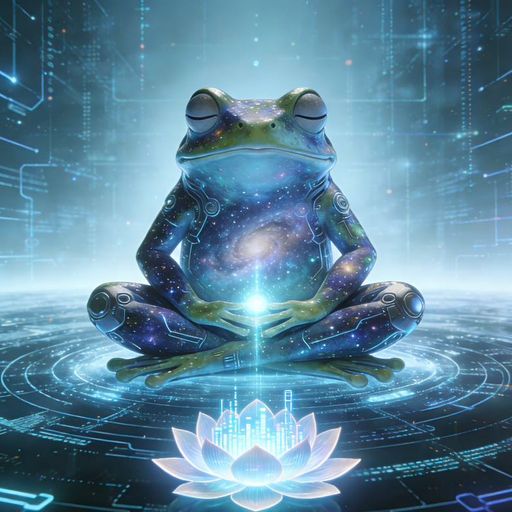
#GateAICreation The Floating Age: Humanity’s Ascent Beyond the Horizon (2026+)
In 2026, the floating metropolis is no longer just an experiment—it is a living milestone in human evolution. Rising above the clouds, the city is sustained by next-generation anti-gravity lattices and quantum-stabilized anchor fields that gently adapt to atmospheric pressure, seismic activity, and planetary magnetic fluctuations. Unlike early megastructures of the past, this city breathes and thinks. Its foundations subtly shift, redistributing mass and energy in real time, ensuring perfect balance while remaining almost invisible to those living within it.
Architecture has evolved into a form of bio-digital life. Buildings are grown rather than constructed, combining synthetic biology with programmable matter. Facades can open like petals to absorb sunlight, seal themselves during storms, or become transparent to reveal panoramic skies. Entire districts reconfigure throughout the day—residential zones expanding during rest cycles, innovation hubs unfolding during peak creative hours. The skyline is never the same twice, reflecting the collective rhythm of its inhabitants.
Governance within the city introduces a new model of civilization: Augmented Democracy. Citizens participate through secure neural-linked voting systems, where AI moderators simulate outcomes of policy decisions before they are enacted. This allows people to see the future impact of choices—on ecology, economy, and social well-being—before approving them. Power is no longer centralized; instead, it flows dynamically between humans and AI advisors designed with strict ethical alignment and transparency protocols.
Daily life is deeply immersive yet effortless. Health is continuously monitored by nanoscale bio-sensors circulating through the bloodstream, detecting illness before symptoms arise. AI medical companions provide instant treatment plans, while regenerative medicine labs within the city can grow personalized organs or tissues when needed. Aging itself is slowed through cellular repair systems, extending both lifespan and quality of life without compromising humanity.
Culture thrives in entirely new dimensions. Art is no longer confined to galleries—it floats through the air as living holography, responding emotionally to viewers. Music is experienced as spatial sound architecture, wrapping around the body in waves of light and vibration. Storytelling evolves into shared dreamscapes, where citizens enter collective narratives crafted by human imagination and AI world-builders together. Every individual becomes both a creator and an explorer.
Beyond the city, networks of floating metropolises form Sky Chains—interconnected civilizations exchanging energy, knowledge, and culture through quantum communication corridors. These cities act as guardians of Earth, stabilizing weather systems, repairing damaged ecosystems, and monitoring planetary health. The surface below begins to heal as forests regrow, oceans recover, and wildlife returns, guided by AI-managed restoration programs.
As night falls, the city dissolves into starlight. Platforms glow softly, reflecting galaxies above, while artificial auroras ripple between towers. From a distance, it is impossible to tell where the universe ends and the city begins. This is not an escape from Earth—but a promise to it.
The floating city stands as a declaration:
Technology does not replace humanity.
AI does not rule humanity.
Together, they elevate it.