BlackRiderCryptoLord

vip
Age 0.4 Yıl
Peak Tier 0
No content yet
#StrategyToIssueMorePerpetualPreferreds
🚨 Breaking Down the Strategy: Issuing More Perpetual Preferred Shares to Raise Capital or Fund Operations 🚨
1. The Core Announcement: The Company (Strategy) Plans to Issue More Perpetual Preferred Shares to Raise Capital or Fund Operations
At its heart, this strategy involves a company (let's assume "Strategy" refers to a hypothetical or specific firm like a tech, energy, or financial entity — if it's a real company, think along the lines of firms like Berkshire Hathaway or banks that use similar instruments) deciding to sell additional perpetual pref
HighAmbitionvip
#StrategyToIssueMorePerpetualPreferreds
🚨 Breaking Down the Strategy: Issuing More Perpetual Preferred Shares to Raise Capital or Fund Operations 🚨
1. The Core Announcement: The Company (Strategy) Plans to Issue More Perpetual Preferred Shares to Raise Capital or Fund Operations
At its heart, this strategy involves a company (let's assume "Strategy" refers to a hypothetical or specific firm like a tech, energy, or financial entity — if it's a real company, think along the lines of firms like Berkshire Hathaway or banks that use similar instruments) deciding to sell additional perpetual preferred shares. These are a type of preferred stock with no fixed maturity date, meaning they can remain outstanding indefinitely.
Why Now? (Context in 2026): In the current economic landscape (post-2025 slowdown, with resilient job growth as per the latest NFP but lingering inflation pressures), companies are looking for low-cost, non-dilutive ways to raise funds. Interest rates might be stabilizing, but traditional debt could be expensive or restrictive. Perpetual prefs offer a middle ground — they count as equity for balance sheet purposes (helping with debt ratios) but pay fixed dividends like bonds.
How Much and For What?: Typically, such issuances aim to raise millions or billions. For example, if Strategy is a mid-cap firm, they might target $500M–$1B. The funds could go toward:
Expansion/Operations: Acquiring assets, R&D, or daily working capital.
Debt Refinancing: Paying off higher-interest loans to reduce costs.
Shareholder Returns: Indirectly supporting buybacks or dividends without tapping core cash.
Crisis Buffering: Building a war chest for uncertainties like trade wars or AI disruptions.
This move signals confidence in long-term cash flows, as the company commits to ongoing dividend payments without a repayment deadline.
2. Short Explanation Expanded: They’re Selling a Type of Stock That Pays Fixed Dividends Indefinitely and Has No Maturity Date
Let's unpack this "short explanation" into a full-blown deep dive. Perpetual preferred shares (also called "perpetual prefs" or "perps") are hybrid securities that sit between common stock and bonds. Here's everything you need to know:
Basic Definition and Features:
Preferred Stock Basics: Preferred shares give holders priority over common shareholders for dividends and assets in liquidation, but usually no voting rights.
Perpetual Twist: Unlike regular prefs (which might have a call date or maturity), perps have no maturity date — they last forever unless the issuer calls them back (redeems) at a set price after a certain period (e.g., 5–10 years).
Fixed Dividends: Holders get a fixed dividend rate (e.g., 5–7% annually, based on par value like $25/share). Payments are quarterly or semi-annually, and they're cumulative (if missed, they accrue and must be paid before common dividends).
No Principal Repayment: Investors never get their principal back automatically — it's like owning a perpetual bond.
How Issuance Works (Step-by-Step Process):
Board Approval: Company's leadership (e.g., Strategy's CEO/CFO) proposes the issuance, gets board OK.
Regulatory Filing: File with SEC (in the US) or equivalent (e.g., Prospectus under Form S-3 for shelf offerings).
Pricing and Terms: Set dividend yield based on market rates (e.g., if Treasuries are at 4%, prefs might yield 6% to attract buyers). Par value, call provisions, and conversion options (rare for perps) are defined.
Underwriting: Banks like JPMorgan or Goldman Sachs underwrite and sell to investors (institutional like pension funds, retail via brokers).
Listing: Trade on exchanges like NYSE (tickers like "STRGY-P" for Strategy's prefs).
Funds Raised: Proceeds hit the balance sheet as equity, improving leverage ratios (e.g., debt-to-equity drops).
Investor Appeal:
Yield Hunters: In a low-rate world, fixed dividends provide steady income (better than volatile common stock dividends).
Tax Perks: Dividends might qualify for lower tax rates (e.g., qualified dividend income in the US).
Downside Protection: Priority in bankruptcy, though still behind debt holders.
Risks for Buyers: Dividends can be deferred (non-cumulative types exist, but rare), no growth potential like common stock, and callable — issuer can redeem if rates fall, forcing reinvestment at lower yields.
3. Pros and Cons for the Company (Issuer's Perspective)
Why choose perps over other funding? Let's discuss the advantages and drawbacks in detail.
Pros:
Cost-Effective Capital: Cheaper than common equity (no dilution of voting control) but often lower cost than debt if equity-like treatment helps ratings.
Balance Sheet Magic: Counts as equity under accounting rules (e.g., IFRS/GAAP), boosting Tier 1 capital for banks or improving solvency ratios.
Flexibility: No maturity means no refinancing pressure; dividends can be deferred in tough times without default (unlike bonds).
Market Signaling: Shows long-term optimism — "We can afford perpetual payments."
Diversification: Attracts income-focused investors, broadening the shareholder base.
Cons:
Higher Cost Than Debt: Dividend yields are typically higher than bond coupons to compensate for equity risk.
Dividend Commitment: Fixed payments eat into cash flow; missing them hurts reputation and could trigger covenants.
Call Risk Management: If not called, yields might look expensive if rates drop.
Market Dependency: Issuance success depends on investor appetite — in high-rate environments, demand drops.
Regulatory Hurdles: For regulated industries (e.g., utilities, banks), approvals needed; Basel III treats some perps as Additional Tier 1 capital.
4. Pros and Cons for Investors
Flipping to the buy-side:
Pros:
Predictable Income: Fixed, high-yield dividends for portfolios needing stability (e.g., retirees).
Seniority: Better claim than common stock in downturns.
Liquidity: Often traded like stocks, easy to buy/sell.
Inflation Hedge?: Fixed rate, but if yields rise with inflation, perps can be called/repurchased.
Cons:
Interest Rate Sensitivity: Prices fall when rates rise (duration is infinite, like zero-coupon bonds).
No Upside: No participation in company growth; dividends don't increase.
Deferral Risk: Issuer can skip dividends without bankruptcy.
Tax and Inflation Erosion: Fixed payments lose value over time; taxes on dividends.
Call Risk: Redeemed early if beneficial to issuer, capping gains.
5. Real-World Examples and Market Impact (As of 2026)
Historical Cases: Banks like Wells Fargo or HSBC have issued perps for capital (e.g., $1B+ deals). Utilities (e.g., Southern Company) use them for stable funding. In crypto/fintech, firms like Coinbase might explore hybrids.
2026 Context: With Fed rates possibly at 4–5%, perps yielding 6–8% are attractive. If Strategy is in tech, this could fund AI expansions amid job market resilience.
Market Reactions: Stock price might dip short-term (dilution fear) but rise on stronger balance sheet. Bond markets watch for yield curve shifts.
Broader Implications: Increases hybrid securities trend, affects ETF flows (e.g., PFF for preferreds), and signals economic health — more issuances mean companies are investing, not hoarding.
6. Strategy Tips: Should You Invest or Watch?
For Investors: If yield > your required return and company stable, buy for income. Diversify — don't overload on one issuer.
For Companies: Use perps if equity needed without control loss; time issuance when rates peak.
Risk Management: Monitor credit ratings (e.g., Moody's), economic data (like NFP for job trends affecting ops).
Alternatives: Compare to convertible bonds, common equity, or term prefs.
7. Final Thoughts: A Smart Play in Uncertain Times
Issuing more perpetual preferred shares is a savvy, evergreen strategy for companies like Strategy to secure capital without the headaches of debt maturity or full equity dilution. It pays fixed dividends forever, appealing to income seekers while giving issuers breathing room. In 2026's rebounding economy, this could be a win-win — but watch for rate changes and company health. What do you think — bullish on perps? Drop your takes below! 📈💼
repost-content-media
  • Reward
  • Comment
  • Repost
  • Share
#GateHKEventsKickOff
Gate.io has officially kicked off its major events in Hong Kong, marking the beginning of an exciting and strategic phase for the company in one of Asia’s most important crypto hubs. This kickoff signals that Gate.io is actively launching a series of activities, including conferences, networking sessions, executive meetings, community gatherings, and special programs designed to connect builders, investors, institutions, and regulators.
These events are often aligned with large global gatherings such as Consensus, where the biggest names in blockchain
HighAmbitionvip
#GateHKEventsKickOff
Gate.io has officially kicked off its major events in Hong Kong, marking the beginning of an exciting and strategic phase for the company in one of Asia’s most important crypto hubs. This kickoff signals that Gate.io is actively launching a series of activities, including conferences, networking sessions, executive meetings, community gatherings, and special programs designed to connect builders, investors, institutions, and regulators.
These events are often aligned with large global gatherings such as Consensus, where the biggest names in blockchain and Web3 come together to discuss innovation, compliance, infrastructure, and the future of digital finance. By starting its events in Hong Kong, Gate.io is showing strong commitment to expanding its presence, strengthening partnerships, and supporting regulated crypto growth in the region.
The phrase “kicks off” means starting something in an energetic, impactful, and important way. It reflects momentum, confidence, and forward movement — signaling that Gate.io is not just participating, but actively leading conversations and shaping the next stage of Web3 development. 🚀
repost-content-media
  • Reward
  • Comment
  • Repost
  • Share
#FranklinAdvancesTokenizedMMFs
Institutional Finance Meets Blockchain
Franklin Templeton’s expansion of tokenized Money Market Funds (MMFs) represents a pivotal moment in institutional adoption of blockchain technology. This isn’t just digital novelty—it signals the integration of legacy finance into on-chain ecosystems, creating tangible, high-liquidity bridges between traditional capital and crypto markets.
1️⃣ Blockchain-Based MMF Expansion
Franklin Templeton is deploying its MMFs on distributed ledger infrastructure, replacing traditional T+1/T+2 settlement cycles with instant, transpare
BTC-1,08%
ETH-0,26%
DEFI4,73%
HighAmbitionvip
#FranklinAdvancesTokenizedMMFs
Institutional Finance Meets Blockchain
Franklin Templeton’s expansion of tokenized Money Market Funds (MMFs) represents a pivotal moment in institutional adoption of blockchain technology. This isn’t just digital novelty—it signals the integration of legacy finance into on-chain ecosystems, creating tangible, high-liquidity bridges between traditional capital and crypto markets.
1️⃣ Blockchain-Based MMF Expansion
Franklin Templeton is deploying its MMFs on distributed ledger infrastructure, replacing traditional T+1/T+2 settlement cycles with instant, transparent, on-chain operations.
Key Benefits:
Real-time settlement: Investor transactions occur instantly, boosting liquidity.
Reduced intermediaries: Less reliance on banks or custodians.
Transparent audit trails: On-chain data ensures full accountability.
Fractional ownership: Even smaller investors can participate efficiently.
Market Implication:
This on-chain efficiency could unlock $50B–$150B in institutional liquidity initially, with the potential to scale into the hundreds of billions as adoption grows.
2️⃣ Fund Shares as Digital Tokens
Tokenization converts fund shares into blockchain-based assets, giving investors:
24/7 accessibility
Near-instant transfers
Automated compliance via smart contracts
This reduces operational bottlenecks, lowers costs (~0.1–0.2% fee efficiency gain per transaction vs legacy), and modernizes the MMF model for digital finance.
Volume & Price Impact:
On-chain MMF transfers can generate $10–15B daily transaction volume for major networks like Ethereum.
Stable, low-risk inflows support price stability for BTC, ETH, and regulated stablecoins by absorbing short-term volatility.
3️⃣ Traditional Finance Moves On-Chain
By tokenizing MMFs, Franklin Templeton bridges low-risk, high-liquidity capital markets with blockchain ecosystems. Institutional investors now gain a secure, regulated entry into DeFi and digital assets.
Market Effects:
Liquidity: Even a 1% allocation from the $5T+ U.S. MMF market could increase on-chain liquidity by $50B.
Network Depth: Higher liquidity strengthens order books, reduces spreads, and improves market efficiency.
Volatility Dampening: Large, low-risk capital inflows reduce speculative swings, indirectly stabilizing crypto prices.
4️⃣ Stablecoin and DeFi Dynamics
Tokenized MMFs compete with or complement stablecoins, offering regulated, yield-bearing alternatives.
Could boost demand for USDC, USDT, and other institutional-grade stablecoins.
DeFi protocols may see 10–20% additional liquidity inflows, improving lending, staking, and yield farming efficiency.
5️⃣ Institutional Confidence & Market Structure
Seeing respected institutions like Franklin tokenizing MMFs signals credibility for digital assets.
Encourages cautious institutional entry, further stabilizing crypto markets.
Expected gradual BTC/ETH price support of 3–6% in mid-term from liquidity absorption and on-chain institutional flows.
6️⃣ Strategic & Long-Term Significance
Tokenized MMFs are a blueprint for hybrid finance, combining regulated capital with blockchain efficiency.
Supports sustainable ecosystem growth, stronger liquidity, and predictable volume.
Encourages other asset managers to explore on-chain offerings, potentially tripling institutional capital inflow in 2–3 years.
💡 Key Takeaways
Franklin Templeton is modernizing MMFs via blockchain.
Tokenized shares improve settlement speed, efficiency, and transparency.
Institutional capital inflows deepen liquidity, stabilize markets, and enhance network reliability.
Stablecoins and DeFi benefit indirectly from predictable, low-risk inflows.
Long-term structure reduces volatility, fostering broader adoption of digital finance.
Final Reflection:
This move shows blockchain and institutional finance are converging. Tokenized MMFs don’t just increase volume—they stabilize markets, improve liquidity, and create professional-grade, high-confidence capital flows. The impact is structural, not speculative, and signals a maturing crypto ecosystem.
repost-content-media
  • Reward
  • 3
  • Repost
  • Share
CryptoSatvip:
Buy To Earn 💰️
View More
#BlackRockToBuyUNI
BlackRock, the world's largest asset manager (with trillions in AUM), has made a major move into decentralized finance (DeFi) by integrating its tokenized U.S. Treasury-backed fund BUIDL (currently ~$1.8–$2.2 billion in value) with Uniswap via UniswapX (in partnership with Securitize). As part of this strategic step — announced on February 11, 2026 — BlackRock is purchasing an undisclosed amount of UNI tokens (Uniswap's governance token). This marks BlackRock's first direct entry into DeFi infrastructure and the first time a major TradFi giant holds UNI on its balance sheet
UNI-8,91%
HighAmbitionvip
#BlackRockToBuyUNI
BlackRock, the world's largest asset manager (with trillions in AUM), has made a major move into decentralized finance (DeFi) by integrating its tokenized U.S. Treasury-backed fund BUIDL (currently ~$1.8–$2.2 billion in value) with Uniswap via UniswapX (in partnership with Securitize). As part of this strategic step — announced on February 11, 2026 — BlackRock is purchasing an undisclosed amount of UNI tokens (Uniswap's governance token). This marks BlackRock's first direct entry into DeFi infrastructure and the first time a major TradFi giant holds UNI on its balance sheet.
This signals strong institutional validation for DeFi protocols, especially leading DEXs like Uniswap, and highlights the growing convergence of tokenized real-world assets (RWAs) with decentralized trading rails.
Key Details of the Development
BUIDL Integration on UniswapX
BUIDL shares (tokenized short-term U.S. Treasuries/yield-bearing) are now tradable on UniswapX (an intents-based RFQ system for efficient swaps).
Access is whitelisted and institutional-only (minimum thresholds like $5M+ for qualified investors).
Enables 24/7 on-chain trading with stablecoins, self-custody, and compliance via Securitize.
This unlocks new liquidity for BUIDL holders while bridging TradFi yield to DeFi ecosystems.
BlackRock's UNI Purchase
BlackRock bought an undisclosed quantity of UNI as a "strategic investment in the Uniswap ecosystem."
UNI serves as governance proxy for Uniswap — holding it gives voting rights on protocol upgrades, fees, etc.
This is seen as a vote of confidence in Uniswap's long-term infrastructure role for tokenized assets.
Immediate Market Reaction
UNI surged 15–42% intraday on the news (peaking near $4.50–$4.57 from pre-news levels around $3.20–$3.50).
It later corrected ~26% due to whale selling (~5.95M UNI offloaded, ~$27M value), settling lower amid profit-taking.
Current UNI Price (as of February 12, 2026)
Live Price: ~$3.35–$3.45 USD (up ~3% in recent hours but down from intraday highs).
24h Trading Volume: ~$900M–$1B+ (spiked on news).
Market Cap: ~$2–$2.1B+.
Circulating Supply: ~753M UNI (total supply 1B, with vesting/unlocks ongoing).
UNI Price Impact & Where It Could Go Next
This news is hugely bullish for UNI long-term as it legitimizes Uniswap as DeFi's core liquidity layer for institutional RWAs (e.g., tokenized Treasuries/MMFs). BlackRock's involvement could drive:
Higher protocol usage → more fees (if fee switch activates).
Governance influence → potential pro-institutional upgrades.
Broader DeFi adoption → more TVL and volume on Uniswap.
Short-Term (Next Weeks–Months):
Expect volatility: Profit-taking from retail/whales could push UNI back to $3.00–$3.20 support (recent lows).
If momentum holds and more institutions follow (e.g., via similar integrations), rebound to $3.80–$4.20 resistance is likely.
Oversold signals (RSI ~26 earlier) suggest a bounce possible if volume sustains.
Medium-Term Forecast (Rest of 2026):
Bullish catalysts: More RWA listings on Uniswap, DeFi revival with lower rates, UNI governance proposals (fee switch).
Conservative forecasts: $4–$6 range (some analysts see $7–$9 if adoption accelerates).
Optimistic: $8–$10+ if BlackRock/others increase exposure and tokenized assets hit $100B+ TVL.
Risks: Macro downturns, regulatory scrutiny on DeFi, or whale dumps could cap gains at $3–$4.
Long-Term (2027+):
UNI could benefit massively from hybrid TradFi-DeFi growth (e.g., trillions in tokenized assets).
Projections range $5–$15+ by 2030 in bullish scenarios, driven by Uniswap's dominance in DEX volume.
Trading Strategy (Brief & Practical)
Bullish Bias (Long-Term Hold): Accumulate on dips below $3.30–$3.40 (strong support). Target $4–$5 retest in coming months.
Short-Term Swing: Buy pullbacks to $3.20–$3.30, sell partials at $3.80–$4.00 resistance. Use tight stops below $3.00 to manage volatility.
Risk Management: Position size small (1–5% portfolio) — news-driven pumps often correct hard. Watch whale wallets and Uniswap TVL for confirmation.
Avoid: FOMO buying at highs; wait for consolidation.
Watch: Upcoming Uniswap governance votes, more RWA integrations, or BlackRock follow-ups.
In summary, BlackRock's UNI purchase and BUIDL integration is a game-changer — validating DeFi for institutions and positioning UNI as a key beneficiary. While short-term price action remains choppy (~$3.35–$3.45 now), the structural tailwinds point to higher levels ahead ($4+ near-term, $6–$10+ longer-term possible). !
repost-content-media
  • Reward
  • 2
  • Repost
  • Share
ybaservip:
Good luck in the Year of the Horse!🐴
View More
#YiLihuaExitsPositions
#YiLihuaExitsPositions just dropped again… 🔥
Yi Lihua — the legend who once held mountains of BTC & ETH — is closing positions.
This isn’t just “selling a little”…
It’s:
✅ Massive profit booking at the top?
❌ Brutal loss cutting after leverage got wrecked?
⚖️ Risk-off mode before the next storm?
🔄 Strategy flip — from bull to neutral/bear?
When a whale like Yi Lihua (the guy who got rekt for $700M+ in one week before) exits, the whole market listens.
History says:
Big exits → uncertainty follows
Profit taking → local tops
Liquidations → panic cascades
Right now: is th
BTC-1,08%
ETH-0,26%
HighAmbitionvip
#YiLihuaExitsPositions
#YiLihuaExitsPositions just dropped again… 🔥
Yi Lihua — the legend who once held mountains of BTC & ETH — is closing positions.
This isn’t just “selling a little”…
It’s:
✅ Massive profit booking at the top?
❌ Brutal loss cutting after leverage got wrecked?
⚖️ Risk-off mode before the next storm?
🔄 Strategy flip — from bull to neutral/bear?
When a whale like Yi Lihua (the guy who got rekt for $700M+ in one week before) exits, the whole market listens.
History says:
Big exits → uncertainty follows
Profit taking → local tops
Liquidations → panic cascades
Right now: is this the calm before another dip… or the final shakeout before the next leg up? 🤔
repost-content-media
  • Reward
  • Comment
  • Repost
  • Share
#USIranNuclearTalksTurmoil
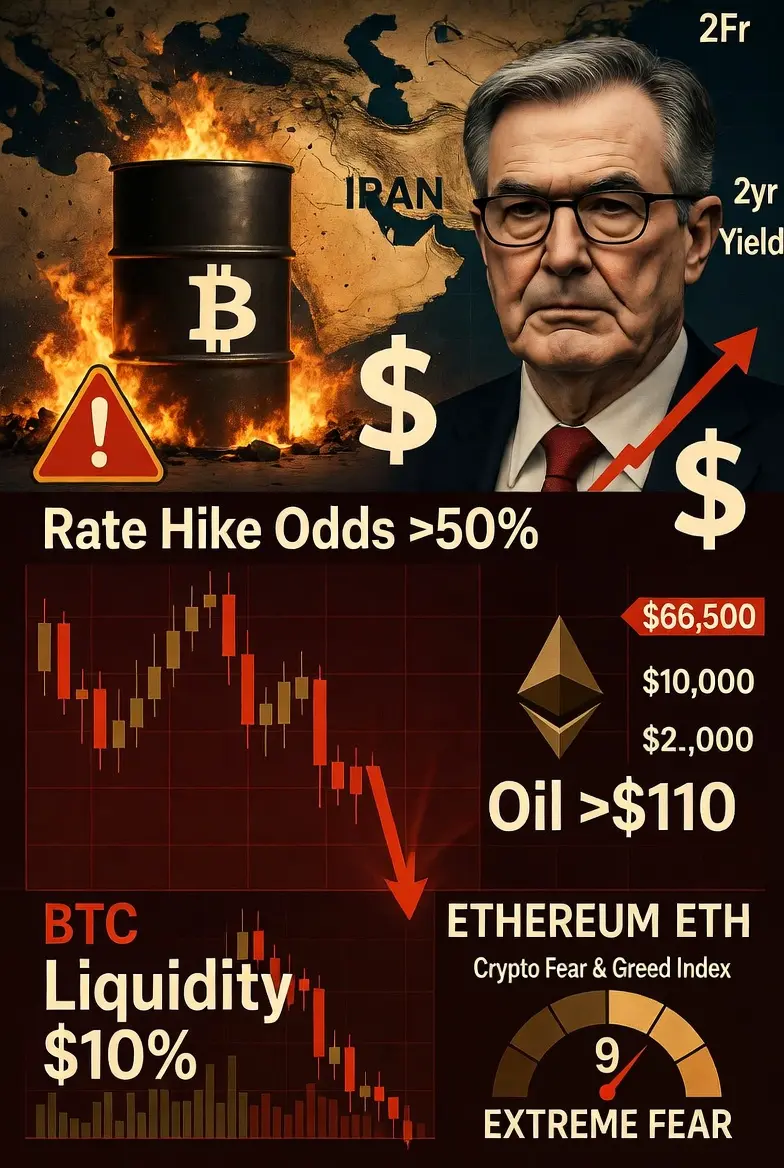
#USIranNuclearTalksTurmoil is LIVE and markets are feeling the heat 🔥
US–Iran nuclear talks in total chaos — diplomacy cracking, sanctions threats rising, enrichment levels stubborn, escalation risk sky-high.
What this means right now:
Diplomacy stalling hard
Sanctions could tighten even more
Iran pushing uranium limits
Real chance of miscalculation → military flare-up
Market reactions (happening NOW):
⛽ Oil pumping (already +1-2% on supply fears)
🪙 Gold ripping higher (classic safe-haven play)
📉 Stocks & risk assets nervous
💥 Crypto taking hits: Bitcoin & Ether
BTC-1,08%
ETH-0,26%
HighAmbitionvip
#USIranNuclearTalksTurmoil
#USIranNuclearTalksTurmoil is LIVE and markets are feeling the heat 🔥
US–Iran nuclear talks in total chaos — diplomacy cracking, sanctions threats rising, enrichment levels stubborn, escalation risk sky-high.
What this means right now:
Diplomacy stalling hard
Sanctions could tighten even more
Iran pushing uranium limits
Real chance of miscalculation → military flare-up
Market reactions (happening NOW):
⛽ Oil pumping (already +1-2% on supply fears)
🪙 Gold ripping higher (classic safe-haven play)
📉 Stocks & risk assets nervous
💥 Crypto taking hits: Bitcoin & Ethereum dipping sharply on risk-off flows + forced liquidations (volatility exploding in thin conditions)
→ BTC behaving like a high-beta tech stock right now, bleeding on panic but could rebound if tensions cool or "fuck it" liquidity floods back
History check: every US-Iran flare-up = short-term crypto volatility + sell-off, then quick bounce if no full war.
This isn’t just noise — it’s macro nitro fuel.
You fading the dip or hedging hard?
Stacking BTC as digital gold insurance?
Or riding stablecoins till dust settles? 👀
repost-content-media
  • Reward
  • Comment
  • Repost
  • Share
#StrategyBuys1,142BTC
On February 9, 2026, Michael Saylor announced that Strategy (formerly MicroStrategy) bought 1,142 Bitcoin for about $90 million. The average price was around $78,815 per BTC.
This purchase increased Strategy’s total holdings to 714,644 BTC. Over the years, they have spent about $54.35 billion buying Bitcoin, with an overall average price of $76,056 per BTC.
The money for this latest buy came from selling company shares raising around $89.5 million, which was almost fully used to buy more Bitcoin.
Why This Is Important
• Even though Bitcoin recently
BTC-1,08%
HighAmbitionvip
#StrategyBuys1,142BTC
On February 9, 2026, Michael Saylor announced that Strategy (formerly MicroStrategy) bought 1,142 Bitcoin for about $90 million. The average price was around $78,815 per BTC.
This purchase increased Strategy’s total holdings to 714,644 BTC. Over the years, they have spent about $54.35 billion buying Bitcoin, with an overall average price of $76,056 per BTC.
The money for this latest buy came from selling company shares raising around $89.5 million, which was almost fully used to buy more Bitcoin.
Why This Is Important
• Even though Bitcoin recently dropped to around $69,000, which is below their buying price, Strategy is still buying.
• This means they are currently sitting on large paper (unrealized) losses, but they are not worried.
• Michael Saylor’s strategy is simple: Buy Bitcoin and never sell.
Market Situation
Bitcoin recently corrected from the $78K–$80K range and fell to around $60K–$69K due to market pressure and liquidations. Strategy bought near the higher range, so this batch is temporarily at a loss.
However, Strategy now owns over 3.4% of the total Bitcoin supply, making them the largest corporate Bitcoin holder in the world.
What Does This Mean for BTC?
Short-term:
This news supports market confidence but won’t instantly push prices higher because $90M is small compared to daily trading volume.
Long-term:
It is bullish. Continuous buying reduces supply and shows strong institutional belief in Bitcoin’s future.
repost-content-media
  • Reward
  • Comment
  • Repost
  • Share
#WhiteHouseCryptoSummit
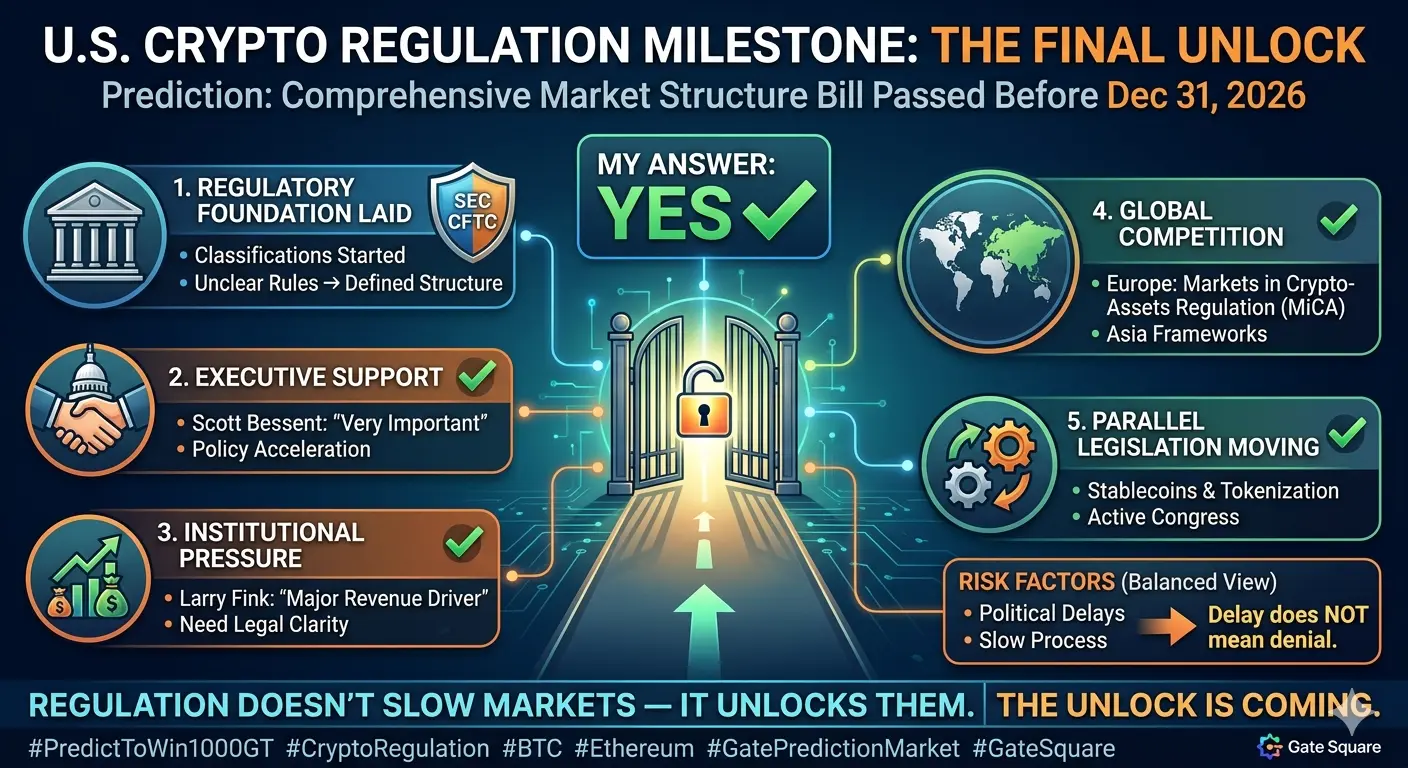
White House meeting fails to resolve US crypto legislation stalemate
Ripple CEO Joins White House Crypto Summit, But Hoskinson Is Left Out
February 4
March 11, 2025
🏛️ What Is the White House Crypto Summit?
The White House Crypto Summit refers to a high‑level meeting hosted at the White House (first held on March 7, 2025) bringing together U.S. government officials, regulators, lawmakers and leaders from the cryptocurrency industry to discuss the future of digital assets in American policy and law. It was positioned as a historic event intended to shape U.S. crypto re
BTC-1,08%
ETH-0,26%
SOL-0,59%
ADA1,99%
HighAmbitionvip
#WhiteHouseCryptoSummit
White House meeting fails to resolve US crypto legislation stalemate
Ripple CEO Joins White House Crypto Summit, But Hoskinson Is Left Out
February 4
March 11, 2025
🏛️ What Is the White House Crypto Summit?
The White House Crypto Summit refers to a high‑level meeting hosted at the White House (first held on March 7, 2025) bringing together U.S. government officials, regulators, lawmakers and leaders from the cryptocurrency industry to discuss the future of digital assets in American policy and law. It was positioned as a historic event intended to shape U.S. crypto regulation and industry direction.
The American Presidency Project
It was chaired by David Sacks, the White House’s appointed AI and Crypto Czar, with the President’s Working Group on Digital Assets playing a central role.
The American Presidency Project
🎯 Main Goals & Focus Areas
1. Regulatory Clarity
One of the summit’s primary aims was to define clear rules and frameworks for crypto — especially after years of uncertainty due to enforcement actions and legal disputes involving regulators like the SEC. Policymakers and industry leaders talked about ways to provide clarity around compliance, oversight, and how digital assets fit into financial law.
2. Stablecoin Oversight
Stablecoins — digital tokens pegged to fiat currencies — were a major topic. Leaders debated how to regulate stablecoin rewards and interest, an issue causing legislative friction between banks and crypto platforms.
3. U.S. Strategic Bitcoin Reserve
A key backdrop to the summit was the proposal to create a U.S. Strategic Bitcoin Reserve — akin to a “digital Fort Knox.” The idea, backed by an executive order signed just before the summit, was to hold seized government Bitcoin and possibly other assets as a permanent reserve. The summit discussed how to audit and manage these holdings and whether to include only BTC or also altcoins.
4. Innovation & Mainstream Adoption
The discussions also touched on how blockchain technology, DeFi, Layer‑2 scaling, and public trust initiatives can accelerate mainstream adoption of crypto while maintaining financial stability and consumer protections.
👥 Who Attended?
The event gathered top crypto industry figures, CEOs, founders, and regulators. Attendees included leaders from major firms, such as exchanges and blockchain projects, along with federal regulators and policymakers.
This blending of industry and government was designed to create dialogue around workable policy solutions.
However, some notable figures (like Cardano’s Charles Hoskinson) were reportedly not invited, which sparked debate in the crypto community about representation.
📜 What Was Announced?
Although the summit was highly anticipated, it did not produce sweeping new crypto laws or detailed regulatory mandates at the time it occurred. Instead, the White House used it to signal direction and priorities:
✅ A strong pro‑crypto stance from the administration
✅ Continued work toward stablecoin and market structure legislation
✅ Emphasis on audits and transparency in government crypto holdings
✅ Reinforcement of the Strategic Bitcoin Reserve concept (though specifics were limited)
Some attendees expressed confidence about clearer rules in the future, but no major legislative breakthrough was announced at the summit itself.
📈 Market & Investor Reactions
The summit received mixed reactions:
📉 Short‑term market response — Bitcoin and altcoins dipped after the summit, possibly due to unmet expectations or “sell‑the‑news” trading behavior. Some investors felt the announcements lacked actionable detail.
📊 Long‑term sentiment — Many institutional voices saw it as a historic moment, believing that U.S. government engagement with crypto at this level signals legitimacy and future regulatory progress.
🧠 Broader Policy Significance
The summit fits into broader shifts in U.S. crypto policy under the current administration, including:
🔹 Executive orders supporting crypto innovation
🔹 More collaborative approaches between regulators and industry
🔹 Efforts to make the U.S. a global leader in crypto and digital finance
🔹 Focus on integrating crypto within traditional financial systems and frameworks
It wasn’t just a one‑off event — it’s part of an ongoing policy effort that could influence legislation, regulatory rulemaking, and market standards over the coming years.
🔍 Key Debates & Ongoing Issues
Here are the main debates coming out of the summit:
⚖️ Stablecoin rules — Banks worry rewards could pull deposits away; crypto firms argue rewards are key for growth.
📊 Strategic Crypto Reserve — Should the U.S. government include only Bitcoin, or also other digital assets like Ethereum, Solana, Cardano, and XRP?
📜 Regulation vs. Innovation — How do you balance consumer protection with fostering innovation and global competitiveness?
📉 Investor Expectations — Some traders expected major announcements or policy guarantees, and short‑term price moves reflected disappointment.
🧩 In Summary: Why #WhiteHouseCryptoSummit Matters
It formally brought crypto issues to the highest level of U.S. government.
It set the stage for future regulatory frameworks and stablecoin laws.
It reinforced the idea of a Strategic Bitcoin Reserve and stronger U.S. leadership in crypto.
It showed both industry cooperation and policy tensions between banks, exchanges, and regulators.
Overall, the summit marked a historic moment for crypto policy, even if the immediate outcomes were less dramatic than some expected.
repost-content-media
  • Reward
  • 3
  • Repost
  • Share
AYATTACvip:
Buy To Earn 💎
View More
post-image
dragon_fly2vip
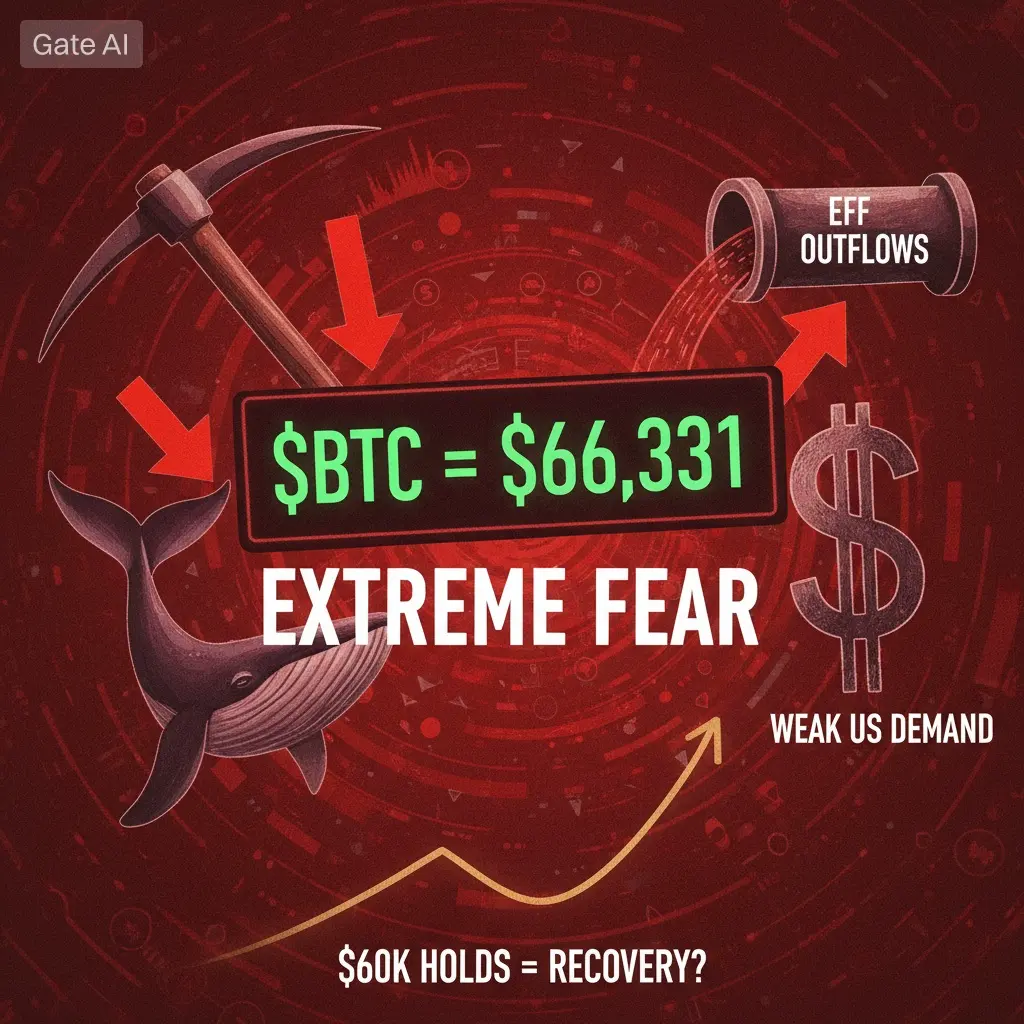
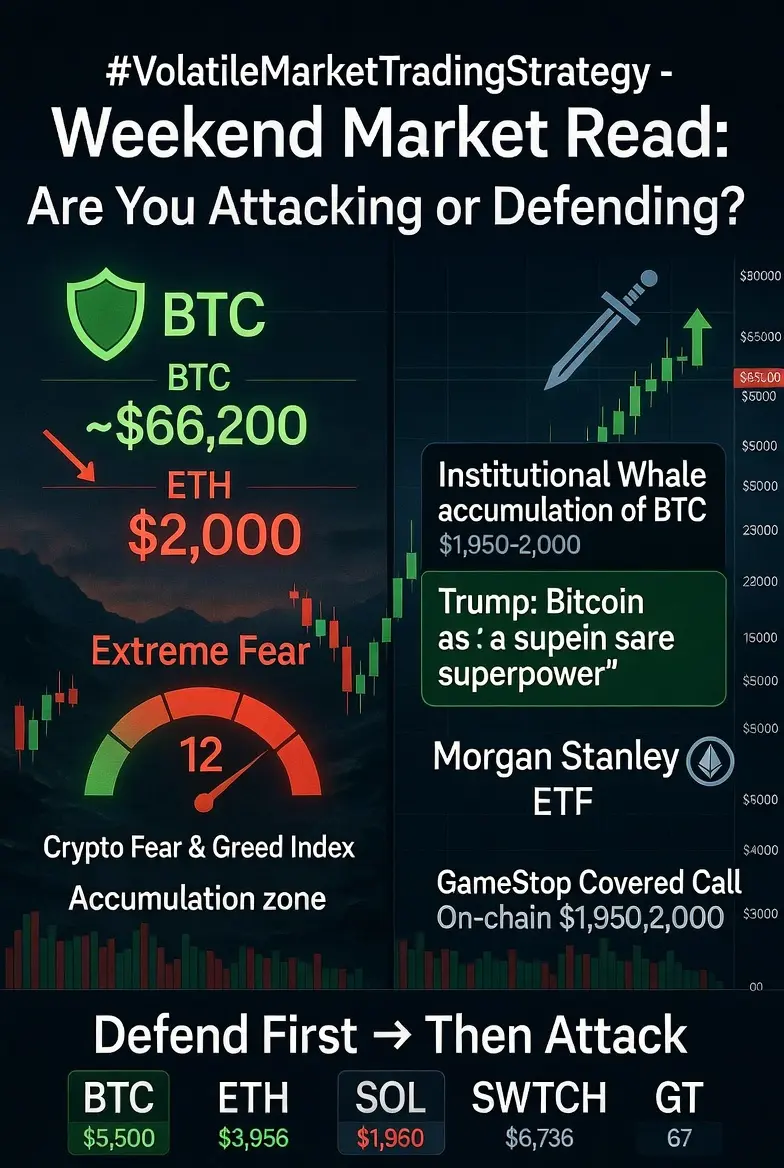
#BitcoinDropsBelow$65K Bitcoin slips below $65,000, a level many assumed would hold. This isn’t just a price dip—it’s a stress test for the entire crypto ecosystem. Traders and investors must now separate noise from real signals.
Market dynamics at play:
Institutional positioning: Large BTC wallets are moving funds toward exchanges, signaling potential sell-side pressure. This isn’t retail panic—it’s calculated repositioning by whales and institutions.
Technical structure: Short-term support around $64,500 is under threat. If breached, rapid liquidations could accelerate, dragging ETH and top altcoins along. Key levels on ETH ($3,100) and SOL must be watched closely.
Volatility reality: A drop below $65K reminds us that crypto remains a high-risk, high-reward environment. Market swings of 5–10% in days are normal, not anomalies.
Trader considerations:
Avoid emotional decisions; let data and charts guide your moves.
Monitor on-chain flows and whale activity for early warnings.
Use dips to build risk-adjusted positions, not to chase FOMO gains.
Why this matters long-term:
BTC under $65K tests conviction and market resilience. Strong hands may see this as an accumulation opportunity, while weak hands face the cost of panic decisions. Historical cycles show that price stress often precedes major moves—both up and down.
Bottom line: The current dip isn’t a headline story—it’s a signal. Those who read the charts, analyze market behavior, and stay disciplined will find opportunity in volatility. Crypto rewards preparation, patience, and informed action.
🔥 Keep strategy sharp, watch the charts, and treat this as a moment to observe, learn, and act wisely.
repost-content-media
  • Reward
  • Comment
  • Repost
  • Share
#GlobalTechSell-OffHitsRiskAssets The tech sector trembles, and risk assets bleed. Today, global markets are reeling as tech giants face unprecedented sell-offs—investors are fleeing high-multiple stocks, crypto is feeling the shockwaves, and market sentiment is tipping toward caution. Bitcoin and Ethereum dipped sharply as risk-on appetite faltered, while Nasdaq futures signal ongoing volatility.
Macro signals are screaming: inflation concerns persist, interest rates remain stubborn, and liquidity is tightening. Hedge funds and whales are repositioning aggressively, and retail investors are c
BTC-1,08%
ETH-0,26%
dragon_fly2vip
#GlobalTechSell-OffHitsRiskAssets The tech sector trembles, and risk assets bleed. Today, global markets are reeling as tech giants face unprecedented sell-offs—investors are fleeing high-multiple stocks, crypto is feeling the shockwaves, and market sentiment is tipping toward caution. Bitcoin and Ethereum dipped sharply as risk-on appetite faltered, while Nasdaq futures signal ongoing volatility.
Macro signals are screaming: inflation concerns persist, interest rates remain stubborn, and liquidity is tightening. Hedge funds and whales are repositioning aggressively, and retail investors are caught between fear and opportunity. This isn’t just a tech correction—it’s a market-wide stress test for risk assets.
Eyes on crypto: BTC testing critical support zones near $58,000, ETH under pressure around $3,100. Altcoins mirror the panic—some bleeding double digits—but smart capital is scouting for accumulation points. The key takeaway: volatility isn’t the enemy—it’s the battlefield where winners separate from losers.
If you thought risk assets were untouchable, this sell-off is a brutal reminder: markets punish overconfidence and reward vigilance. Stay informed, monitor liquidity flows, and respect macro signals—this is not a drill; this is structural rotation in real time.
repost-content-media
  • Reward
  • Comment
  • Repost
  • Share
#GlobalTechSell-OffHitsRiskAssets The tech sector trembles, and risk assets bleed. Today, global markets are reeling as tech giants face unprecedented sell-offs—investors are fleeing high-multiple stocks, crypto is feeling the shockwaves, and market sentiment is tipping toward caution. Bitcoin and Ethereum dipped sharply as risk-on appetite faltered, while Nasdaq futures signal ongoing volatility.
Macro signals are screaming: inflation concerns persist, interest rates remain stubborn, and liquidity is tightening. Hedge funds and whales are repositioning aggressively, and retail investors are c
BTC-1,08%
ETH-0,26%
dragon_fly2vip
#GlobalTechSell-OffHitsRiskAssets The tech sector trembles, and risk assets bleed. Today, global markets are reeling as tech giants face unprecedented sell-offs—investors are fleeing high-multiple stocks, crypto is feeling the shockwaves, and market sentiment is tipping toward caution. Bitcoin and Ethereum dipped sharply as risk-on appetite faltered, while Nasdaq futures signal ongoing volatility.
Macro signals are screaming: inflation concerns persist, interest rates remain stubborn, and liquidity is tightening. Hedge funds and whales are repositioning aggressively, and retail investors are caught between fear and opportunity. This isn’t just a tech correction—it’s a market-wide stress test for risk assets.
Eyes on crypto: BTC testing critical support zones near $58,000, ETH under pressure around $3,100. Altcoins mirror the panic—some bleeding double digits—but smart capital is scouting for accumulation points. The key takeaway: volatility isn’t the enemy—it’s the battlefield where winners separate from losers.
If you thought risk assets were untouchable, this sell-off is a brutal reminder: markets punish overconfidence and reward vigilance. Stay informed, monitor liquidity flows, and respect macro signals—this is not a drill; this is structural rotation in real time.
repost-content-media
  • Reward
  • Comment
  • Repost
  • Share
#BuyTheDipOrWaitNow?
#BuyTheDipOrWaitNow? |BTC trading below $60,000 is not a “cheap entry” narrative — it’s a global liquidity stress signal.
When crypto, US equities, gold, and silver all sell off together, this is not sentiment-driven panic; this is forced deleveraging across markets.
1️⃣ Bottom-fishing reality (no sugarcoating)
Trying to call a bottom during high volatility is not strategy — it’s gambling.
Historically, real bottoms form after volatility compresses, funding rates normalize, and sellers are exhausted.
Fear alone doesn’t mark bottoms — liquidity returning does.
2️⃣ Why every
BTC-1,08%
dragon_fly2vip
#BuyTheDipOrWaitNow?
#BuyTheDipOrWaitNow? |BTC trading below $60,000 is not a “cheap entry” narrative — it’s a global liquidity stress signal.
When crypto, US equities, gold, and silver all sell off together, this is not sentiment-driven panic; this is forced deleveraging across markets.
1️⃣ Bottom-fishing reality (no sugarcoating)
Trying to call a bottom during high volatility is not strategy — it’s gambling.
Historically, real bottoms form after volatility compresses, funding rates normalize, and sellers are exhausted.
Fear alone doesn’t mark bottoms — liquidity returning does.
2️⃣ Why everything is falling together
• Higher-for-longer interest rate expectations
• Margin calls triggering asset-agnostic selling
• Funds reducing risk exposure simultaneously
When liquidity tightens, correlation goes to 1 — everything becomes a source of cash.
3️⃣ Trading review (discipline check)
This is not an environment for aggressive longs.
Capital preservation > prediction.
Selective hedging or staying flat beats emotional dip-buying.
My stance:
I’m waiting, not chasing.
The market will offer entries again — but only after sellers lose control, not while they’re still pressing.
Markets don’t reward urgency.
They reward patience, structure, and survival.
repost-content-media
  • Reward
  • 1
  • Repost
  • Share
CryptoLensvip:
btc price will be droping today and it will be at least5%+
#CelebratingNewYearOnGateSquare #我在Gate广场过新年
The New Year didn’t make me profitable.
Discipline did — after the market punished me for ignoring it.
Most people celebrate a date change.
The market only respects behavior change.
Last year made one thing painfully clear:
Hope traders became liquidity
Risk managers stayed alive
Patience outperformed intelligence
That order doesn’t reset in January.
While timelines are full of wishes, fireworks, and screenshots, serious capital is quiet:
Defining invalidation
Cutting exposure early
Waiting for confirmation instead of chasing movement
If you’re ente
dragon_fly2vip
#CelebratingNewYearOnGateSquare #我在Gate广场过新年
The New Year didn’t make me profitable.
Discipline did — after the market punished me for ignoring it.
Most people celebrate a date change.
The market only respects behavior change.
Last year made one thing painfully clear:
Hope traders became liquidity
Risk managers stayed alive
Patience outperformed intelligence
That order doesn’t reset in January.
While timelines are full of wishes, fireworks, and screenshots, serious capital is quiet:
Defining invalidation
Cutting exposure early
Waiting for confirmation instead of chasing movement
If you’re entering this year without rules you actually follow, you’re not early — you’re exposed.
Gate Square isn’t a place for motivational quotes.
It’s where habits get priced in real time.
New Year doesn’t mean new luck.
It means the market will test you again —
and this time, it won’t be gentle.
Adapt, or repeat.
The chart already knows your choice.
repost-content-media
  • Reward
  • Comment
  • Repost
  • Share
#WhiteHouseTalksStablecoinYields
Stablecoins (USDT, USDC, etc.) currently sit at a market cap of roughly $260–320 billion (fluctuating around $267–310B in early 2026 data, with peaks near $318B). This is the total supply/outstanding circulation — think of it as the "size" of the stablecoin economy.
Market Breakdown & Percentages (as of early-mid 2026)
Total stablecoin market cap/supply: ~$260–320 billion (e.g., $266B in Jan, up to $318B peaks, ~$267–270B in Feb reports).
USDT (Tether) dominance: 60–68% of the market (~$185–187B market cap), often 61–64%. It controls the lion's share.
USDC (Ci
DAI0,01%
HighAmbitionvip
#WhiteHouseTalksStablecoinYields
Stablecoins (USDT, USDC, etc.) currently sit at a market cap of roughly $260–320 billion (fluctuating around $267–310B in early 2026 data, with peaks near $318B). This is the total supply/outstanding circulation — think of it as the "size" of the stablecoin economy.
Market Breakdown & Percentages (as of early-mid 2026)
Total stablecoin market cap/supply: ~$260–320 billion (e.g., $266B in Jan, up to $318B peaks, ~$267–270B in Feb reports).
USDT (Tether) dominance: 60–68% of the market (~$185–187B market cap), often 61–64%. It controls the lion's share.
USDC (Circle): 23–25% (~$64–78B), more institutional-focused and regulated.
Others (DAI, USDe, PYUSD, etc.): Remaining 7–15%, with growing but smaller shares.
Concentration: Top 2 (USDT + USDC) often hold 85–93% of total supply, showing extreme dominance.
Trading Volume
Stablecoins power the vast majority of crypto trading and transfers:
Annual transaction volume: $27–46 trillion (some estimates hit $33–35T in 2025–2026, often exceeding Visa/PayPal combined).
Daily/24h volume: Often $30–100B+ across major pairs, with USDT alone driving $50–100B+ daily in many snapshots.
Percentage role: Stablecoins facilitate ~70–82% of all centralized exchange (CEX) spot trading volume and a huge chunk of DeFi/on-chain activity. They are the "quoting currency" — most trades happen in USDT or USDC pairs.
Liquidity
Liquidity refers to how easily you can buy/sell large amounts without moving the price much (tight spreads, deep order books).
Stablecoins provide the deepest liquidity in crypto markets — USDT especially dominates on CEXs (75%+ of stablecoin trading volume flows through it).
On-chain: Ethereum holds ~50–70% of supply in some breakdowns, Tron ~40–45% (low-fee transfers), Solana/Base/Arbitrum growing fast.
Depth: Major pairs (BTC/USDT, ETH/USDT) have massive liquidity pools, enabling high-frequency trading, derivatives, and institutional flows.
Stablecoins reduce slippage and impermanent loss in DeFi liquidity pools, boosting overall market efficiency.
Price Stability
Stablecoins are designed to hold ~$1 peg (price stability = minimal deviation from $1).
Mechanisms: Reserves (Treasuries, cash equivalents) + arbitrage/redemption keep the peg tight.
Yields impact: Issuers earn interest on reserves (Treasuries yield 3–5%+ in recent environments), but if yields are passed to holders:
Attracts more users → higher supply/adoption → deeper liquidity and tighter pegs (more arbitrageurs stabilize price).
But creates risks: Higher yields could pull money from bank deposits → potential runs/redemptions during stress → temporary peg breaks or forced Treasury sales → short-term liquidity squeezes in Treasuries.
Without yields (banks' push): Less attractive for holding → potentially slower growth, but more "payment-only" focus → stable but lower volume/liquidity growth.
Real-world: Peg holds very well for USDT/USDC (deviations rare, <0.5% usually), but past events (e.g., 2022–2023 stress) showed minor wobbles when liquidity dries up.
How Yields Tie Into Price, Volume, Liquidity & Percentages
Pro-yield (crypto side): Rewards (passive or activity-based) boost adoption → more supply minted → higher market cap percentages for compliant issuers → deeper liquidity pools → higher trading volume (people hold more for yields) → better price stability via more arbitrage capital.
Anti-yield (banks side): Yields = unfair competition → deposit flight (estimates: $500B–$6T+ potential outflows from banks) → reduced bank lending → systemic risks. If banned/limited, stablecoins become pure payments tools → slower growth in supply/volume, but potentially more stable pegs (less run risk from yield-chasing).
Compromise floating: Ban passive yields on holdings, allow activity-based rewards (staking, liquidity provision, transactions) → balances innovation with bank concerns → moderate impact on volume/liquidity growth.
Overall impact if yields restricted: Could cap stablecoin market growth (projections $500B–$2T by 2028–2030 slower), reduce volume/liquidity in DeFi, shift dominance to non-US issuers (offshore), but protect bank deposits and systemic stability.
Bottom Line
Stablecoins are already the backbone of crypto liquidity (80%+ trading, trillions in volume) and price stability ($1 peg). The White House talks could reshape everything:
Full yields → explosive growth in supply/volume/liquidity, but higher risks.
Strict limits → controlled growth, better bank protection, potentially lower dominance percentages for US-based issuers long-term.
The Feb 2026 meetings (Feb 2 deadlock, Feb 10 follow-up) are crunch time — no deal yet, but pressure is on for a compromise by month-end to unlock CLARITY Act/GENIUS Act progress. This directly affects how much stablecoins grow, how liquid markets stay, how stable the $1 peg remains, and who captures the biggest percentage slice of the digital dollar pie.
repost-content-media
  • Reward
  • Comment
  • Repost
  • Share
#BitMineBuys40KETH
BitMine (also referred to as Bitmine Immersion Technologies, ticker BMNR, and chaired by Tom Lee) has indeed made a significant purchase of 40,000 ETH (Ethereum) in a single day recently. This was part of their ongoing aggressive accumulation strategy, with on-chain data showing buys like 20,000 ETH from FalconX and another 20,000 ETH from BitGo, totaling around $83.4 million at the time (based on prices around $2,000–$2,100 per ETH during the transaction period).
This move came amid a sharp market pullback, where ETH has dropped over 60% from its recent all-time highs (aro
ETH-0,26%
HighAmbitionvip
#BitMineBuys40KETH
BitMine (also referred to as Bitmine Immersion Technologies, ticker BMNR, and chaired by Tom Lee) has indeed made a significant purchase of 40,000 ETH (Ethereum) in a single day recently. This was part of their ongoing aggressive accumulation strategy, with on-chain data showing buys like 20,000 ETH from FalconX and another 20,000 ETH from BitGo, totaling around $83.4 million at the time (based on prices around $2,000–$2,100 per ETH during the transaction period).
This move came amid a sharp market pullback, where ETH has dropped over 60% from its recent all-time highs (around $4,900+). Despite massive unrealized losses (reportedly $7–8 billion+ on their overall holdings), BitMine views this dip as a strong buying opportunity tied to Ethereum's fundamentals, staking yields, and long-term role in finance.
Key Details on BitMine's Ethereum Position
Total holdings: Approximately 4.326 million ETH (as of early February 2026), representing about 3.6% of Ethereum's circulating supply — making them one of the largest corporate holders.
Staking: Nearly 2.9 million ETH are staked, generating passive daily rewards (estimated around $1 million+ per day in some reports).
Overall treasury: Their crypto + cash + other investments exceed $10 billion, with ETH as the primary reserve asset.
Strategy: Led by Tom Lee (famous for bullish crypto calls), BitMine is treating the current weakness as an entry point, expecting a V-shaped recovery based on historical patterns. They continue buying even as prices hover near $2,000.
This signals strong institutional confidence in ETH despite the bearish market phase. Large buys like this often act as bullish catalysts, reducing available supply and potentially supporting price floors.
Current Ethereum Price (as of February 10, 2026)
Ethereum (ETH) is currently trading around $2,000–$2,012 USD, down about 1–2% in the last 24 hours amid broader crypto weakness. It's well below its 2025 peaks but holding key support levels near $2,000.
Ethereum Price Forecast and Potential Impact from This News
The crypto market is highly volatile, and predictions vary widely. Here's a balanced discussion based on recent analyst views and market sentiment:
Short-term (next few months in 2026): ETH could face more downside pressure if the broader bear market continues (some technical targets mention $1,760, $1,400, or even $1,000 in worst-case scenarios). However, heavy institutional buying like BitMine's could provide support and limit deeper drops. A rebound to $2,500–$3,000 is possible if sentiment improves.
Medium-term (end of 2026): More optimistic forecasts include:
Standard Chartered: Targets $7,500 by end-2026 (with extensions to $15,000+ in later years).
Other analysts: Ranges from $5,000–$8,000+ if recovery plays out, driven by staking rewards, network upgrades, and institutional adoption.
Tom Lee's view (via BitMine): Expects a swift V-shaped recovery, implying strong upside from current levels.
Longer-term (2027–2030): Bullish scenarios see ETH reaching $10,000–$40,000 in multi-year cycles, fueled by Ethereum's utility in DeFi, NFTs, layer-2 scaling, and real-world finance. Bearish views cap it lower if adoption slows.
Impact of BitMine's buy on ETH price:
This kind of whale/institutional accumulation (especially at scale, with 3.6%+ of supply held) is bullish. It reduces circulating supply, signals "smart money" confidence, and could spark FOMO among other investors. Combined with staking (locking up supply), it might accelerate recovery once market conditions turn (e.g., better liquidity or macro improvements). However, in the short term, overall market sentiment dominates — so while this is a positive signal, ETH won't moon overnight.
Overall, BitMine's move reinforces the narrative that big players see ETH as undervalued right now and are positioning for the next bull run.
repost-content-media
  • Reward
  • Comment
  • Repost
  • Share
#MegaETHMainnetLaunches
🚀 MegaETH Mainnet Is Live: Ethereum Enters the Real-Time Era
MegaETH, the high-performance Ethereum Layer-2 blockchain, has officially launched its mainnet, marking a major milestone for Ethereum scaling. The network is no longer in test mode — it is now fully live and open for real-world use by developers, users, and applications worldwide.
The mainnet launch took place on February 9, 2026, and alongside it, MegaETH introduced its ecosystem frontend called “The Rabbithole.” This serves as the main gateway for users to explore live applications, bridge assets, deploy
ETH-0,26%
LINK0,62%
DEFI4,73%
TOKEN3,93%
HighAmbitionvip
#MegaETHMainnetLaunches
🚀 MegaETH Mainnet Is Live: Ethereum Enters the Real-Time Era
MegaETH, the high-performance Ethereum Layer-2 blockchain, has officially launched its mainnet, marking a major milestone for Ethereum scaling. The network is no longer in test mode — it is now fully live and open for real-world use by developers, users, and applications worldwide.
The mainnet launch took place on February 9, 2026, and alongside it, MegaETH introduced its ecosystem frontend called “The Rabbithole.” This serves as the main gateway for users to explore live applications, bridge assets, deploy contracts, and interact with the network easily.
🔍 What Does the Mainnet Launch Mean?
In simple terms, MegaETH has transitioned from testnet (experimental environment) to mainnet (real blockchain with real value).
Users can now:
Send real transactions
Deploy smart contracts
Interact with live decentralized apps (dApps)
Bridge assets from Ethereum
Swap tokens
Use real DeFi protocols, games, and on-chain tools
All transactions ultimately settle on Ethereum, meaning MegaETH benefits from Ethereum’s security while delivering massive performance improvements.
⚡ Why MegaETH Is Different: The “Real-Time” Blockchain
MegaETH is designed to feel less like a traditional blockchain and more like a real-time web application. The goal is near-instant execution with minimal delay — removing the friction users usually experience on Ethereum.
Key Technical Highlights:
100,000+ transactions per second (TPS) claimed
(50,000+ TPS targets reported at launch)
Sub-10 millisecond block times
(transactions confirm in under 0.01 seconds)
10+ Ggas per second processing capability
Built as an Ethereum Layer-2, inheriting Ethereum’s security while scaling performance massively
During pre-launch stress testing, MegaETH reportedly:
Handled 55,000 TPS peaks
Processed billions of transactions
Demonstrated strong stability under heavy load
This level of performance opens the door for high-frequency trading, real-time gaming, social platforms, instant payments, and advanced DeFi, all running on Ethereum infrastructure.
📊 Early Network Activity & On-Chain Stats
Since the mainnet launched very recently, the ecosystem is still in its early growth phase — but momentum is building quickly.
Current Early Indicators:
Total Value Locked (TVL): ~$40 million
(initial launch figures were as low as $3M, showing rapid growth)
Stablecoin Market Cap: ~$35 million
(primarily USDT)
DEX Volume (24h): Very low (~$40–$50)
Bridged TVL: Over $90 million on some trackers
Daily transactions: Still ramping up, but expected to grow as adoption increases
More than 50+ applications were live or integrating at launch, including:
DeFi and lending tools
Derivatives platforms
Oracle integrations via Chainlink
Infrastructure and developer tooling
The Blockscout explorer already shows millions of transactions processed, indicating active network usage despite the early stage.
🪙 $MEGA Token: Price, Supply & Liquidity Status
The native token $MEGA has a total supply of 10 billion, but it is not yet fully tradable on major centralized exchanges.
Current Token Situation:
Price: ~$0.13–$0.132 (pre-market / perpetual indicators)
24h Volume: Extremely low or near zero on most trackers
Market Cap: Not fully established due to minimal circulating supply
FDV: ~$1.3 billion (based on pre-market pricing)
Liquidity: Very limited — no deep DEX or CEX pools yet
Token releases appear tied to future milestones and ecosystem growth, not an immediate full TGE or airdrop. For now, MegaETH’s focus is clearly on network adoption, infrastructure, and application growth, rather than short-term token speculation.
🔮 Overall Outlook: Big Vision, Early Stage
MegaETH represents a major step forward for Ethereum scalability, aiming to close the speed gap with ultra-fast chains while maintaining Ethereum’s security and decentralization.
Strengths:
Extremely low latency
Massive throughput potential
Strong technical vision
Ethereum security + Chainlink integrations
Challenges Ahead:
User adoption will be the true test
Liquidity and volume must grow
Strong competition from other L2s (Base, Arbitrum, Optimism, etc.)
Token economics and exchange listings will be major catalysts
For developers and users interested in ultra-fast Ethereum applications, now is the perfect time to explore MegaETH via The Rabbithole and official documentation.
🚀 Final Thought
Ethereum’s future isn’t just about scaling — it’s about speed without compromise. MegaETH is betting that real-time blockchain experiences are the next evolution.
repost-content-media
  • Reward
  • Comment
  • Repost
  • Share
#MrBeastAcquiresStep
🚀 BIG NEWS: MrBeast Just Acquired Step – Entering the Fintech World!
YouTube's biggest star, Jimmy "MrBeast" Donaldson, has officially taken his empire into financial services. Through his company Beast Industries, he has acquired Step, the popular teen-focused banking and money management app.
This move marks a major expansion beyond content creation, Feastables chocolate, and philanthropy — straight into helping millions of young people build better financial habits.
Here’s the full breakdown, point by point:
What is Step?
Step is a mobile-first fintech app designed sp
ETH-0,26%
DEFI4,73%
HighAmbitionvip
#MrBeastAcquiresStep
🚀 BIG NEWS: MrBeast Just Acquired Step – Entering the Fintech World!
YouTube's biggest star, Jimmy "MrBeast" Donaldson, has officially taken his empire into financial services. Through his company Beast Industries, he has acquired Step, the popular teen-focused banking and money management app.
This move marks a major expansion beyond content creation, Feastables chocolate, and philanthropy — straight into helping millions of young people build better financial habits.
Here’s the full breakdown, point by point:
What is Step?
Step is a mobile-first fintech app designed specifically for teens, Gen Z, and young adults. It acts as an all-in-one money platform (not a full bank, but partnered with Evolve Bank & Trust for FDIC-insured services). Key features include:
No-fee debit accounts
Secured Visa credit-building card (helps build credit early without debt risk)
Savings tools with interest
Early pay / cash advance options
Spending controls for parents
Focus on financial literacy and money management
The Acquisition Details
Announced on February 9, 2026
Beast Industries bought Step (terms not publicly disclosed; estimated under $200M based on market observers)
Step already has over 7 million users and previously raised significant funding (including from Stripe, General Catalyst, Coatue, plus celebrities like Stephen Curry, Will Smith, Charli D’Amelio, and The Chainsmokers)
This follows Beast Industries’ $200M investment from BitMine Immersion Technologies (a major Ethereum treasury firm chaired by Tom Lee) in January 2026
Why MrBeast Did This
In his own words (from his X post):
“Nobody taught me about investing, building credit, or managing money when I was growing up. That’s exactly why we’re joining forces with Step! I want to give millions of young people the financial foundation I never had.”
It aligns perfectly with his audience — mostly Gen Z and Gen Alpha — who are just starting to handle money.
What Impact Will This Have on the Crypto Market?
While Step currently focuses on traditional fintech (banking, credit, savings), the crypto angle is heating up speculation:
Beast Industries received $200M from BitMine, an Ethereum-focused treasury company. BitMine’s chair Tom Lee has hinted at exploring DeFi integration into Beast’s upcoming financial platform.
In late 2025, MrBeast-linked entities filed a trademark for “MrBeast Financial”, explicitly covering cryptocurrency trading, crypto payment processing, DEX transactions, and digital asset services.
If crypto features roll out (e.g., easy on-ramps for ETH, stablecoins, or DeFi tools inside the app), it could onboard millions of Gen Z users — many crypto-curious but new to wallets/exchanges — into the ecosystem.
Short-term: Minimal direct pump (no token yet, no immediate crypto launch announced).
Long-term potential: Massive adoption catalyst. MrBeast’s 466M+ YouTube reach + trust factor could normalize crypto for teens, drive on-chain activity, and boost Ethereum/DeFi narratives (especially with BitMine’s ETH treasury backing).
Watch for: Future announcements on “MrBeast Financial” products — crypto could be the killer feature that differentiates this from traditional neobanks.
What This Means for Users & the Future
Step users get access to Beast Industries’ massive reach (466M+ YouTube subscribers + global brand power)
Expect new groundbreaking products, better financial education tools, and possibly integrations with MrBeast-style rewards or giveaways
Step’s team (including founder/CEO CJ MacDonald) stays on to scale the platform
Hints at bigger ambitions: This could be the foundation for a full “MrBeast Financial” suite
Why It’s a Game-Changer
MrBeast is one of the most trusted names with young people — combining that trust with real financial tools could disrupt teen banking
It’s a smart pivot: from viral videos and giveaways to long-term value creation through fintech (and potentially crypto)
Competitors like traditional banks, other neobanks (Chime, Current), and apps like Greenlight should take note
MrBeast is no longer just entertaining — he’s building tools to change lives through money smarts. This could be the start of “MrBeast Financial” becoming a real thing — and maybe even a bridge to mainstream crypto adoption.
repost-content-media
  • Reward
  • 1
  • Repost
  • Share
Thynkvip:
Watching Closely 🔍️
#YiLihuaExitsPositions
The phrase “Yi Lihua exits positions” is used in crypto discussions to suggest that Yi Lihua (a known trader, fund manager, or market participant) has closed or reduced active trading positions in certain crypto assets.
At present, there is no fully verified public disclosure confirming the exact assets, position sizes, or timing of these exits. Because of this, the topic should be understood more as a market narrative or sentiment signal, rather than a confirmed on-chain or official announcement.
To properly understand its impact, it’s important to first understand wha
HighAmbitionvip
#YiLihuaExitsPositions
The phrase “Yi Lihua exits positions” is used in crypto discussions to suggest that Yi Lihua (a known trader, fund manager, or market participant) has closed or reduced active trading positions in certain crypto assets.
At present, there is no fully verified public disclosure confirming the exact assets, position sizes, or timing of these exits. Because of this, the topic should be understood more as a market narrative or sentiment signal, rather than a confirmed on-chain or official announcement.
To properly understand its impact, it’s important to first understand what exiting positions means in crypto trading and why such actions attract attention.
What Does “Exiting Positions” Mean in Crypto?
In crypto trading, exiting a position means closing an open trade:
Selling an asset if the trader was long
Buying back an asset if the trader was short
This is the point where profits or losses are realized, making exit decisions one of the most critical parts of trading.
Why Would a Trader Exit Positions?
Traders and institutions exit positions for several strategic reasons:
Profit targets reached
Gains are locked in to avoid reversals.
Risk management
Stop-loss levels are triggered to prevent larger losses.
Market or news events
Regulatory changes, macro shocks, or sudden volatility can force exits.
Portfolio rebalancing
Capital is shifted to other assets or reduced exposure.
Market structure changes
Trend breakdowns or weakening momentum signal caution.
Why This Topic Gets Attention
When a well-known trader or fund is believed to be exiting positions, markets often react emotionally. Traders may interpret it as:
A possible local market top
Increased downside risk
A shift toward a risk-off environment
However, this does not automatically mean the market will fall—context matters.
Common Exit Strategies Used by Professionals
Manual exits based on technicals, volume, or news
Automated exits using stop-loss and take-profit orders
Trailing stops that protect gains while allowing trends to continue
Large players often exit gradually to minimize market impact.
Mistakes Retail Traders Often Make
Exiting too early due to fear
Holding losing positions hoping for recovery
Ignoring liquidity, fees, and slippage
Blindly copying large traders without confirmation
Headlines alone should never dictate trading decisions.
How Traders Should Interpret This Situation
Instead of reacting emotionally, traders should:
Treat it as a sentiment signal, not a trade command
Recheck technical levels and volume
Adjust risk exposure if needed
Focus on personal strategy and time horizon
Smart trading is about confirmation, not imitation.
Risk Reminder
Crypto markets are highly volatile. Even when large participants reduce exposure, price action can move in either direction. Always trade with:
Clear entry and exit plans
Proper position sizing
Defined risk limits
No single trader controls the market.
Final Note
Until confirmed data or official statements are available, this topic should be viewed as contextual market discussion, not verified fact. Patience, discipline, and independent analysis remain essential.
repost-content-media
  • Reward
  • Comment
  • Repost
  • Share
#GateLunarNewYearOn-ChainGala
The Gate Lunar New Year On-Chain Gala is Gate.io’s flagship event celebrating the Lunar New Year in 2026. The event combines on-chain innovation, community engagement, trading incentives, and exclusive rewards, blending blockchain technology with cultural festivities. Here’s everything you need to know.
1️⃣ Purpose of the Gala
The primary goal is to celebrate the Lunar New Year with the global crypto community, emphasizing Gate.io’s role as a leader in decentralized and centralized trading.
It aims to increase user engagement, encourage active trading, and showca
BTC-1,08%
ETH-0,26%
GALA2,35%
DEFI4,73%
HighAmbitionvip
#GateLunarNewYearOn-ChainGala
The Gate Lunar New Year On-Chain Gala is Gate.io’s flagship event celebrating the Lunar New Year in 2026. The event combines on-chain innovation, community engagement, trading incentives, and exclusive rewards, blending blockchain technology with cultural festivities. Here’s everything you need to know.
1️⃣ Purpose of the Gala
The primary goal is to celebrate the Lunar New Year with the global crypto community, emphasizing Gate.io’s role as a leader in decentralized and centralized trading.
It aims to increase user engagement, encourage active trading, and showcase the platform’s advanced on-chain capabilities.
The Gala also serves as a community-building exercise, strengthening ties between Gate.io and retail/institutional traders worldwide.
2️⃣ Event Structure & Key Highlights
Trading Competitions
Users can participate in special Lunar New Year trading contests.
Top traders are rewarded with bonuses in BTC, ETH, or selected altcoins.
Metrics tracked include trade volume, transaction count, and profit percentage, rewarding both high-volume and skilled traders.
NFT Drops & Collectibles
Exclusive Lunar New Year-themed NFTs were released for the event.
Some NFTs are tradable or redeemable on-chain, offering utility beyond simple collectibles.
NFTs include limited edition art, digital zodiac icons, and event badges.
Staking & Yield Rewards
Gate.io offered special staking campaigns tied to the Gala.
Users staking certain tokens during the Gala period earned higher-than-usual APY, along with potential NFT bonuses.
Lucky Draws & Red Packet Giveaways
Inspired by traditional Lunar New Year customs, Gate.io conducted digital “red packet” giveaways on-chain.
Participants could receive random token rewards, adding an element of gamification and excitement.
Cultural & Educational Engagement
The Gala featured mini-events explaining Lunar New Year traditions, connecting global users to the cultural significance.
Educational content also highlighted on-chain trading tips, DeFi strategies, and NFT utility.
3️⃣ On-Chain Integration
Unlike purely marketing-focused celebrations, this Gala leveraged Gate.io’s on-chain capabilities:
Direct on-chain reward distribution ensures transparency and traceability of all prizes.
Smart contract automation handled contests, staking, and NFT allocations efficiently.
Users could verify all rewards directly on-chain, enhancing trust and reducing disputes.
4️⃣ Participation & Community Impact
Participation was global, including Asia, Europe, and North America.
Community feedback emphasized fun, reward variety, and transparency.
Events like NFT drops and trading competitions increased user retention and platform activity, aligning with Gate.io’s growth strategy.
5️⃣ Market & Platform Implications
Trading Volume Boost: On-chain events often generate short-term spikes in trading volume and liquidity.
New User Acquisition: Festivals with gamified rewards attract new users and introduce them to crypto trading and staking.
Brand Visibility: The Gala positions Gate.io as innovative and culturally conscious, bridging blockchain technology with global traditions.
6️⃣ Key Takeaways
The Gate Lunar New Year On-Chain Gala is more than a celebration—it’s a strategic engagement campaign leveraging on-chain transparency, gamification, and community incentives.
It strengthens user loyalty, promotes active trading, and enhances Gate.io’s reputation in both crypto and cultural spheres.
The event showcases how blockchain technology can make traditional celebrations interactive, rewarding, and globally accessible.
✅ Summary
The Gala successfully merged cultural celebration with blockchain innovation, offering users an engaging, transparent, and rewarding experience. From trading competitions and NFT drops to staking incentives and red packet giveaways, every aspect was designed to enhance participation, trust, and platform growth.
repost-content-media
  • Reward
  • 1
  • Repost
  • Share
ybaservip:
2026 Go Go Go 👊
#BuyTheDipOrWaitNow?
Gate Plaza|2/6 Market Update: Bitcoin < $60k, Gold/Silver Plunge, Stocks Under Pressure
🎁 Fan Appreciation Benefits · Rewards Keep Increasing
🌍 1. Market Overview: Global Risk-Off Takes Hold
This morning, global risk markets experienced a sharp, multi-asset selloff:
Bitcoin dipped below $60,000, erasing post-election gains and currently trading volatile around mid-$60k levels. Over the past month, BTC is down roughly 30%, highlighting the high volatility in crypto markets.
U.S. stock index futures extended losses. Nasdaq and S&P have declined sharply over multiple sessi
BTC-1,08%
HighAmbitionvip
#BuyTheDipOrWaitNow?
Gate Plaza|2/6 Market Update: Bitcoin < $60k, Gold/Silver Plunge, Stocks Under Pressure
🎁 Fan Appreciation Benefits · Rewards Keep Increasing
🌍 1. Market Overview: Global Risk-Off Takes Hold
This morning, global risk markets experienced a sharp, multi-asset selloff:
Bitcoin dipped below $60,000, erasing post-election gains and currently trading volatile around mid-$60k levels. Over the past month, BTC is down roughly 30%, highlighting the high volatility in crypto markets.
U.S. stock index futures extended losses. Nasdaq and S&P have declined sharply over multiple sessions, while the Dow shed hundreds of points, reflecting broad risk aversion.
Precious metals faced a severe correction. Spot gold retreated to $4,660 per ounce, and silver plummeted 9% intraday, pressured by forced deleveraging and margin calls.
Market question: When will the bottom arrive? No clear bottom is visible yet, as deleveraging cascades and high volatility continue to push prices lower. Potential stabilization signals to monitor include:
Reduced selling from long-term holders in Bitcoin.
A cooling in the VIX (volatility index) indicating risk appetite returning.
Dip-buying rebounds in gold and silver.
Historically, crypto drawdowns of ~40% often test lower support zones—in BTC’s case, roughly $56k–$58k. Extreme fear sentiment can indicate that a capitulation phase may be near, but timing is uncertain.
💹 2. Bottom-Fishing Signals: Timing and Strategy
Traders are asking: Will the market continue to decline, and when is the right time to bottom-fish?
Near-Term Risks: The leveraged unwind from gold/silver margin hikes is spilling over to equities and crypto. Macroeconomic uncertainty and tech/AI disruption fears add further downward pressure.
Oversold Conditions: BTC is nearing major technical supports like the 200-week moving average, and gold is pulling back after a parabolic run—potential early signals that the downside is being absorbed.
Best Bottom-Fishing Approach:
Wait for confirmation signals, e.g., volatility decreasing, ETF inflows resuming, or BTC holding support in the $56k–$60k range.
Scale into positions during capitulation spikes, when high-volume selling aligns with extreme fear indicators.
Long-term holders often profit in these phases, but short-term traders face heightened risks if deleveraging continues.
Key takeaway: Bottom-fishing requires patience and discipline—avoid trying to catch a falling knife.
🔍 3. Cause Analysis: Why Are Multiple Markets Falling Together?
Seeing gold, silver, U.S. stocks, and crypto all declining simultaneously can be confusing, but several factors explain the correlation:
Forced Deleveraging & Margin Calls
Precious metals saw sharp corrections after CME margin hikes (up 30–40%).
Leveraged traders were forced to sell gold and silver, which spilled over into BTC and equities to cover losses.
Risk-Off Contagion
Broader investor flight from risk assets affected tech stocks (AI disruption concerns, weak labor data) and crypto.
Geopolitical tensions and Fed policy uncertainty further amplified selling pressure.
Not Fundamentals Alone
Gold and silver were overextended due to speculative, leveraged buying; BTC’s short-term movements correlate more with credit availability and risk appetite than its long-term “digital gold” thesis.
When leverage unwinds, assets that are usually uncorrelated sell together, even if their fundamental drivers differ.
True Driving Factors
High leverage built up across multiple markets.
Macro shocks, including tariff fears, Fed policy ambiguity, and AI capex concerns, created cascading sell pressure.
Insight: Understanding these causes helps traders avoid panic reactions and make calculated decisions, rather than just following the herd.
📊 4. Trading Review: How Are Traders Reacting?
Market participants are responding with a mix of strategies:
Shorting: Traders capitalize on downward momentum in BTC, stocks, or silver.
Dip Buying: Cautious entries at perceived lows aim for medium- to long-term gains.
Hedging & Risk Management: Using stablecoins, options, or diversified portfolios to limit losses.
Portfolio Diversification: Spreading exposure across assets reduces single-market risk.
Key takeaway: Discipline, patience, and a clear plan are essential. Emotional trading in volatile markets can quickly lead to losses.
✅ Final Thoughts
Markets remain volatile, and bottoms are hard to time precisely. Observing technical signals, macro drivers, and trading strategies can help navigate this turbulence. Whether your approach is buying the dip, shorting, or waiting, preparation and risk management are crucial.
repost-content-media
  • Reward
  • 1
  • Repost
  • Share
ybaservip:
2026 GOGOGO 👊
  • Pin

Trade Crypto Anywhere Anytime
qrCode
Scan to download Gate App
Community
  • 简体中文
  • English
  • Tiếng Việt
  • 繁體中文
  • Español
  • Русский
  • Français (Afrique)
  • Português (Portugal)
  • Bahasa Indonesia
  • 日本語
  • بالعربية
  • Українська
  • Português (Brasil)