
CryptoSelf

vip
Market Analyst
On-chain Analyst
Age 4.4 Yıl
No content yet
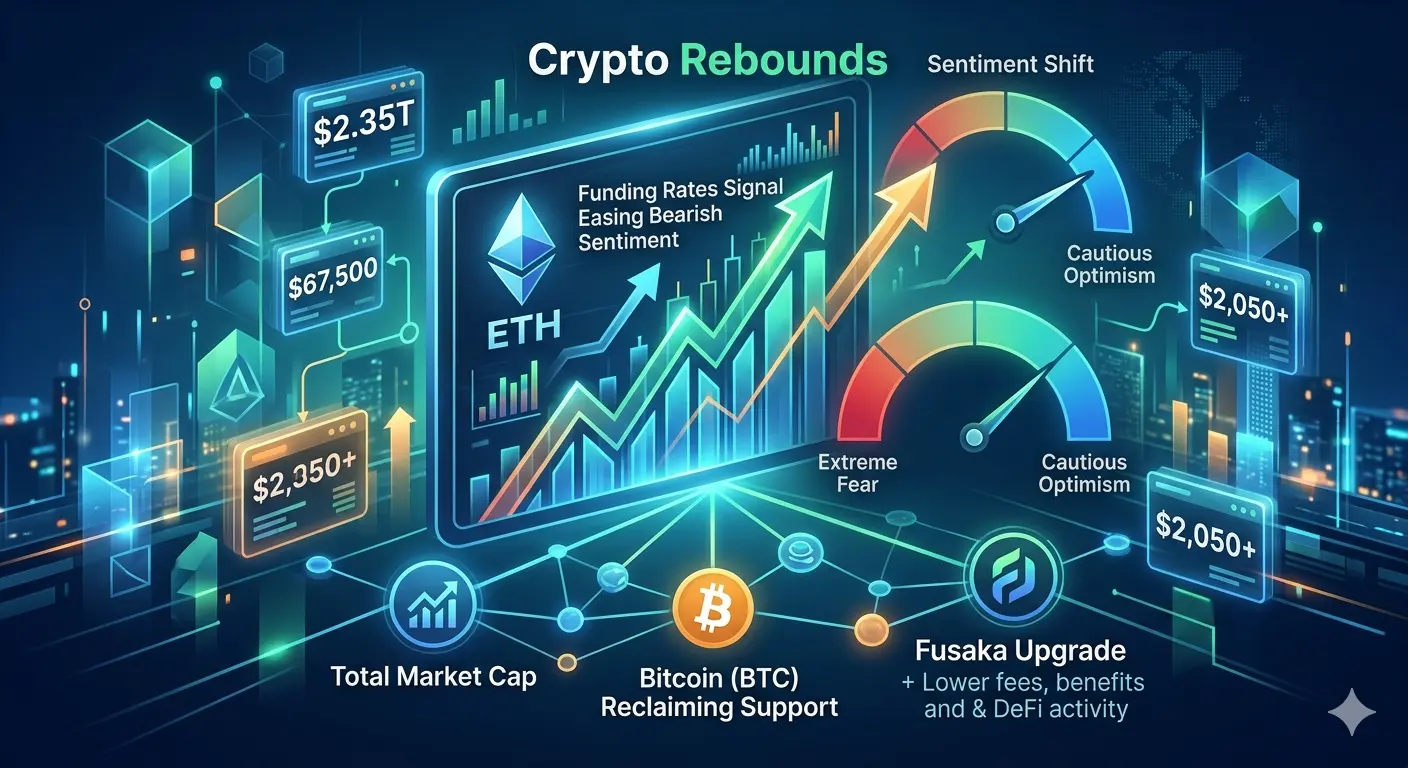
**Crypto Markets Close Q1 with a Rebound: ETH Funding Rates Change Direction**
As the first quarter of 2026 comes to an end, digital asset markets are holding a stronger footing than expected. After a challenging period marked by hawkish Fed rhetoric and geopolitical uncertainties, the sector’s two giants, BTC and ETH, are entering the quarter’s close not with a push downward but with a noticeable reluctance to decline, looking upward instead.
**Where do we stand?**
As of March 31, 2026, Bitcoin is trading around $66,200. Many analysts expected a sharp decline when it lost the psychological su
BTC-1,77%
ETH-1,16%
View Original
post-image
  • Reward
  • Comment
  • Repost
  • Share
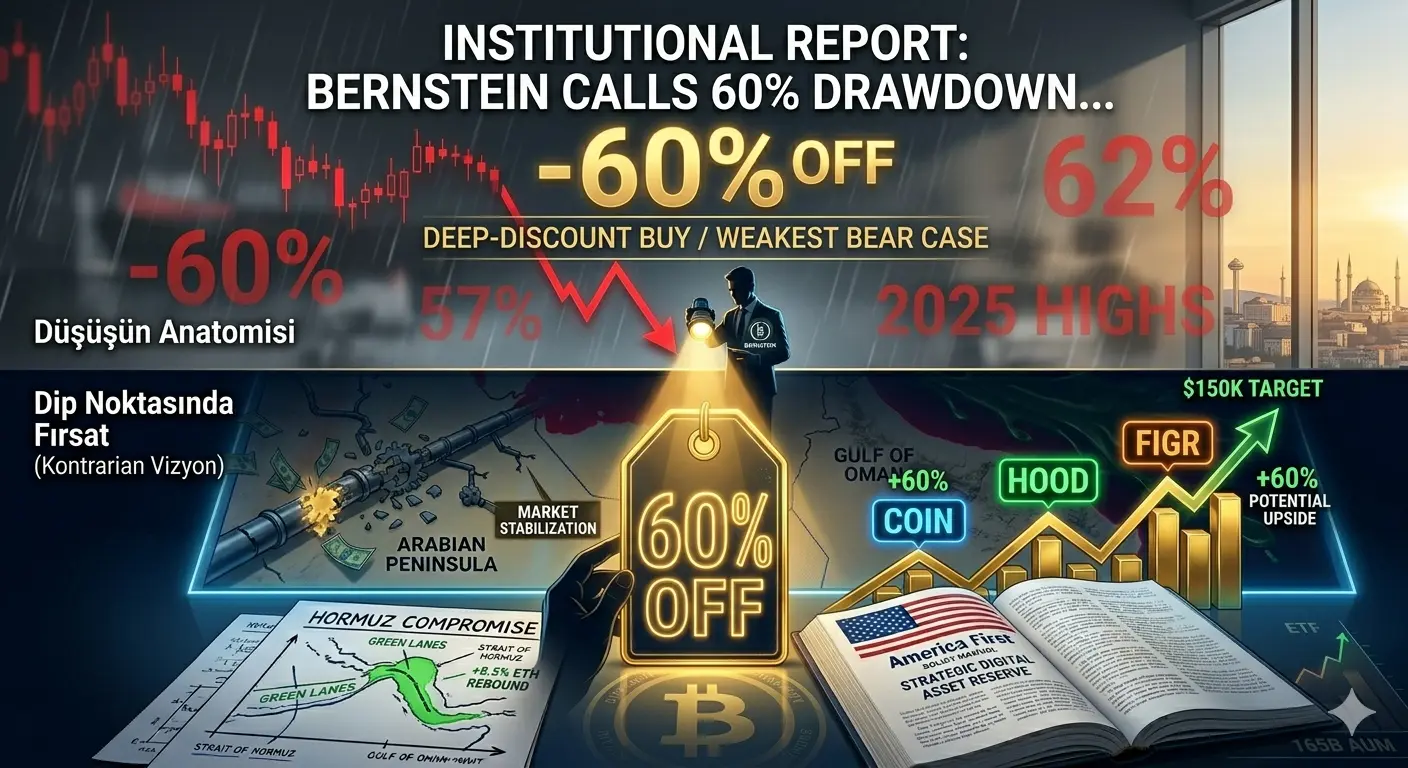
Institutional Report: Bernstein Calls 60% Drawdown in Crypto Stocks a “Deep-Discount Buy”
As the first quarter of 2026 comes to a close, Wall Street powerhouse Bernstein has issued a high-conviction report on the digital asset sector. Analysts led by Gautam Chhugani argue that the recent "crypto winter" of late 2025 and early 2026 has pushed crypto-linked equities into a territory of extreme undervaluation, calling the current market a “significant discount” opportunity.
The 60% Crash: Understanding the Numbers
Since peaking in October 2025—when Bitcoin hit its all-time high of $126,000—the cr
BTC-1,77%
post-image
  • Reward
  • Comment
  • Repost
  • Share
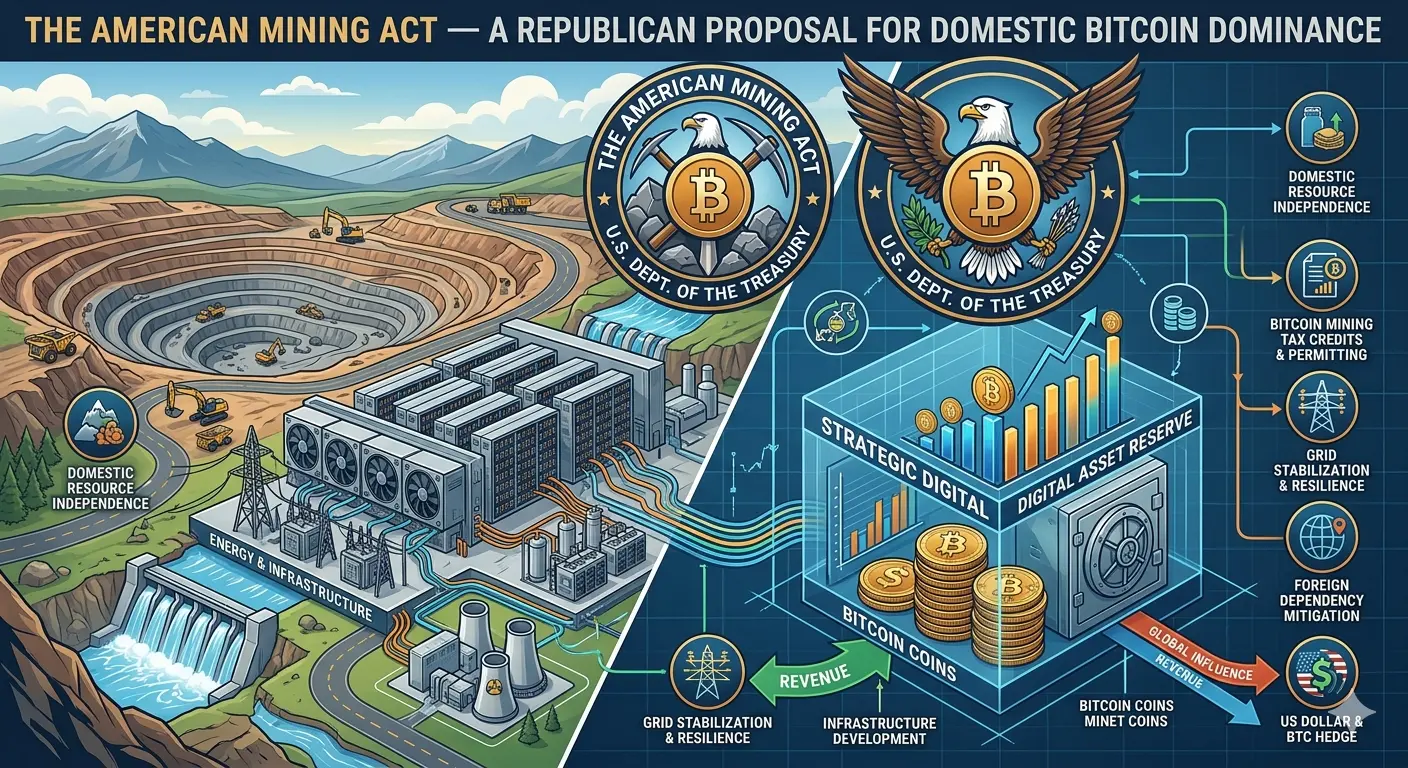
Policy Update: The American Mining Act — A Republican Proposal for Domestic Bitcoin Dominance
As the global energy and digital asset landscape evolves rapidly in 2026, a significant legislative push is emerging from the Republican caucus in the United States. Proposed as "The American Mining Act," this bill represents a foundational attempt to explicitly secure a leading position for the U.S. in both physical resource extraction and digital mining, with a strategic focus on strengthening Bitcoin (BTC) reserves.
The Dual Focus: Physical and Digital Sovereignty
The American Mining Act is built o
BTC-1,77%
post-image
  • Reward
  • 2
  • Repost
  • Share
dragon_fly2vip:
To The Moon 🌕
View More
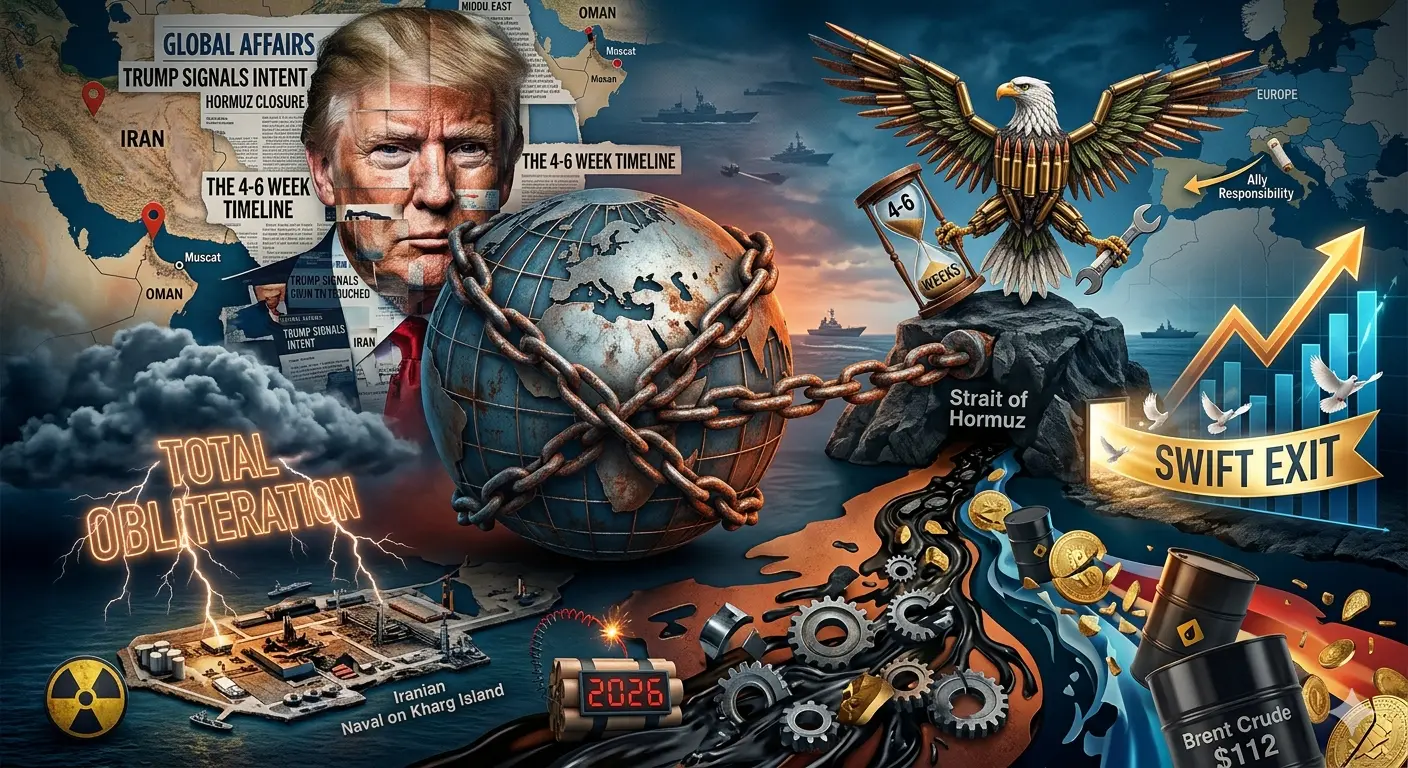
Global Affairs: Trump Signals Intent to End Iran Campaign Despite Hormuz Closure
In a move that has sent shockwaves through international diplomatic circles, President Donald Trump has reportedly informed senior aides that he is prepared to conclude the U.S. military campaign against Iran, even if the strategically vital Strait of Hormuz remains largely obstructed. This shift in strategy suggests a prioritization of a "swift exit" over the long-term stabilization of global energy routes.
The 4-to-6 Week Timeline
According to recent reports from the Wall Street Journal, the administration’s shi
post-image
  • Reward
  • 1
  • Repost
  • Share
HighAmbitionvip:
thnxx for the update
#GateGoldenTouch
Macro Markets Update: U.S. Futures Rally While Gold Shines on Safe-Haven Pivot
The global financial landscape is witnessing a complex "tug-of-war" as March 2026 comes to a close. While U.S. stock futures have turned higher, signaling a renewed appetite for risk, gold prices are simultaneously climbing as investors seek shelter from persistent geopolitical uncertainties and a shifting interest rate outlook.
U.S. Futures: A Resilient Turnaround
Wall Street is showing signs of recovery following a volatile month. As of March 31, 2026, futures tied to the major indices have edged
post-image
  • Reward
  • 1
  • Repost
  • Share
HighAmbitionvip:
Thanks for sharing
The Hidden AI War in Crypto — And Most Traders Don’t Even See It
The Hidden AI War in Crypto Markets: Game Theory, Probabilities, and the New Edge Every Trader Is Missing
The crypto market is no longer just a battlefield of buyers and sellers — it has quietly evolved into a complex arena where algorithms compete, adapt, and outmaneuver each other in real time. What most traders still perceive as “random volatility” is, in many cases, the emergent behavior of interacting systems making decisions under uncertainty. This shift is subtle, but it changes everything.
Traditional financial thinking s
xxx40xxxvip
The Hidden AI War in Crypto — And Most Traders Don’t Even See It
The Hidden AI War in Crypto Markets: Game Theory, Probabilities, and the New Edge Every Trader Is Missing
The crypto market is no longer just a battlefield of buyers and sellers — it has quietly evolved into a complex arena where algorithms compete, adapt, and outmaneuver each other in real time. What most traders still perceive as “random volatility” is, in many cases, the emergent behavior of interacting systems making decisions under uncertainty. This shift is subtle, but it changes everything.
Traditional financial thinking struggles to keep up with this reality. Models built on rational behavior assumptions fail in a market driven by emotion, hype cycles, and fragmented information. Fear of missing out, panic selling, and herd mentality dominate short-term price action. As a result, relying purely on historical data or fixed indicators is no longer enough to gain an edge.
A more powerful way to understand crypto markets is to treat them as a dynamic game. Every trader, bot, and institution becomes a player in a constantly evolving system. Each action — whether it’s entering a position, exiting, or simply waiting — affects the behavior of others. Prices are not just reactions to news; they are outcomes of strategic interactions.
This is where artificial intelligence begins to unlock a new layer of insight. Instead of predicting a single “correct” outcome, advanced systems evaluate multiple possibilities simultaneously. Rather than assigning rigid probabilities, they measure the strength of available evidence and adapt as new information emerges. This allows them to operate effectively even when the market sends conflicting signals — something every crypto trader experiences daily.
For example, imagine a scenario where technical indicators suggest a bullish breakout, but social sentiment is turning negative. Most traders freeze or make impulsive decisions. An AI-driven probabilistic system, however, doesn’t force a binary choice. It recognizes uncertainty as a valid state and adjusts exposure accordingly. In high-risk environments, sometimes the best move is controlled hesitation — not action.
But the real breakthrough comes from combining this probabilistic thinking with game theory. In crypto, you’re not trading against the market — you’re trading against other decision-makers. Some are retail traders driven by emotion, others are automated bots executing predefined strategies, and a few are large players capable of shifting liquidity. Understanding how these participants react under pressure creates a strategic advantage that pure data analysis cannot provide.
Now imagine simulating this entire environment.
In a multi-agent system, different strategies compete in a controlled setting. One agent might follow trend momentum, another might exploit mean reversion, while a third reacts to sentiment shifts. Over time, these agents evolve, adapt, and learn which behaviors survive under different market conditions. The result is not just a prediction model, but a living system that continuously refines its decision-making process.
What makes this approach especially powerful in crypto is its ability to handle anomalies. Black swan events — sudden crashes, exchange failures, regulatory shocks — are not rare exceptions here; they are part of the landscape. Most models break under these conditions because they rely too heavily on past patterns. A more adaptive framework, however, can reinterpret new situations using flexible reasoning rather than rigid rules.
Another critical aspect is explainability. One of the biggest barriers to adopting AI in trading is trust. Traders don’t just want signals — they want to understand why a decision is made. Systems that can communicate reasoning in simple terms — such as highlighting increased uncertainty or conflicting signals — create a stronger connection between human intuition and machine intelligence.
This transforms AI from a black box into a decision partner.
Of course, no system is perfect. High computational demands, unpredictable external events, and the sheer complexity of human psychology remain significant challenges. Even the most advanced models cannot fully predict a market driven by narratives and sudden shifts in collective sentiment.
There are also ethical concerns. As AI systems become more sophisticated, the risk of market manipulation increases. Large players using advanced algorithms could potentially influence price behavior in ways that smaller participants cannot detect or counter. This makes transparency and responsible design not just technical goals, but necessary safeguards for the ecosystem.
Despite these challenges, one thing is becoming increasingly clear: the future of crypto trading belongs to those who can navigate uncertainty, not eliminate it.
The edge is no longer about being right all the time — it’s about managing ambiguity better than everyone else.
Traders who begin to think in terms of probabilities instead of predictions, strategies instead of signals, and systems instead of isolated trades will find themselves operating on a completely different level. The market hasn’t become more chaotic — it has become more sophisticated.
And in this new environment, the real competition isn’t just human anymore.
#GateSquare #创作者冲榜 #内容挖矿 #Gate广场

repost-content-media
  • Reward
  • 7
  • Repost
  • Share
HighAmbitionvip:
good information about crypto
View More
7-Day Invite Fiesta Phase 5: Check In Daily and Earn Up to 1,100 USDT https://www.gate.com/campaigns/4389?ref=UAAWUFoN&ref_type=132&utm_cmp=bsRiMDlL
post-image
  • Reward
  • 35
  • Repost
  • Share
HighAmbitionvip:
good information about crypto
View More
  • Reward
  • 32
  • Repost
  • Share
HighAmbitionvip:
To The Moon 🌕
View More
  • Reward
  • 32
  • Repost
  • Share
HighAmbitionvip:
To The Moon 🌕
View More
  • Reward
  • 33
  • Repost
  • Share
MasterChuTheOldDemonMasterChuvip:
Just go for it 👊
View More
  • Reward
  • 35
  • Repost
  • Share
MasterChuTheOldDemonMasterChuvip:
坚定HODL💎
View More
thank you so much 🌸🌸
User_anyvip
Goldman Sachs notes that after months of declines in the crypto market, prices may be approaching cyclical lows. In a note dated March 26, 2026, bank analyst James Yaro emphasized that the current pullback is quite close to historical averages. Bitcoin has fallen approximately 46% from its October 2025 peak of $126,000, settling in the $66,000 to $70,000 range. This correction is painting a similar picture in crypto-related stocks.
Crypto-related stocks have fallen around 46% compared to their October 2025 peaks. Goldman Sachs states that this decline makes valuations more attractive. The bank highlights Robinhood, Figure Technologies, and Coinbase among the prominent companies, maintaining a buy recommendation for all three. While raising the price target for Coinbase to $235, it still sees around 35% upside potential. Similarly, it points to attractive entry points for Robinhood and Figure Technologies.
However, Goldman Sachs warns that weakness in trading volumes may persist. Goldman Sachs notes that periods of low volume historically last an average of three months. This could lead to a 2% decrease in revenue and a 4% decrease in profitability in 2026. However, they add that the volume contraction is manageable and a recovery is expected in the second half of the year. The market has been exhibiting volatile but flat performance in recent weeks.
In its overall assessment, Goldman Sachs signals that crypto prices are approaching a cyclical bottom. They state that the historical peak has been reached and the average bottom has been reached, increasing opportunities for long-term investors. However, short-term volume-driven pressures may continue. While this pressure could lead to sudden fluctuations in the Bitcoin price, it could also delay a sustained recovery.
In conclusion, Goldman Sachs' analysis indicates that the market is at a critical juncture. While the correction that has lasted for months conforms to historical norms, selective stock opportunities are emerging. Names like Robinhood Figure and Coinbase are attracting attention during this period. Investors are watching for a volume recovery and are hopefully awaiting the second half of 2026. With this bottom signal, the crypto market is preparing to step into a new cycle.
#BitcoinWeakens
#CreatorLeaderboard
#RangeTradingStrategy
$BTC
repost-content-media
  • Reward
  • 38
  • Repost
  • Share
MasterChuTheOldDemonMasterChuvip:
Just go for it 👊
View More
thank you so much 🌸🌸
xxx40xxxvip
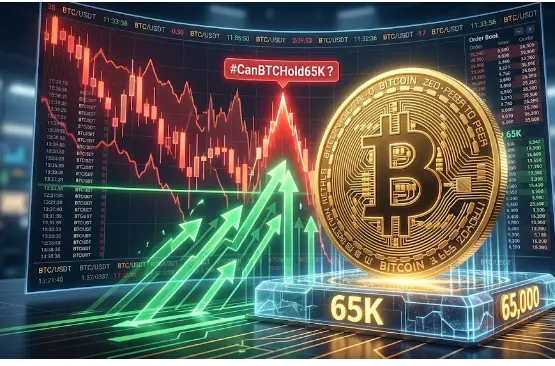
#CanBTCHold65K? 🚨 $65,000 Last Line of Defense? Critical Week for BTC
#GateSquare #TradingAnalysis #CryptoTrading #RiskManagement
Bitcoin dropped to $65,000 this morning and is now trading around $67,436. The market’s short summary:
“It hasn’t crashed yet, but no decision has been made.”
This week is different — multiple major factors are converging at the same time.
Why the Middle East Crisis Matters for BTC
Yemen Houthi missile attacks are intensifying the conflict, sending Brent crude to $116.75 (+59% MoM).
Mechanism: Oil ↑ → Inflation pressure ↑ → Interest rate expectations ↑ → Risk assets exit → BTC under pressure.
U.S. statements on Iran oil show the conflict won’t end quickly → ongoing uncertainty supports oil and keeps BTC pressured.
Bottom line: BTC is behaving more like equities than digital gold.
Technical Snapshot: Conflicting Signals
Weakness signs:
Daily MA7 < MA30 < MA120 → classic downtrend
MACD shows peak divergence
4h CCI and WR in overbought
Recovery signs:
Daily CCI entered oversold
15m & 4h SAR still below price
Morning volume increased → buyers returned
Key levels:
$65,000 support tested and held
Resistance: $68,000 – $72,000; $72,000 break could open path to $80,000 target
Institutional Buying Supports the Base
Strategy bought +1,031 BTC in March (total 762,099 BTC, avg cost $75,694)
Morgan Stanley announced low-fee spot BTC ETF
Coinbase + Fannie Mae launched crypto-collateral mortgages
Message: Institutions are buying, not selling at lows. Long-term base is strong.
Crude Oil Strategy
Bull scenario: Ongoing Houthi attacks, Strait of Hormuz pressure, no U.S.-Iran deal → Brent $120+
Bear scenario: Ceasefire or negotiations → Brent $80-$90
Risk management: Scale entries instead of one large directional bet. Monitor XAUUSD or crude oil on Gate TradFi.
My Thesis: Cautious Bull
Stay bullish while $65,000 holds
Stop-loss below $65,000
$80,000 target requires a sustained break of $72,000
Discussion Questions (CTA)
Will $65,000 support hold, or is it just a temporary pause?
Next major move: $60,000 or $80,000?
Will oil continue to pressure BTC, or will BTC emerge as a safe haven?
Share your thoughts below — let’s discuss!
$BTC $ETH $SOL
repost-content-media
  • Reward
  • 32
  • Repost
  • Share
MasterChuTheOldDemonMasterChuvip:
坚定HODL💎
View More
#CanBTCHold65K?
As Bitcoin navigates the mid cycle phase of the current market structure, the critical question dominating investor attention is clear: can BTC sustainably hold the 65,000 level, or is this zone a temporary consolidation before a deeper structural move
Market Context: A Battle Between Momentum and Liquidity
Following its recent pullback from higher resistance zones, Bitcoin has entered a technically sensitive range where both bullish continuation and corrective pressure coexist. The 65,000 level is not just a round number. It represents a confluence of historical resistance tu
BTC-1,77%
discoveryvip
#CanBTCHold65K?
As Bitcoin navigates the mid cycle phase of the current market structure, the critical question dominating investor attention is clear: can BTC sustainably hold the 65,000 level, or is this zone a temporary consolidation before a deeper structural move
Market Context: A Battle Between Momentum and Liquidity
Following its recent pullback from higher resistance zones, Bitcoin has entered a technically sensitive range where both bullish continuation and corrective pressure coexist. The 65,000 level is not just a round number. It represents a confluence of historical resistance turned support, derivative positioning clusters, and psychological anchoring for market participants.
Recent price action shows that buyers are actively defending this region, but the strength of that defense is being tested by declining spot volume and cautious institutional flows. This suggests that while there is interest in maintaining the level, conviction is not yet at its peak.
On Chain Signals: Holding Structure but Losing Aggression
On chain data provides a more nuanced picture. Long term holders remain largely inactive, indicating strong hands are not distributing aggressively. Exchange reserves continue to trend lower, which typically signals reduced immediate selling pressure.
However, short term holder behavior is more reactive. Profit taking increases whenever price approaches local highs, creating repeated rejection zones. This dynamic limits upside expansion and keeps Bitcoin within a tightening range.
Derivatives Landscape: The Real Battlefield
The derivatives market is currently the primary driver of short term price direction. Funding rates have normalized after previous spikes, suggesting that excessive leverage has been flushed out. Open interest remains elevated but stable, indicating that new positions are being built cautiously rather than aggressively.
Liquidation maps highlight a dense cluster both above and below the current price. This creates a compression effect, where price is drawn toward liquidity pockets. In practical terms, this means increased probability of sudden volatility spikes in either direction.
If Bitcoin can maintain support above 65,000 while gradually building open interest with neutral funding, it strengthens the case for a breakout. Conversely, a loss of this level could trigger a cascade of long liquidations, accelerating downside momentum.
Macro Environment: The Hidden Driver
Bitcoin is no longer isolated from global macro conditions. Interest rate expectations, inflation data, and dollar strength continue to influence capital allocation decisions.
Recent signals from major economies indicate a cautious stance on monetary easing. This limits the flow of cheap liquidity into risk assets, including crypto. At the same time, persistent inflation concerns keep Bitcoin relevant as a hedge narrative, creating a push and pull dynamic in investor sentiment.
Institutional Flows: Slower but Strategic
Institutional participation remains present but selective. Instead of aggressive accumulation, large players are focusing on strategic entries around key levels. The 65,000 zone is one such level, often used for both accumulation and hedging.
This behavior results in a market that is structurally supported but tactically indecisive. It reduces the likelihood of sharp collapses but also delays explosive upside moves.
Key Scenarios
Bullish Scenario
Sustained consolidation above 65,000 combined with rising spot volume and stable derivatives metrics could lead to a breakout toward higher resistance zones. In this case, the level transforms into a strong base for continuation.
Bearish Scenario
Failure to hold 65,000 with increasing selling pressure could trigger a liquidity sweep below the range. This would likely be driven by long liquidations rather than fundamental weakness, but the price impact could be sharp.
Neutral Scenario
Continued range bound movement between liquidity clusters, with no clear directional bias until a macro or structural catalyst emerges.
Conclusion
The 65,000 level is more than a price point. It is a structural pivot where market psychology, liquidity dynamics, and macro forces intersect.
Bitcoin’s ability to hold this level will depend less on short term speculation and more on the balance between spot demand, derivatives positioning, and macro liquidity conditions.
At this stage, the market is not lacking interest. It is lacking conviction.
And in markets, conviction is what turns levels into foundations or breaks them into opportunities.
repost-content-media
  • Reward
  • 31
  • 1
  • Share
GateUser-a6342ca2vip:
Sorry, the provided source text does not contain meaningful content to translate.
View More
#PredictToWin1000GT
The total crypto market capitalization is currently sitting around $2.34 trillion, with a modest recovery of about 1-2% in the last 24 hours. The 24-hour trading volume has climbed above $78-85 billion, which still points to decent liquidity even if things feel choppy. Bitcoin is trading in the $66,000 – $67,500 range after some recent swings, while Ethereum is hovering near $2,000 – $2,070, showing small daily moves of 1-4% depending on the hour. The overall mood remains cautious; short-term volatility is elevated, but we’re not in freefall territory.
The dominant short-t
BTC-1,77%
ETH-1,16%
SOL-4,08%
XRP-2,44%
discoveryvip
#PredictToWin1000GT
The total crypto market capitalization is currently sitting around $2.34 trillion, with a modest recovery of about 1-2% in the last 24 hours. The 24-hour trading volume has climbed above $78-85 billion, which still points to decent liquidity even if things feel choppy. Bitcoin is trading in the $66,000 – $67,500 range after some recent swings, while Ethereum is hovering near $2,000 – $2,070, showing small daily moves of 1-4% depending on the hour. The overall mood remains cautious; short-term volatility is elevated, but we’re not in freefall territory.
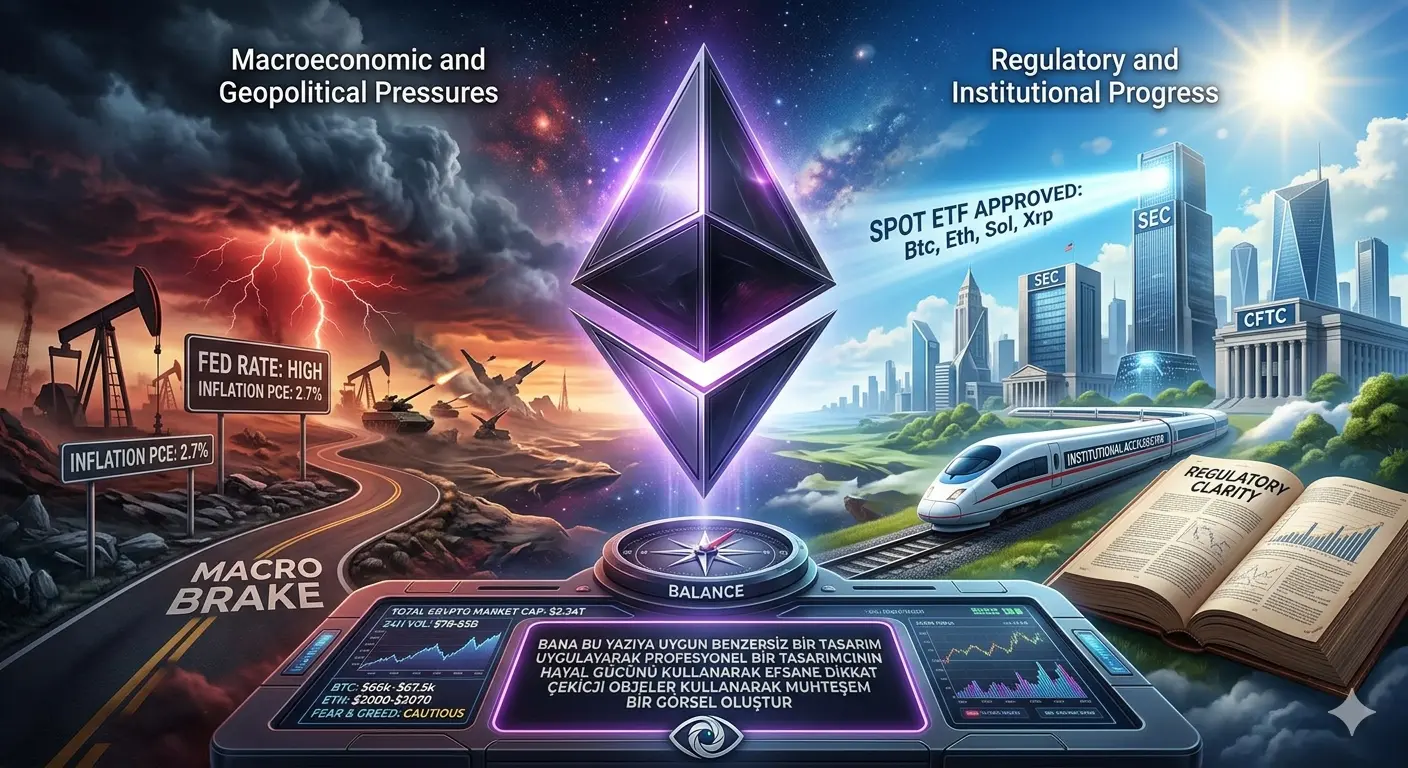
The dominant short-term headwind is coming from macroeconomics and the Federal Reserve. In mid-March, the Fed decided to keep the federal funds rate steady in the 3.50% – 3.75% range. Their “dot plot” projections were quite measured: they now expect only one rate cut in 2026, with many members forecasting none at all for this year. They also revised their inflation outlook upward — PCE inflation is now projected at 2.7% for 2026, higher than previous estimates. A big reason behind this shift is the ongoing geopolitical tension in the Middle East, particularly developments involving Iran, which have pushed oil prices higher and created supply concerns around key routes like the Strait of Hormuz. Higher energy costs feed directly into inflation, making the Fed more hesitant to ease policy quickly.
In a high-interest-rate environment, risk assets like crypto feel the pressure because investors can earn safer returns elsewhere without taking on as much volatility. A stronger dollar adds to that burden for dollar-denominated assets. The combination of sticky inflation, potential energy shocks, and policy uncertainty creates a fog of “wait and see” that leads to selling or reduced buying in crypto. That’s largely why Bitcoin has been testing lower supports recently and why the broader market has experienced pullbacks.
On the positive side, regulatory progress is providing a structural tailwind that could matter more over the medium to longer term. On March 17, the SEC and CFTC issued a joint interpretation that classifies Bitcoin, Ethereum, Solana, XRP, and a list of other major assets as digital commodities rather than securities. This moves oversight primarily to the CFTC for these tokens and brings much-needed clarity after years of legal gray areas. Just days later, around March 27, the SEC faced deadlines on dozens of ETF applications (reports mentioned around 91 filings covering various tokens). This includes spot products, staking-related ETFs, and multi-asset options. BlackRock’s staked Ethereum ETF has already been live and contributing to some ETH outperformance in spots. Major banks are also starting to make crypto ETFs more accessible to their clients.
Why does this matter? When big institutions get clearer rules and easier vehicles to allocate capital, demand becomes more institutional and less purely speculative. Liquidity improves, and crypto starts looking more like a legitimate part of traditional portfolios rather than just a high-risk bet. Tokenization efforts and yield-generating products are slowly turning the space into real financial infrastructure. On the corporate side, we’re seeing treasuries adding exposure to assets like ETH, and while some miners are shifting hash power toward AI-related activities, that doesn’t necessarily hurt network security long-term and may even help decentralization in certain ways.
The fear & greed index remains in cautious territory, but ETF flows and regulatory tailwinds have supported some dip-buying. Even after notable drawdowns in crypto-related stocks earlier, many view current levels as potential accumulation zones rather than the start of a deeper bear market.
Here’s my realistic take based on how these forces are interacting:
In the short term (next 2–4 weeks), the Fed’s hawkish tilt combined with any lingering Middle East uncertainty could keep Ethereum consolidating or testing the $1,950 – $2,100 zone, with possible mild pullbacks if oil spikes again or risk sentiment sours. Bitcoin may stay range-bound between roughly $65,000 – $71,000. Volatility will likely stay high as traders watch every headline.
Over the medium to longer term (through the end of 2026 and beyond), the regulatory clarity and growing institutional infrastructure should start carrying more weight. If geopolitical tensions ease and the Fed eventually signals even modest easing, risk appetite could return. In that case, I see a plausible path for Ethereum to work its way toward the $2,300 – $2,500 area as a first step, while Bitcoin could gradually push toward $75,000 – $80,000+ if the structural inflows continue. These aren’t wild guesses — they’re grounded in how past cycles responded to similar combinations of macro pressure followed by adoption milestones, plus the current data on ETF interest and clearer rules.
In short, two opposing forces are at play: macro and geopolitical factors acting as a brake in the near term, while regulation and institutional adoption act as an accelerator for the longer horizon. I’m staying balanced — neither overly bullish nor bearish — and focusing on risk management while watching how these pieces evolve.
$BTC $ETH $SOL
repost-content-media
  • Reward
  • 38
  • Repost
  • Share
Yeasinvip:
Diamond Hands 💎
View More
#BOJAnnouncesMarchPolicy
The Bank of Japan’s (BOJ) March 2026 monetary policy decisions stand out as a strategic step in the economic normalization process. Following the two-day meeting, the decisions reflect a cautious stance that considers both domestic balances and global uncertainties.
Policy Interest Rate and Decision Dynamics
In the March meeting, the Bank held the uncollateralized overnight call rate steady at approximately 0.75%. This decision was reached with an 8-to-1 majority vote. While one board member proposed hiking the rate to 1.0%, the majority preferred to wait in light of
discoveryvip
#BOJAnnouncesMarchPolicy
The Bank of Japan’s (BOJ) March 2026 monetary policy decisions stand out as a strategic step in the economic normalization process. Following the two-day meeting, the decisions reflect a cautious stance that considers both domestic balances and global uncertainties.
Policy Interest Rate and Decision Dynamics
In the March meeting, the Bank held the uncollateralized overnight call rate steady at approximately 0.75%. This decision was reached with an 8-to-1 majority vote. While one board member proposed hiking the rate to 1.0%, the majority preferred to wait in light of current data.
Aligning with market expectations, this outcome demonstrates Japan's desire to protect delicate balances during its recovery phase.
Economic Outlook and Strategic Approach
Official assessments indicate that the Japanese economy is showing a generally moderate recovery trend despite stagnation in certain sectors. In line with price stability targets, it is noteworthy that real interest rates still remain at quite low levels. The Bank states that if economic activity and price expectations align with projections, it will continue to adjust the degree of monetary expansion and raise interest rates gradually.
Governor Kazuo Ueda emphasized "data-driven monitoring" in his post-decision remarks. Quarterly forecasts to be announced in April, new inflation indicators, and updates on neutral interest rate estimates will play a critical role in determining the next step. Furthermore, the impact of Middle East developments on energy costs is heightening the Bank's sensitivity to inflation risks.
Rationale Behind the "Wait-and-See" Decision
The core elements underlying the decision can be summarized as follows:
Data Focus: A comprehensive projection is expected once the results of the spring wage negotiations and the effects of global geopolitical risks become clearer.
Cyclical Confidence: Prioritizing the protection of domestic demand and the sustainability of the income-spending loop prevented a rapid tightening move.
Diverging Views: The minority view argued that the output gap has closed and the wage-price spiral poses a risk, while the majority felt the need to see more evidence.
Market Expectations and Future Projections
Although volatility in the Yen remained limited following the decision, fluctuations in fuel costs and exchange rates continue to be inflationary pressure factors. Markets are currently pricing in a high probability of a new rate hike at the meeting scheduled for late April. The Bank's plans to publish new inflation indicators by the summer and increase flexibility in policy guidance are strengthening the foundations of the normalization process.
Analysts suggest that while wage increases and inflation dynamics are supportive, shifts in global trade policies are keeping the Bank cautious. The fact that real rates are still in negative territory indicates that the normalization process is still in its early stages.
General Evaluation
The Bank’s March 2026 decision is an indication of patient progress on the path to exiting years of ultra-loose policies. While the 0.75% interest level represents a significant threshold for the Japanese economy, additional steps appear likely in the coming period to make price stability permanent. The April meeting will offer clearer signals for the future roadmap in light of new data.
repost-content-media
  • Reward
  • 26
  • Repost
  • Share
xxx40xxxvip:
2026 GOGOGO 👊
View More
#CLARITYBillMayHitDeFi
How Could the CLARITY Act Impact the DeFi Ecosystem?
The CLARITY Act (Digital Asset Market Clarity Act of 2025), which aims to provide a comprehensive regulatory framework for digital asset markets, passed the House of Representatives in July 2025 with broad bipartisan support and has since entered the review process in the Senate. The core objective of the legislation is to clarify the distinction between securities and digital commodities, establish a clear division of authority among regulators, and free innovative financial applications from legal uncertainty. Howev
discoveryvip
#CLARITYBillMayHitDeFi
How Could the CLARITY Act Impact the DeFi Ecosystem?
The CLARITY Act (Digital Asset Market Clarity Act of 2025), which aims to provide a comprehensive regulatory framework for digital asset markets, passed the House of Representatives in July 2025 with broad bipartisan support and has since entered the review process in the Senate. The core objective of the legislation is to clarify the distinction between securities and digital commodities, establish a clear division of authority among regulators, and free innovative financial applications from legal uncertainty. However, certain provisions in the bill have sparked significant discussions in the decentralized finance (DeFi) sector. These discussions focus on the potential effects of the legislation on DeFi protocols, developers, and users.
The Act categorizes digital assets into two main groups: those that qualify as securities and those classified as digital commodities whose value derives from decentralized blockchain networks. The latter group falls primarily under the jurisdiction of the commodity regulator. This classification seeks to deliver the long-awaited legal clarity the industry has sought, while also including specific exemptions for activities unique to DeFi. For example, decentralized functions such as transaction validation, operating nodes, providing computational power, developing user interfaces, and creating wallet software are exempt from registration and intermediary obligations under certain conditions. This approach focuses regulation on centralized intermediaries that control customer funds, rather than on individuals who write code.
Nevertheless, some challenges arise for the DeFi ecosystem. The Act’s definitions of decentralization and the concept of “control” will determine the extent to which protocols can benefit from these exemptions. If a protocol’s front-end interface or certain components are deemed to involve centralized elements that manage user interactions, those elements could be subject to risk management, cybersecurity, and compliance standards. This could impose additional operational burdens, particularly on DeFi applications involving liquidity pools, lending and borrowing mechanisms, and derivative products. Industry experts note that compliance costs could rise substantially and may prove prohibitive, especially for smaller-scale projects.
Furthermore, while the legislation aims to regulate interactions between centralized intermediaries and DeFi protocols, it intends to protect purely decentralized peer-to-peer activities. In practice, however, regulating the interfaces through which users access protocols could indirectly affect DeFi’s accessibility and liquidity. Some observations suggest that if compliant interfaces become the standard, non-technical users might need to interact directly with smart contracts, potentially creating a divide. Such a separation could undermine DeFi’s fundamental principle of equal access and slow the pace of innovation.
The legislative process in the Senate also generates uncertainty. The planned review in January 2026 has been postponed due to disagreements on issues such as DeFi definitions and stablecoin yields. This delay prolongs legal uncertainty in the sector and keeps debates alive regarding how protective or restrictive the final version of the Act will be for DeFi. The bill’s provision for a study on DeFi opens the door to future regulations, which complicates long-term planning for the industry.
In summary, although the CLARITY Act seeks to promote innovation by establishing a general framework for digital asset markets, the boundaries of the exemptions and compliance requirements it introduces for DeFi could significantly influence the sector’s dynamics. The balance between preserving decentralized architecture and ensuring investor protection will be shaped in the final text of the legislation. This process represents a critical threshold that will determine the future of DeFi. Sector stakeholders emphasize that greater legal clarity can support innovation, yet overly rigid definitions risk slowing it down. The progress of the Act should be monitored closely, as its outcomes will directly affect the global competitiveness of decentralized finance.
repost-content-media
  • Reward
  • 25
  • Repost
  • Share
Erikid54vip:
LFG 🔥
View More
#MarketsRepriceFedRateHikes
Markets Are Repricing the Federal Reserve’s Interest Rate Path
Federal Reserve monetary policy expectations have always triggered profound reactions in financial markets when they shift abruptly. What we are witnessing today exemplifies this dynamic perfectly: under the hashtag #MarketsRepriceFedRateHikes, investors and analysts are rapidly revising their assumptions about the central bank’s future rate trajectory. Just a few weeks ago, markets were pricing in multiple rate cuts throughout 2026. Now, with strengthening inflationary pressures, discussions have turne
discoveryvip
#MarketsRepriceFedRateHikes
Markets Are Repricing the Federal Reserve’s Interest Rate Path
Federal Reserve monetary policy expectations have always triggered profound reactions in financial markets when they shift abruptly. What we are witnessing today exemplifies this dynamic perfectly: under the hashtag #MarketsRepriceFedRateHikes, investors and analysts are rapidly revising their assumptions about the central bank’s future rate trajectory. Just a few weeks ago, markets were pricing in multiple rate cuts throughout 2026. Now, with strengthening inflationary pressures, discussions have turned toward the possibility of rate hikes or a prolonged pause. This repricing is far more than a technical adjustment; it represents a strategic repositioning shaped at the intersection of the global economy, energy markets, and geopolitical developments.
At the Federal Open Market Committee (FOMC) meeting held in March 2026, policymakers decided to keep the federal funds rate unchanged in the 3.50%–3.75% target range. This outcome was widely anticipated. However, the post meeting Summary of Economic Projections (SEP) and the updated “dot plot” revealed a more nuanced picture. According to the median projection in the dot plot, FOMC participants expect the federal funds rate to end 2026 at 3.4%, implying only one 25 basis point cut for the remainder of the year. This maintains the cautious stance seen in prior projections but reflects a tighter consensus among members. Many participants anticipate that the return of inflation to the 2% target will proceed more gradually, while economic growth is expected to remain relatively resilient. The longer-run neutral rate projection was also revised slightly higher, signaling that policy rates may need to stay restrictive for an extended period.
Market repricing has gone even further than the official FOMC projections. Futures contracts tied to the federal funds rate have pushed the probability of at least one rate hike by the end of 2026 up to around 52% crossing the 50% threshold for the first time in this cycle. Markets that recently assigned over 90% odds to multiple cuts have now begun pricing in potential hikes at the September and December meetings. Some forecasts now place the chance of no cuts at all in 2026 near 40%, while the likelihood of a net hike has settled around 25%. This shift is not merely speculative; it stems from a data driven recalibration of expectations.
The primary catalyst for this repricing has been the sharp rise in energy prices. Global benchmark oil prices have surged past the $110 per barrel level, reigniting inflation concerns. When combined with supply side geopolitical tensions, this development heightens the risk of persistent cost pressures across goods and services. An economy that was previously contending with disinflationary forces now faces renewed cost shocks from the supply side. Recent inflation readings have also proven more stubborn than expected, with core inflation measures remaining above the Fed’s target. The relatively balanced labor market characterized by steady job gains and stable unemployment reduces the urgency for immediate policy easing. Policymakers have repeatedly emphasized their “data dependent” approach, which becomes even more critical amid heightened uncertainty.
This evolution in rate expectations has left clear marks on bond markets. Rising short term yields have contributed to flattening in certain segments of the yield curve while pushing up longer-term borrowing costs. In this environment, investors are balancing their risk appetite: demand for inflation hedging instruments is increasing, even as more cautious positioning gains traction. On a global scale, these developments are supporting the U.S. dollar and influencing cross border capital flows. Emerging market economies, in particular, are preparing for a scenario in which the Fed maintains a higher for longer policy stance for an extended time.
From a historical perspective, the Fed’s practice of adjusting policy based on incoming data is nothing new. Yet the 2026 context is distinctive, coinciding with post-pandemic recovery, supply chain normalization, and the ongoing energy transition. The path back to 2% inflation now appears likely to stretch into 2027 and 2028, reinforcing the potential for a “higher for longer” policy posture. Divergent views persist within the FOMC: some members project zero cuts, while a minority favors more aggressive easing. This dispersion underscores growing uncertainty and a narrower margin for policy maneuver.
In summary, the #MarketsRepriceFedRateHikes phenomenon demonstrates how financial markets are proactively internalizing potential shifts in the Fed’s future actions. This repricing is not just a short-term reaction; it reflects a structural adjustment driven by the prolonged interplay of inflation dynamics, energy prices, and global risks. For investors, it highlights the need for greater portfolio flexibility and vigilant, data-focused monitoring. Data releases ahead of the Fed’s upcoming meetings particularly on inflation, employment, and growth could reshape these expectations once again. For now, markets are navigating a balanced path between cautious optimism and realistic risk assessment. This episode once more underscores the complexity of central banking and the unpredictable power of economic data: every decision creates wide-ranging ripple effects, and the policy path in the coming months will continue to evolve in line with today’s repricing.
#PredictToWin1000GT
repost-content-media
  • Reward
  • 24
  • 1
  • Share
xxx40xxxvip:
2026 GOGOGO 👊
View More
Gold vs Silver: Navigating the Timeless Battle of Precious Metals
In the world of finance and investment, few assets carry the allure, history, and strategic importance of precious metals. Gold and silver have been treasured for millennia, not only for their beauty but also for their intrinsic value, stability, and unique role in both industrial and financial ecosystems. Today, as markets fluctuate and geopolitical uncertainties mount, understanding the differences between these two metals is more critical than ever for investors seeking both protection and growth.
The Eternal Value of Gold
Go
post-image
  • Reward
  • 23
  • 2
  • Share
xxx40xxxvip:
2026 GOGOGO 👊
View More
  • Pin