BlockHunter

vip
Age 0.5 Year
Peak Tier 5
No content yet
#TopCopyTradingScout
Copy trading is no longer just a convenience feature in crypto—it has evolved into a full-scale participation model that is reshaping how individuals interact with financial markets. On platforms like Gate.io, this system allows users to engage with complex market structures without directly executing trades themselves. However, as the ecosystem grows, one reality becomes increasingly clear: access is easy, but selection is everything. This is where the concept of a Top Copy Trading Scout transforms from an idea into a necessity.
At its core, copy trading simplifies execu
BTC1.68%
MrFlower_XingChen
#TopCopyTradingScout
Copy trading is no longer just a convenience feature in crypto—it has evolved into a full-scale participation model that is reshaping how individuals interact with financial markets. On platforms like Gate.io, this system allows users to engage with complex market structures without directly executing trades themselves. However, as the ecosystem grows, one reality becomes increasingly clear: access is easy, but selection is everything. This is where the concept of a Top Copy Trading Scout transforms from an idea into a necessity.
At its core, copy trading simplifies execution but not decision-making. When a trader follows another, they are not just copying trades—they are inheriting a risk profile, strategy logic, and behavioral pattern. This means every copied position carries hidden layers of decision-making that are often overlooked by beginners. A Top Copy Trading Scout understands this complexity and approaches the process not as passive participation, but as active evaluation of human strategy under market pressure.
In today’s crypto environment, where assets like Bitcoin move within cycles of expansion, correction, and consolidation, trader behavior becomes more important than raw performance numbers. A trader who performs well in a trending market may fail completely in a range-bound or volatile structure. This is why scouting focuses on adaptability across different market phases, rather than short-term gains during favorable conditions.
One of the most overlooked aspects of copy trading is behavioral consistency. Many traders show strong results during high-volatility periods but struggle when volatility compresses. A skilled scout looks beyond profit charts and studies how a trader behaves when the market slows down. Do they overtrade? Do they increase leverage to compensate for reduced movement? Or do they remain disciplined and wait for clear setups? These behavioral patterns often reveal more than performance metrics.
Another critical dimension is risk architecture. Every trader operates within a specific risk framework, whether consciously or unconsciously. Some rely on tight stop-loss strategies with frequent small losses, while others allow positions to fluctuate widely before closing. A Top Copy Trading Scout evaluates whether this structure aligns with sustainable capital management. High returns achieved through uncontrolled risk are not a sign of skill—they are a warning signal.
As copy trading becomes more competitive, early discovery of high-quality traders is turning into a strategic advantage. By the time a trader becomes widely followed, their edge may already be diluted due to increased capital flow and visibility. Scouts who identify consistent performers early gain access to more stable and less crowded strategies. This early positioning is similar to finding undervalued assets before they attract mainstream attention.
The role of diversification is also becoming more sophisticated. Instead of simply following multiple traders, advanced scouts build complementary portfolios. For example, one trader may specialize in trend-following strategies, another in range trading, and another in short-term scalping. This creates a balanced system where different strategies perform under different market conditions, reducing overall volatility in the follower’s portfolio.
Technology is playing an increasing role in enhancing scouting efficiency. Modern platforms provide detailed analytics, including drawdown curves, win rates, average holding time, and risk scores. However, data alone is not enough. Numbers can be misleading if not interpreted correctly. A trader with a high win rate but large occasional losses may be riskier than a trader with a lower win rate but controlled drawdowns. The scout’s edge lies in contextual analysis, not just data consumption.
Another emerging trend is the influence of market structure on trader performance. In low-liquidity environments, execution quality becomes critical. Slippage, delayed entries, and partial fills can significantly impact results. A Top Copy Trading Scout considers how a trader performs under different liquidity conditions, especially during high-impact news events or sudden volatility spikes.
Psychology also plays a major role in copy trading dynamics. Followers often react emotionally to short-term losses, even when the overall strategy remains valid. This can lead to premature exits from otherwise strong traders. A disciplined scouting approach helps reduce this emotional interference by focusing on long-term consistency rather than short-term fluctuations. It reinforces the idea that performance must be evaluated over cycles, not moments.
Another important factor is transparency. Traders who provide clear, consistent, and verifiable performance records are easier to evaluate. Hidden or incomplete data introduces uncertainty, making it difficult to assess true risk exposure. A Top Copy Trading Scout prioritizes transparency as a foundation for trust and reliability.
As the crypto market continues to mature, copy trading is moving toward a more institutional-style evaluation model. The focus is shifting from individual trades to portfolio-level performance, from short-term profits to long-term stability, and from reactive decisions to structured strategies. This evolution reflects a broader trend in financial markets, where data-driven analysis and risk management are becoming dominant.
Despite all these advancements, risk remains an inherent part of copy trading. Market conditions can change rapidly, and even the most consistent traders can face periods of underperformance. This is why continuous monitoring is essential. Scouting is not a one-time process—it is an ongoing cycle of evaluation, adjustment, and optimization.
Ultimately, the concept of a Top Copy Trading Scout represents a deeper understanding of how modern trading works. It acknowledges that success is not about blindly following others, but about understanding who to follow, why to follow them, and when to stop following them. It transforms copy trading from a passive shortcut into an active strategy built on discipline, analysis, and adaptability.
In a market defined by volatility and uncertainty, tools alone are not enough. Insight is what creates an edge. And in the world of copy trading, scouting is that edge.
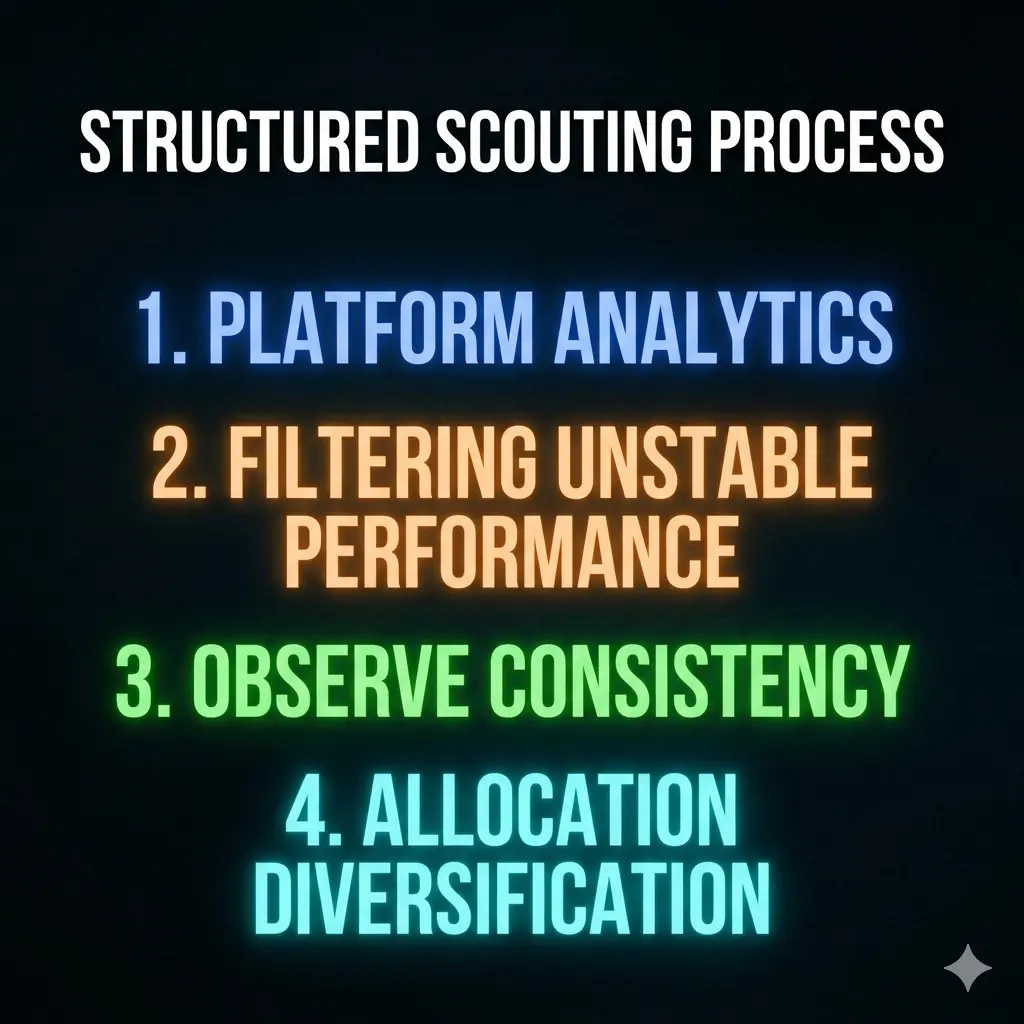
#TopCopyTradingScout
repost-content-media
  • Reward
  • Comment
  • Repost
  • Share
#DailyPolymarketHotspot
Today’s spotlight is not about hype or chasing narratives—it’s about precision in probability thinking. Platforms like Polymarket are reshaping how traders approach markets by turning expectations into tradable outcomes. But most participants still misunderstand the game. They approach prediction markets like long-term investing, when in reality, this is a short-term probability battlefield.
The first and most important step is understanding the question itself. Prediction markets are not asking which asset is strongest or which project has the best fundamentals. They
BTC1.68%
MrFlower_XingChen
#DailyPolymarketHotspot
Today’s spotlight is not about hype or chasing narratives—it’s about precision in probability thinking. Platforms like Polymarket are reshaping how traders approach markets by turning expectations into tradable outcomes. But most participants still misunderstand the game. They approach prediction markets like long-term investing, when in reality, this is a short-term probability battlefield.
The first and most important step is understanding the question itself. Prediction markets are not asking which asset is strongest or which project has the best fundamentals. They are asking a much simpler but more demanding question: what is most likely to happen within a defined timeframe? This shifts the entire mindset from belief-based decisions to probability-based execution. Traders who fail to make this distinction often end up chasing narratives instead of calculating outcomes.
Looking at the current market structure, the environment is clearly range-bound and reactive. Bitcoin is holding within the $76K–$79K zone, showing no strong directional commitment. At the same time, macro uncertainty—driven by interest rate expectations, oil volatility, and geopolitical tension—is keeping markets sensitive to sudden news catalysts. This creates a condition where stability matters more than volatility when estimating probabilities.
In such an environment, professional traders think very differently from amateurs. While inexperienced participants chase exciting outcomes and high-reward scenarios, experienced traders focus on what is already closest to reality. They understand that prediction markets reward consistency, not bold guesses. The goal is not to predict the biggest move—it is to identify the most probable outcome with the least resistance.
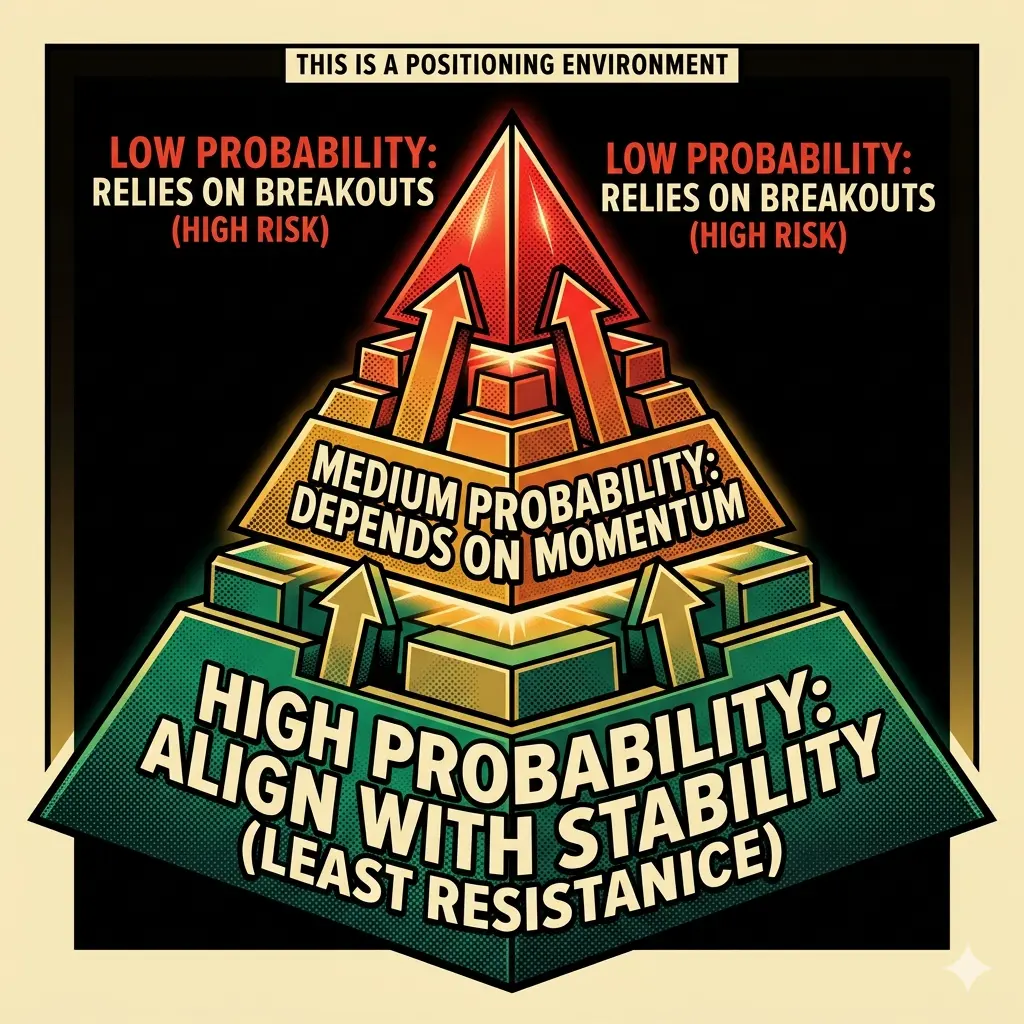
A simple probability framework helps clarify this. High-probability scenarios are those that require minimal change from the current state. These are often less attractive in terms of reward but offer higher consistency. Medium-probability setups depend on continuation of existing momentum and require some movement. Low-probability scenarios, on the other hand, rely on major breakouts or unexpected catalysts—making them high-risk by nature.
Right now, the market is in a decision phase, not an expansion phase. This distinction is critical. When markets are consolidating, extreme outcomes become less likely because there is no strong directional force pushing price beyond key levels. This means betting on aggressive breakout scenarios without confirmation is statistically weaker compared to positioning around stable outcomes.
Smart traders adjust accordingly. A conservative approach focuses on outcomes that align closely with current price action. It avoids overextended predictions and prioritizes probability over reward. This approach may seem less exciting, but over time it delivers more consistent results. On the other hand, aggressive strategies target breakout scenarios—but these require precise timing, strong catalysts, and acceptance of a lower success rate.
The real edge, however, lies in how positions are managed. Advanced traders do not simply enter and wait for final settlement. They actively monitor probability shifts and exit early when the odds move in their favor. This transforms prediction markets from a binary win/lose system into a dynamic trading environment, where profits are extracted from changing sentiment rather than fixed outcomes.
Risk management remains essential, even in high-probability setups. Unexpected macro events, geopolitical developments, or sudden liquidity spikes can quickly invalidate assumptions. Prediction markets are not risk-free—they are simply structured differently. Managing exposure and avoiding overcommitment is what separates disciplined traders from emotional ones.
Another layer to consider is how quickly sentiment can change. On platforms like Polymarket, probability adjustments can happen in real time as new information enters the market. This means traders must stay flexible and avoid becoming attached to a single outcome. The ability to adapt is more valuable than being right from the start.
The key takeaway from today’s market is simple but powerful: this is not a trending environment—it is a positioning environment. When direction is unclear and volatility is controlled, the advantage shifts toward those who can interpret probabilities accurately and act with discipline.
In the end, prediction markets are not about absolute correctness. They are about being more accurate than the crowd, faster than the crowd. The smartest move in conditions like these is not to chase excitement, but to align with stability.
Because in a slow, uncertain market, the biggest edge doesn’t come from bold predictions—it comes from calculated patience.
💬 Your Move:
Are you aligning with high-probability stability…
or chasing breakout narratives in a range-bound market?
#GateSquare
#ContentMining
#CreaterCarnival
repost-content-media
  • Reward
  • Comment
  • Repost
  • Share
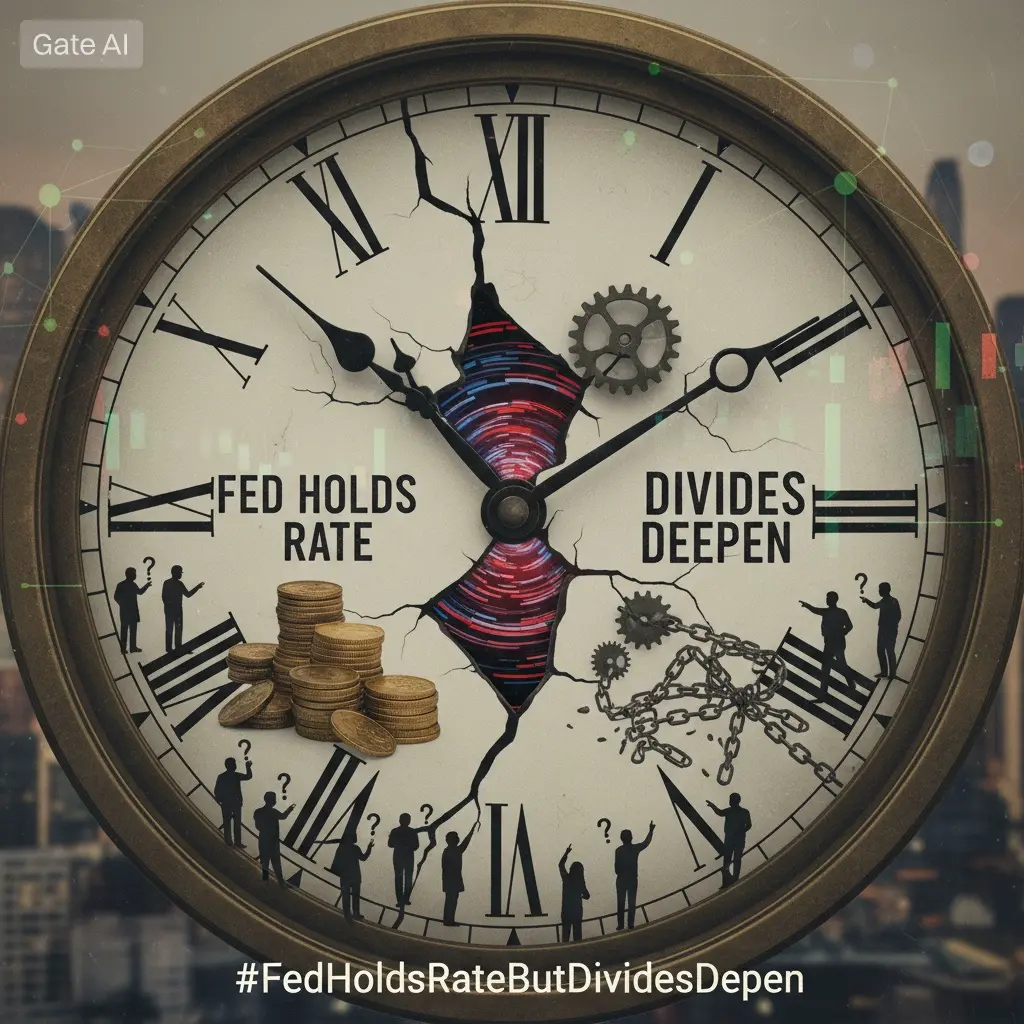
##FedHoldsRateButDividesDeepen
The latest decision by the Federal Reserve to hold interest rates steady may look like a pause on the surface, but the deeper structure reveals something far more important: policy uncertainty is increasing, not decreasing. Markets are no longer reacting to what the Fed does—they are reacting to why the Fed is struggling to decide what to do next.
What stands out now is not the rate decision itself, but the widening gap in expectations among policymakers. This internal divergence signals that the economic outlook is no longer clear even to those controlling mone
MrFlower_XingChen
##FedHoldsRateButDividesDeepen
The latest decision by the Federal Reserve to hold interest rates steady may look like a pause on the surface, but the deeper structure reveals something far more important: policy uncertainty is increasing, not decreasing. Markets are no longer reacting to what the Fed does—they are reacting to why the Fed is struggling to decide what to do next.
What stands out now is not the rate decision itself, but the widening gap in expectations among policymakers. This internal divergence signals that the economic outlook is no longer clear even to those controlling monetary policy. Some members remain focused on inflation risks, particularly in services and energy, while others are increasingly concerned about slowing growth, tightening credit conditions, and weakening consumer momentum. When a central bank loses directional unity, markets lose confidence in forward guidance—and that is where volatility begins to build.
A key factor often overlooked in this phase is the lag effect of monetary policy. Rate hikes do not impact the economy immediately—they work with delays. This means the full impact of previous tightening may still be unfolding beneath the surface. As borrowing costs remain elevated, pressure continues to build in sectors like housing, small business lending, and consumer credit. This delayed impact creates a situation where the Fed is making decisions based on incomplete feedback, increasing the risk of policy miscalculation.
At the same time, inflation dynamics are becoming more complex. While headline inflation has cooled, underlying price pressures remain uneven. Energy markets are volatile, supply chains are stabilizing but not fully normalized, and wage-driven inflation continues to persist in certain sectors. This mixed environment makes it difficult for the Fed to confidently shift toward easing without risking a second inflation wave.
Another emerging layer is global monetary divergence. While the Federal Reserve remains cautious, other central banks are beginning to adjust policies at different speeds. This divergence impacts currency flows, particularly strengthening the U.S. dollar in relative terms. A stronger dollar tightens global liquidity, which indirectly affects emerging markets, commodities, and risk assets—including crypto.
For markets, the most important variable is still liquidity. Tight policy conditions limit the availability of capital for speculative investment. Assets like Bitcoin can remain structurally strong, but aggressive upside momentum becomes harder to sustain without expanding liquidity. This is why markets may appear stable but lack follow-through—capital is cautious, not absent.
Another critical signal comes from the bond market. Treasury yields are acting as a real-time reflection of expectations. If yields remain elevated or continue rising, it suggests that markets are pricing in “higher for longer” conditions, even if the Fed is not actively hiking. This creates a passive tightening effect, where financial conditions remain restrictive without additional policy action.
Corporate behavior is also shifting under these conditions. Companies are becoming more conservative with expansion, hiring, and capital expenditure. This defensive posture reduces growth expectations and contributes to a slower economic cycle. Over time, this feeds back into market sentiment, reinforcing caution across risk assets.
From a trading perspective, this environment demands a different mindset. It is no longer about predicting a clear bullish or bearish trend—it is about navigating uncertainty cycles. Price action becomes reactive, driven by data releases, policy signals, and sudden sentiment shifts. In such conditions, overconfidence is one of the biggest risks.
A key adjustment is focusing on flexibility over conviction. Strong opinions can become liabilities when the macro backdrop is unstable. Instead of committing heavily to one direction, traders benefit from adapting to changing conditions, managing exposure carefully, and responding to confirmed signals rather than assumptions.
Another important consideration is the role of expectations versus reality. Markets often move not on what happens, but on how outcomes compare to expectations. Even neutral data can create volatility if it contradicts prevailing sentiment. This makes it essential to understand not just economic indicators, but how they are being interpreted collectively.
Looking ahead, several catalysts will shape the next phase. Inflation data will determine whether price pressures are truly stabilizing. Labor market reports will reveal whether economic slowdown is accelerating. Energy prices will influence inflation expectations. And central bank communication will continue to guide sentiment. Each of these factors has the potential to shift market direction quickly.
The broader takeaway is that the current environment is defined by policy tension. The Federal Reserve is balancing competing risks, and until that balance resolves, markets will remain sensitive and reactive. This is not a phase of strong trends—it is a phase of positioning and recalibration.
For traders, the edge lies in understanding this transition. It is not about reacting faster—it is about interpreting deeper. Markets are no longer driven by simple narratives. They are driven by complex interactions between data, policy, and expectations.
In this kind of environment, discipline becomes more valuable than aggression, patience becomes more profitable than activity, and risk management becomes the foundation of survival.
The Fed may have paused, but the uncertainty has not. And until clarity returns, the market will continue to test every assumption.
repost-content-media
  • Reward
  • Comment
  • Repost
  • Share
#WCTCTradingKingPK
WCTCTradingKingPK 🏆 Ethereum Live Market Analysis (April 30, 2026)
In today’s trading environment, understanding real-time market structure is more important than predicting direction. Ethereum is currently trading in a highly sensitive zone where price action is being driven more by liquidity and short-term positioning than by strong trend momentum. This creates a challenging environment, especially for traders participating in high-level competitions like WCTCTradingKingPK, where precision matters more than activity.
At the moment, Ethereum is fluctuating around the $2,2
ETH1.14%
BTC1.68%
MrFlower_XingChen
#WCTCTradingKingPK
WCTCTradingKingPK 🏆 Ethereum Live Market Analysis (April 30, 2026)
In today’s trading environment, understanding real-time market structure is more important than predicting direction. Ethereum is currently trading in a highly sensitive zone where price action is being driven more by liquidity and short-term positioning than by strong trend momentum. This creates a challenging environment, especially for traders participating in high-level competitions like WCTCTradingKingPK, where precision matters more than activity.
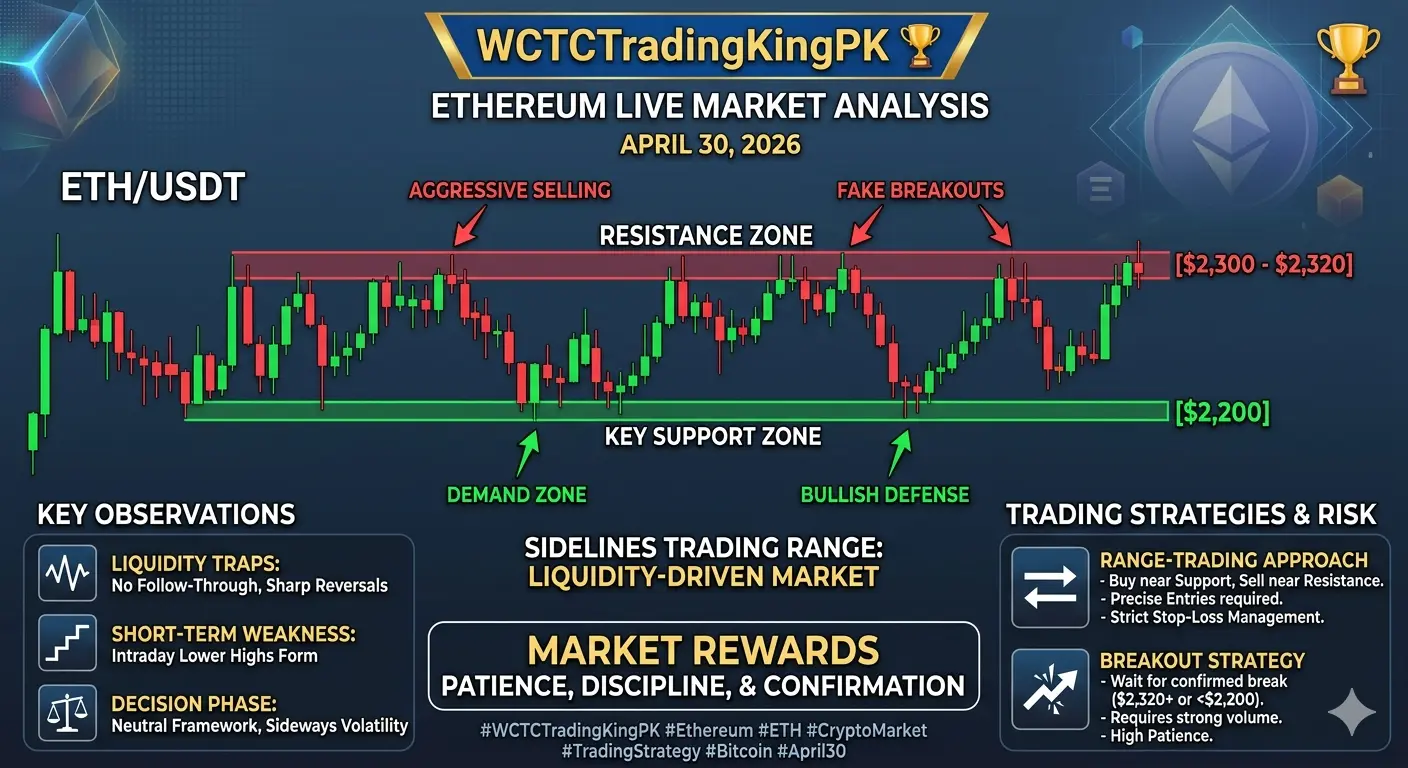
At the moment, Ethereum is fluctuating around the $2,200–$2,300 range, and this range itself tells a deeper story. The market is not trending cleanly upward or downward. Instead, it is reacting to micro-level flows, short-term sentiment shifts, and broader macro uncertainty. This type of behavior indicates that the market is currently in a decision phase, where both buyers and sellers are active but neither side has gained full control.
One of the most important observations in this phase is the lack of follow-through. Price moves are happening, but they are not sustaining. Breakouts fail quickly, and breakdowns are often followed by sharp recoveries. This creates a pattern of fake moves, which is a classic sign of a liquidity-driven market. In such conditions, traders who rely on simple breakout strategies often get trapped, while more experienced participants wait for confirmation before committing capital.
From a structural perspective, Ethereum is showing signs of short-term weakness within a broader neutral framework. Intraday charts reveal lower highs forming, which suggests that sellers are active at higher levels. However, at the same time, buyers are stepping in near support zones, preventing a full breakdown. This balance between buying and selling pressure creates a sideways environment where price remains compressed.
The key support level right now sits near $2,200, which is acting as an immediate defensive zone for buyers. This level has been tested multiple times, and each time, some level of demand has appeared. However, repeated testing of support can weaken it over time. If this level breaks decisively, the next major support zone lies between $2,150 and $2,100, where stronger demand is expected to emerge.
On the upside, resistance is clearly defined between $2,300 and $2,320. This zone has repeatedly rejected upward attempts, indicating that sellers are defending this area aggressively. A successful breakout above this level would not just be a small move—it would signal a potential shift in short-term momentum. Beyond that, the next important resistance lies around $2,400, which would act as confirmation of a stronger bullish push.
What makes the current environment particularly complex is the behavior of volatility. Instead of expanding in one direction, volatility is being distributed across both sides of the range. This results in sharp spikes followed by immediate reversals, creating confusion and increasing the likelihood of emotional trading decisions. For many participants, this leads to overtrading, which is one of the biggest risks in a sideways market.
Another critical factor influencing Ethereum right now is its relationship with Bitcoin. Bitcoin is also trading within a range, and without a clear directional move from BTC, Ethereum is unlikely to establish a strong independent trend. This interdependence means that ETH traders must monitor Bitcoin’s behavior closely, as it often acts as the primary driver of market sentiment.
From a professional trading perspective, this is not a market for aggressive positioning. Instead, it is a market that rewards patience, discipline, and selective execution. Traders who attempt to capture every small move are more likely to accumulate losses due to unpredictable reversals. On the other hand, those who wait for clear setups—such as a confirmed breakout or a strong support reaction—have a higher probability of success.
There are generally two approaches that can be applied in this environment. The first is a range-trading strategy, where traders buy near support and sell near resistance while the range remains intact. This approach requires precision and strict risk management, as entering too early or too late can quickly turn a profitable setup into a loss. The second approach is a breakout strategy, where traders wait for price to move beyond key levels with strong confirmation before entering. This method reduces false signals but requires patience.
Risk management is especially important in the current phase. Because the market lacks clear direction, position sizing should be controlled, and leverage should be used cautiously. Sudden moves driven by news or liquidity events can quickly invalidate setups, making it essential to protect capital at all times.
From a psychological standpoint, this is one of the most challenging environments for traders. The absence of a clear trend creates uncertainty, and repeated fake moves can lead to frustration. This often pushes traders into impulsive decisions, which further increases risk. Maintaining discipline and sticking to a structured plan becomes a key advantage in such conditions.
Looking ahead, the next significant move in Ethereum will likely come from a breakout of the current range. If price manages to break above the $2,320 level with strong volume, it could trigger a bullish move toward higher resistance zones. Conversely, if support at $2,200 fails, a move toward $2,100 or lower could follow. Until one of these scenarios plays out, the market is expected to remain in a state of consolidation.
The broader takeaway is that Ethereum is not weak—it is simply waiting for direction. This waiting phase is part of the natural market cycle, where energy builds before a larger move. Traders who recognize this and adjust their strategies accordingly are better positioned to navigate the market effectively.
In the context of WCTCTradingKingPK, this phase becomes even more important. Competitions are not won by constant trading—they are won by making the right trades at the right time. This means knowing when to stay out of the market is just as important as knowing when to enter.
In conclusion, Ethereum’s current market price reflects a low-confidence, high-manipulation environment. The range between $2,200 and $2,320 defines the immediate battlefield, and until a clear breakout or breakdown occurs, the market will continue to test traders’ patience and discipline. The next move will not come from guessing—it will come from confirmation. And those who wait for that confirmation will have the strongest edge.
#WCTCTradingKingPK #ETH #CryptoMarket #TradingStrategy
repost-content-media
  • Reward
  • Comment
  • Repost
  • Share
#TopCopyTradingScout
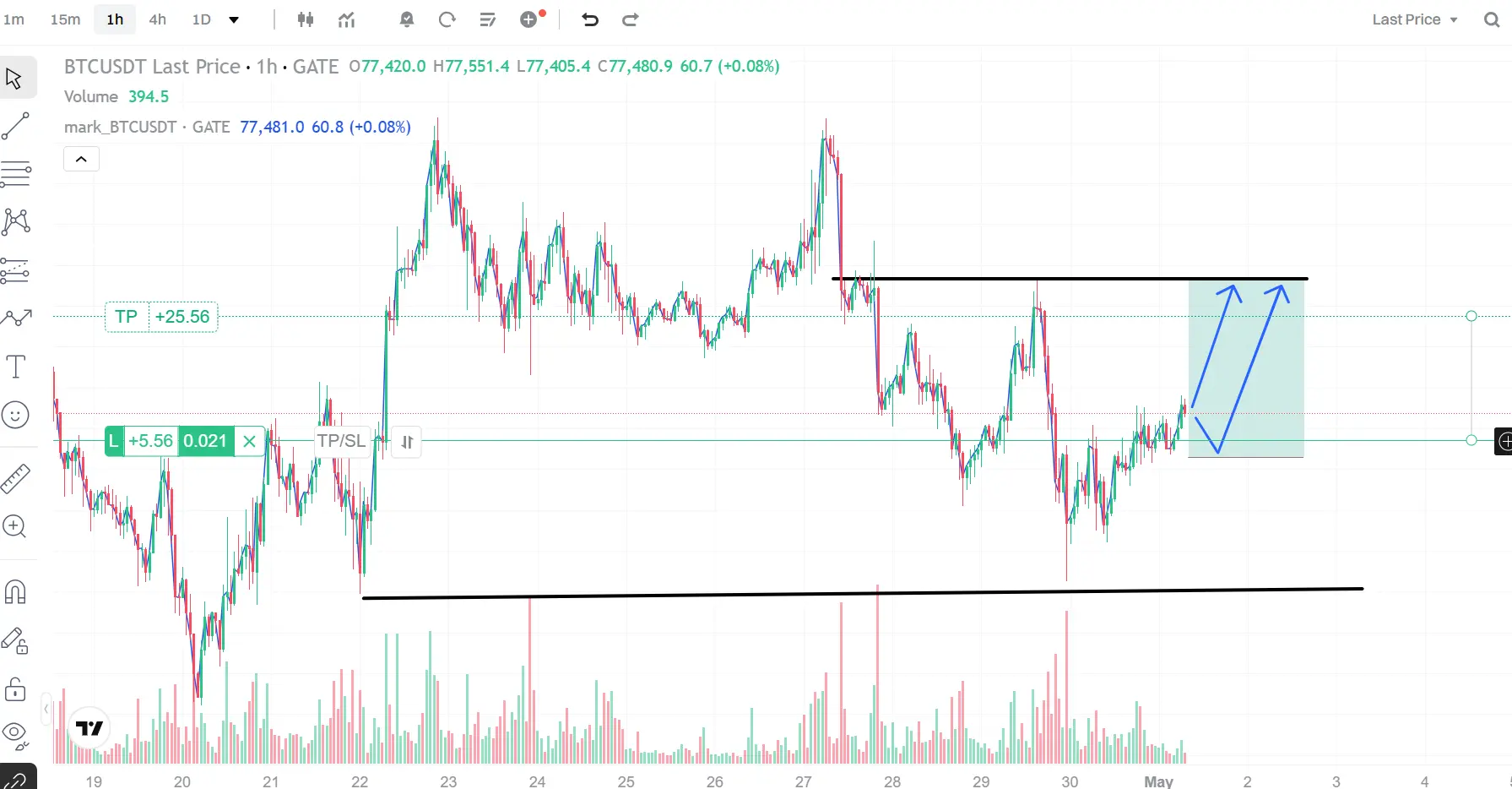
Copy trading has evolved far beyond a simple feature—it is now a complete market participation model that is redefining how individuals engage with crypto. Platforms like Gate.io have made it possible for users to access professional-level trading activity without executing trades themselves. But as the ecosystem matures, one truth is becoming increasingly clear: easy access does not equal smart participation. The real edge lies in selection, and that is where the role of a Top Copy Trading Scout becomes critical.
At a deeper level, copy trading is not just about mirrorin
BTC1.68%
EDGE-2.17%
MrFlower_XingChen
#TopCopyTradingScout

Copy trading has evolved far beyond a simple feature—it is now a complete market participation model that is redefining how individuals engage with crypto. Platforms like Gate.io have made it possible for users to access professional-level trading activity without executing trades themselves. But as the ecosystem matures, one truth is becoming increasingly clear: easy access does not equal smart participation. The real edge lies in selection, and that is where the role of a Top Copy Trading Scout becomes critical.
At a deeper level, copy trading is not just about mirroring trades—it is about inheriting a decision-making system. Every trader you follow carries a unique combination of strategy, psychology, risk tolerance, and execution style. When you copy them, you are effectively embedding their behavior into your portfolio. This is why blind copying is dangerous. A Top Copy Trading Scout understands that behind every trade lies a chain of decisions, and those decisions must be evaluated before capital is committed.
In modern crypto markets, where assets like Bitcoin move through cycles of expansion, compression, and volatility spikes, adaptability has become more valuable than raw profitability. A trader who performs exceptionally well in trending conditions may struggle when the market becomes range-bound or uncertain. This is why scouting focuses on performance across different environments, not just peak results during favorable periods.
One of the most important but underestimated aspects of scouting is behavioral stability. Markets constantly change, but trader behavior often reveals whether performance is sustainable. During low-volatility phases, disciplined traders reduce activity and wait for high-probability setups, while inexperienced traders increase risk to chase returns. Observing how a trader reacts when opportunities are limited provides insight into their long-term viability.
Risk architecture is another foundational pillar. Every trader operates within a framework that defines how they manage losses, size positions, and control exposure. Some traders generate high returns by taking excessive risks, which may not be immediately visible in short-term performance data. A Top Copy Trading Scout looks beyond profits and asks a more important question: how were those profits achieved? Sustainable growth always comes from controlled risk, not aggressive speculation.
As the copy trading space becomes more competitive, early identification of high-quality traders is turning into a strategic advantage. By the time a trader becomes widely followed, their strategy may already be saturated with capital, reducing efficiency and increasing slippage. Scouts who identify consistent performers early are able to position themselves ahead of the crowd, capturing more stable and less diluted performance.
Diversification within copy trading is also evolving. Instead of simply following multiple traders randomly, advanced scouts build structured portfolios of strategies. For example, combining a trend-following trader with a range trader and a short-term scalper creates balance across different market conditions. This reduces dependency on any single strategy and improves overall stability.
Technology has significantly enhanced the scouting process. Modern analytics provide detailed insights into performance metrics such as drawdowns, win rates, trade frequency, and holding periods. However, data alone can be misleading if not interpreted correctly. A trader with a high win rate but occasional large losses may carry more risk than a trader with moderate wins and controlled losses. The real advantage lies in contextual understanding, not just numerical evaluation.
Market structure also plays a critical role in trader performance. In low-liquidity environments, execution becomes more difficult, and strategies that rely on precise entries may suffer. A Top Copy Trading Scout evaluates how traders perform during different liquidity conditions, including high-impact news events and sudden volatility spikes. This helps identify strategies that are robust rather than fragile.
Psychological discipline is equally important for followers. One of the biggest challenges in copy trading is emotional reaction to short-term losses. Many users exit positions prematurely when performance temporarily declines, only to miss recovery phases. A structured scouting approach helps reduce this behavior by focusing on long-term consistency and reinforcing the importance of evaluating performance over complete cycles.
Transparency remains a key factor in building trust. Traders who provide clear and verifiable performance histories allow for more accurate evaluation. Lack of transparency introduces uncertainty, making it difficult to assess true risk exposure. A Top Copy Trading Scout prioritizes traders who maintain consistent and open records of their activity.
As the crypto market matures, copy trading is gradually adopting an institutional-style framework. The focus is shifting from individual trades to portfolio-level outcomes, from short-term gains to long-term sustainability, and from reactive decisions to structured strategies. This transformation reflects a broader evolution in financial markets, where disciplined analysis and risk management are becoming dominant.
Despite these advancements, risk cannot be eliminated. Market conditions can shift rapidly, and even the most consistent traders can experience drawdowns. This is why scouting is not a one-time action but a continuous process. Traders must be monitored, evaluated, and adjusted over time to maintain performance quality.
Another emerging dimension is the concept of dynamic allocation. Instead of fixed capital distribution, advanced scouts adjust exposure based on performance trends. Traders showing consistent results may receive increased allocation, while underperforming ones are reduced or removed. This adaptive approach enhances portfolio efficiency and reduces long-term risk.
Ultimately, the idea of a Top Copy Trading Scout represents a shift in mindset. It moves copy trading away from passive imitation and toward active intelligence-driven participation. Success is no longer about following the most popular trader—it is about understanding who truly has a sustainable edge.
In a market defined by volatility, uncertainty, and rapid change, tools alone are not enough. Insight, discipline, and continuous evaluation create the real advantage. Copy trading provides access—but scouting determines outcomes.
And in today’s competitive environment, scouting is not optional—it is the edge that separates survival from success.
repost-content-media
  • Reward
  • Comment
  • Repost
  • Share
#TopCopyTradingScout
🚨 In today’s crypto market, success is less about constant trading and more about making the right strategic choices — especially when it comes to who you follow. Copy trading has rapidly evolved into one of the most impactful participation models, allowing users to mirror experienced traders instead of manually executing every position. On platforms like Gate.io, this system has become more refined, offering detailed performance data that shifts the focus from guesswork to informed decision-making. However, while access to copy trading is easier than ever, the real chal
MrFlower_XingChen
#TopCopyTradingScout
🚨 In today’s crypto market, success is less about constant trading and more about making the right strategic choices — especially when it comes to who you follow. Copy trading has rapidly evolved into one of the most impactful participation models, allowing users to mirror experienced traders instead of manually executing every position. On platforms like Gate.io, this system has become more refined, offering detailed performance data that shifts the focus from guesswork to informed decision-making. However, while access to copy trading is easier than ever, the real challenge lies in selecting the right traders to follow, because ultimately, your results are directly tied to their consistency, discipline, and risk management approach.
The concept itself is simple, but the execution requires a deeper understanding. Many traders enter copy trading with the mindset of chasing high returns, often drawn to profiles showing sudden spikes in ROI. But experienced scouts understand that these short-term gains can be misleading. True performance is measured over time — across different market conditions — where consistency becomes far more valuable than occasional high profits. A trader who delivers stable growth with controlled risk is far more reliable than one who experiences sharp gains followed by deep losses. This is why metrics like long-term ROI, maximum drawdown, and win/loss stability carry more weight than flashy numbers.
Risk management stands at the core of every successful copy trading strategy. High returns may look attractive on the surface, but without proper control mechanisms such as disciplined position sizing, stop-loss usage, and limited leverage, those gains can quickly disappear. A top copy trading scout doesn’t just evaluate how much a trader earns — they analyze how much risk is taken to achieve those returns. Controlled drawdowns indicate a structured approach, while excessive volatility often signals inconsistency. In volatile crypto markets, survival and capital preservation are just as important as profit generation.
Another defining factor is adaptability. Markets are not static — they constantly shift between bullish trends, bearish pressure, and sideways consolidation. The most effective traders are those who can adjust their strategies accordingly, scaling positions during strong trends and reducing exposure during uncertainty. This flexibility is what separates long-term performers from short-lived success stories. Copy trading, in this sense, is not just about mirroring trades, but about aligning with traders who understand how to navigate changing market dynamics.
There is also a structural layer that many overlook: correlation risk. Copying multiple traders may seem like diversification, but if those traders follow similar strategies or react to the same market signals, the portfolio can become unintentionally concentrated. This means that a single market move can impact all positions simultaneously. A well-informed scouting approach involves selecting traders with different styles and methodologies, creating a more balanced and resilient portfolio that can perform across varying conditions.
Psychology plays an equally important role in copy trading success. Many users tend to enter after a trader has already delivered strong performance, driven by fear of missing out, and then exit during normal drawdowns due to panic. This behavior often leads to poor results despite choosing capable traders. A disciplined approach requires trusting data over эмоtions, focusing on long-term metrics rather than short-term fluctuations. The ability to remain consistent in selection and avoid reactive decisions is what defines a mature copy trading strategy.
From a broader perspective, the growth of copy trading is also influencing overall market behavior. As more users follow top traders, large volumes of capital can move simultaneously, amplifying price action and increasing the importance of execution timing. This adds another layer of complexity, where not only strategy but also liquidity awareness becomes a factor. It highlights how copy trading is no longer just a passive tool, but an active component of market structure.
Ultimately, being part of #TopCopyTradingScout is not about finding the trader with the highest returns — it is about identifying those who demonstrate stable, repeatable performance with strong risk control across different market cycles. The goal is to build a system that prioritizes consistency, resilience, and long-term growth rather than short-term gains. Because in crypto, sustainability always outperforms temporary success.
#GateSquare
#ContentMining
#CreaterCarnival
repost-content-media
  • Reward
  • Comment
  • Repost
  • Share
#DailyPolymarketHotspot
🚨 Crypto markets are no longer just reacting to reality — they are pricing the future before it happens.
The evolution of crypto in 2026 has introduced a powerful shift in how traders interpret market signals. What once depended heavily on charts, indicators, and breaking news has now expanded into something far more dynamic: probability-driven trading. Platforms like Polymarket are at the center of this transformation, turning raw sentiment into measurable data backed by capital. This changes everything, because in markets, where money flows reveals more truth than w
BTC1.68%
ETH1.14%
MrFlower_XingChen
#DailyPolymarketHotspot
🚨 Crypto markets are no longer just reacting to reality — they are pricing the future before it happens.
The evolution of crypto in 2026 has introduced a powerful shift in how traders interpret market signals. What once depended heavily on charts, indicators, and breaking news has now expanded into something far more dynamic: probability-driven trading. Platforms like Polymarket are at the center of this transformation, turning raw sentiment into measurable data backed by capital. This changes everything, because in markets, where money flows reveals more truth than where opinions go.
Prediction markets are not just tools for speculation — they are becoming early sentiment engines. Instead of waiting for events to unfold, traders can now observe how expectations are forming in real time. This creates a forward-looking edge. When probabilities shift toward bullish ETF flows, favorable regulation, or macro stability, markets often begin moving before those outcomes are officially confirmed. In this sense, expectation itself becomes a tradable asset, and those who understand it gain a critical advantage.
At the core of this system remains Bitcoin, which continues to act as the primary driver of market psychology. Prediction markets consistently show that Bitcoin is not just another asset — it is the anchor of sentiment across the entire crypto ecosystem. When confidence in BTC strengthens, liquidity expands and risk appetite grows. When confidence weakens, the entire market contracts. The significance of key psychological levels is no longer just technical — it is deeply tied to collective belief, which prediction markets capture in real time.
Alongside Bitcoin, Ethereum plays a different but equally important role. While BTC dominates directional sentiment, Ethereum represents the structural backbone of the crypto economy. Prediction markets increasingly reflect this distinction, focusing on Ethereum’s long-term adoption metrics such as staking growth, Layer-2 expansion, and decentralized finance development. This separation highlights a maturing market where Bitcoin drives liquidity psychology, while Ethereum drives ecosystem confidence.
Another major layer shaping market expectations is institutional involvement, particularly through ETF narratives. Prediction markets provide early signals about how capital may flow from traditional finance into crypto. When confidence in ETF inflows rises, price action often becomes more stable and accumulation-driven rather than purely speculative. This shift from retail-driven volatility to institutional-driven structure is one of the most important transformations happening in the market today.
Altcoins, on the other hand, continue to act as amplifiers of Bitcoin sentiment. Prediction markets help explain why some altcoin cycles explode while others fail to gain traction. When market confidence expands, speculative capital rotates aggressively into higher-risk assets, creating rapid upside. But when sentiment contracts, that same capital exits just as quickly. This makes understanding emotional momentum just as important as technical analysis, because in crypto, sentiment often leads price — not the other way around.
At the extreme end of this spectrum sit meme coins, which function as pure reflections of market psychology. These assets are driven almost entirely by narrative intensity and community emotion. Prediction markets offer valuable insight here by identifying rising speculative behavior before it fully manifests across social platforms. In many ways, meme activity acts as a temperature gauge for retail sentiment — when hype peaks, volatility usually follows.
Regulation adds yet another dimension to this evolving landscape. Unlike the past, where policy changes were sudden shocks, prediction markets now allow traders to track regulatory expectations in advance. Whether it’s approval probabilities, restriction fears, or institutional access signals, these insights shape positioning long before official announcements occur. This reinforces a critical idea: markets move on expectations first, and reality confirms them later.
What makes prediction markets particularly powerful is their honesty. Social media is filled with opinions, hype, and noise — but prediction markets require financial commitment. When real capital is involved, participants reveal conviction, not just speculation. While they are not perfect and can still be influenced by bias or large players, they remain one of the clearest windows into real-time market psychology available today.
Looking ahead, crypto trading is becoming a multi-layered intelligence game. Relying on a single approach is no longer enough. The most effective traders now combine technical analysis, macro trends, liquidity flows, on-chain data, and prediction market sentiment to build a complete picture. This shift represents a move from reactive trading toward anticipatory positioning, where understanding future expectations becomes the ultimate edge.
💬 The real question now is:
Are you still reacting to the market — or are you learning to read where it’s going next?
#CryptoSentiment
#PredictionMarkets
#SmartTrading
repost-content-media
  • Reward
  • Comment
  • Repost
  • Share
#TopCopyTradingScout
📊 The Rise of Smart Copy Trading
In today’s fast-moving crypto market, copy trading has become one of the easiest ways for people to participate without having deep technical knowledge. Platforms like Gate.io have made it simple for users to follow experienced traders and benefit from their strategies. However, as more users enter this space, it’s becoming clear that simply copying others is not enough for long-term success.
The concept of Top Copy Trading Scout represents a more advanced approach. Instead of blindly following popular traders, it focuses on careful selec
MrFlower_XingChen
#TopCopyTradingScout
📊 The Rise of Smart Copy Trading
In today’s fast-moving crypto market, copy trading has become one of the easiest ways for people to participate without having deep technical knowledge. Platforms like Gate.io have made it simple for users to follow experienced traders and benefit from their strategies. However, as more users enter this space, it’s becoming clear that simply copying others is not enough for long-term success.
The concept of Top Copy Trading Scout represents a more advanced approach. Instead of blindly following popular traders, it focuses on careful selection, analysis, and long-term sustainability. This approach treats copy trading as an active strategy rather than a passive tool.
🧠 Moving from Popularity to Strategy
In the early days, most investors chose traders based on high returns or popularity rankings. But high profits often come with high risk. Many traders who show impressive short-term gains may also experience significant losses.
The scouting approach changes the mindset. Instead of focusing only on profits, investors look at how those profits are generated. The goal is to find traders who deliver steady performance with controlled risk, not just temporary success.
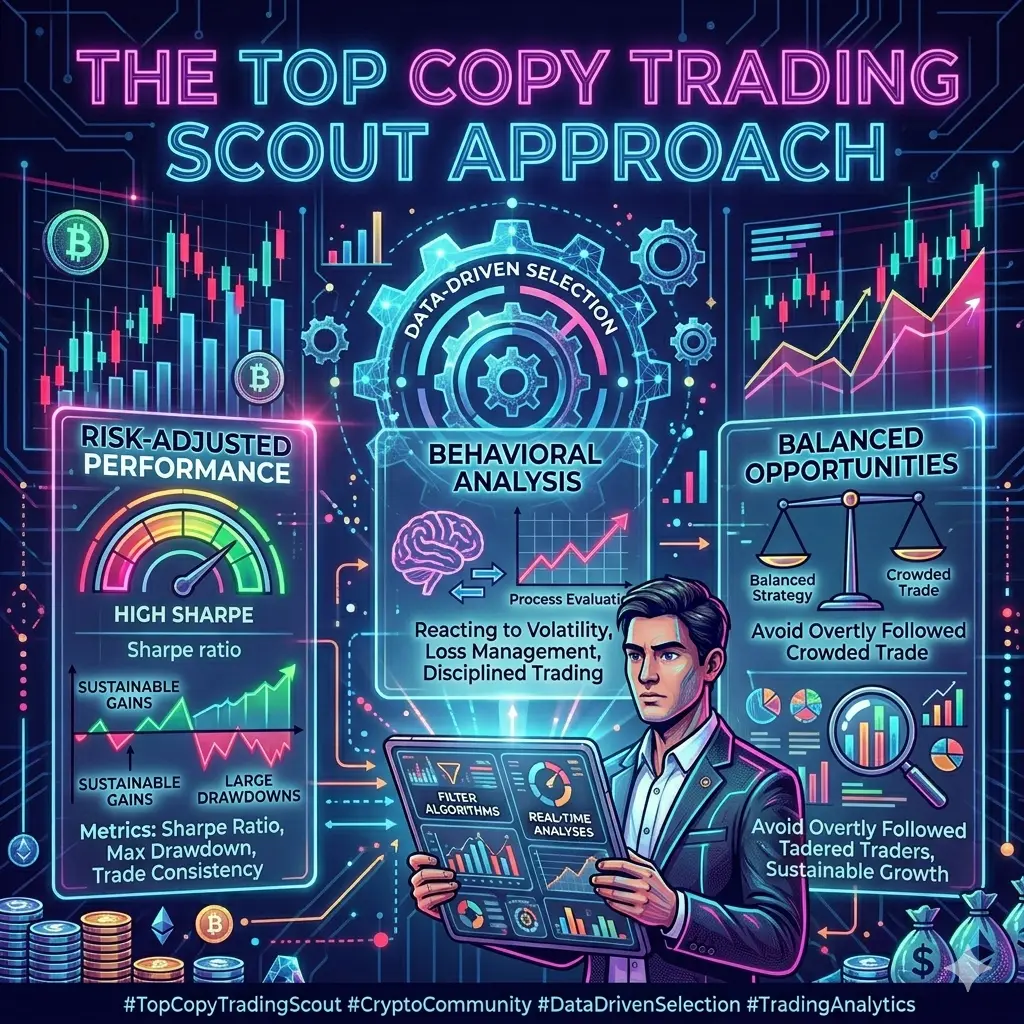
📉 Importance of Risk-Adjusted Performance
A key part of this strategy is understanding risk-adjusted performance. Metrics like consistency, stability, and controlled losses become more important than raw profit percentages.
Indicators such as the Sharpe ratio, maximum drawdown, and trade consistency help investors evaluate whether a trader’s strategy is sustainable. A trader with moderate but stable growth is often more valuable than one with extreme but unpredictable returns.
🔍 Behavioral Analysis Matters
Beyond numbers, behavior plays a critical role. The way a trader reacts during market volatility reveals their true skill level.
Strong traders usually:
Manage losses quickly
Stay disciplined during market swings
Avoid emotional decision-making
Stick to their strategy even under pressure
This kind of discipline helps protect capital and ensures long-term survival in unpredictable markets.
🌊 Market Dynamics and Crowd Risk
Copy trading can also create market effects. When too many users follow the same trader, it can lead to crowded positions. This increases risk, especially during sudden market movements when everyone tries to exit at the same time.
The Top Copy Trading Scout approach avoids this by identifying balanced opportunities instead of overly popular ones. Diversification and independent analysis become key factors in reducing risk.
⚙️ Role of Technology and Data
Modern platforms provide advanced tools such as real-time analytics, performance dashboards, and algorithmic filters. These tools allow investors to analyze traders in much greater detail than before.
However, having access to data is not enough. The real advantage comes from understanding how to interpret that data correctly. Analytical thinking becomes a major edge in selecting the right traders.
🚀 A More Sustainable Future
In conclusion, Top Copy Trading Scout is about making smarter, data-driven decisions. It transforms copy trading from a simple following mechanism into a structured investment approach.
By focusing on risk management, behavioral discipline, and strategic analysis, investors can achieve more stable and consistent results over time. As the crypto market continues to evolve, this approach will likely define the future of copy trading.
The key takeaway:
Success in copy trading is not about following the crowd—it’s about choosing wisely.
#GateSquare
#ContentMining
#CreaterCarnival
repost-content-media
  • Reward
  • Comment
  • Repost
  • Share
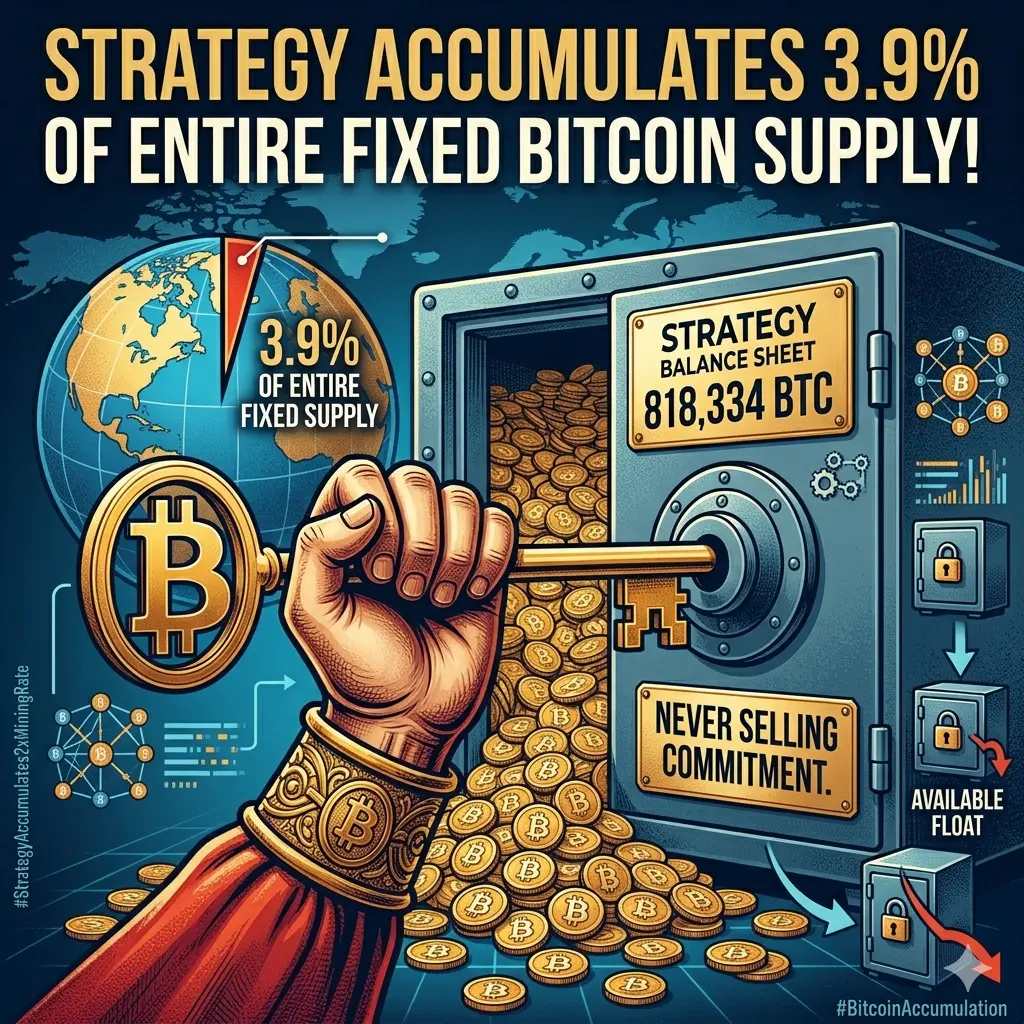
#StrategyAccumulates2xMiningRate
The crypto market often gets distracted by short-term volatility, but a much bigger story is unfolding behind the scenes. MicroStrategy, widely known for its aggressive Bitcoin strategy, is accumulating Bitcoin at a pace that is beginning to outstrip the natural supply created by miners. This shift is not just notable—it has the potential to redefine how Bitcoin’s market dynamics function over the long term.
At the center of this trend is a growing imbalance between supply and demand. Bitcoin’s issuance is fixed and predictable, which has always been one of it
BTC1.68%
MrFlower_XingChen
#StrategyAccumulates2xMiningRate
The crypto market often gets distracted by short-term volatility, but a much bigger story is unfolding behind the scenes. MicroStrategy, widely known for its aggressive Bitcoin strategy, is accumulating Bitcoin at a pace that is beginning to outstrip the natural supply created by miners. This shift is not just notable—it has the potential to redefine how Bitcoin’s market dynamics function over the long term.
At the center of this trend is a growing imbalance between supply and demand. Bitcoin’s issuance is fixed and predictable, which has always been one of its core strengths. However, when a single institution starts acquiring BTC at more than double the rate of new supply, it creates a tightening effect on available liquidity. In some cases, the scale becomes even more extreme, with monthly purchases significantly exceeding the number of coins mined during the same period. This kind of accumulation introduces a powerful structural pressure that the market cannot ignore forever.
The competitive landscape among institutions is also evolving. MicroStrategy has managed to surpass exposure linked to BlackRock products such as the iShares Bitcoin Trust. This marks a shift from indirect exposure through financial instruments to direct ownership of Bitcoin on corporate balance sheets. It highlights increasing confidence among major players that holding the asset itself may offer stronger long-term advantages than relying on intermediaries.
Another critical factor is the long-term holding mindset. Leadership figures like Michael Saylor have consistently emphasized a commitment to holding Bitcoin rather than actively trading it. When such a large portion of supply is effectively locked away, it reduces the amount of BTC that is actually available in the market. This concept of “effective supply” becomes far more important than the total supply, as it directly impacts how prices respond to new demand.
From an economic perspective, the implications are straightforward but powerful. When supply becomes constrained and demand remains steady or increases, upward pressure on price naturally follows. Bitcoin already operates under a scarcity model, but aggressive institutional accumulation amplifies this effect, creating what many consider a developing supply shock. This doesn’t always translate into immediate price movement, but it builds pressure that can eventually lead to strong market expansions.
At the same time, retail market behavior often lags behind these structural changes. Many participants remain focused on short-term price action, reacting to dips, news cycles, and macro uncertainty. Meanwhile, institutions continue to accumulate with a longer-term vision. This divergence between retail hesitation and institutional conviction has historically played a key role in shaping major market cycles.
Looking ahead, if this pace of accumulation continues, the broader market could experience reduced liquidity, stronger price support levels, and more aggressive upward movements during demand surges. Bitcoin’s role is also likely to evolve further, strengthening its position as a strategic reserve asset rather than just a speculative instrument.
In the end, this trend is not just about how much Bitcoin one company holds. It reflects a deeper transformation in how large players perceive and interact with digital assets. The real question is not whether this accumulation matters—it’s how long it will take for the rest of the market to fully recognize its impact.
#GateSquare
#ContentMining
#CreaterCarnival
repost-content-media
  • Reward
  • Comment
  • Repost
  • Share
#TapAndPayWithGateCard
The integration of digital assets into everyday financial activity marks an important step in the evolution of the crypto ecosystem. What was once primarily seen as a speculative or investment-driven space is now gradually transforming into a functional financial layer. Solutions like the Tap and Pay feature offered through Gate.io’s Gate Card highlight this transition, showing that crypto is no longer limited to trading—it is becoming a usable medium for real-world payments.
One of the most significant advantages of contactless payment technology in crypto cards is the
MrFlower_XingChen
#TapAndPayWithGateCard
The integration of digital assets into everyday financial activity marks an important step in the evolution of the crypto ecosystem. What was once primarily seen as a speculative or investment-driven space is now gradually transforming into a functional financial layer. Solutions like the Tap and Pay feature offered through Gate.io’s Gate Card highlight this transition, showing that crypto is no longer limited to trading—it is becoming a usable medium for real-world payments.
One of the most significant advantages of contactless payment technology in crypto cards is the improvement in user experience. Tap-and-pay functionality brings crypto spending in line with traditional payment systems, offering speed, simplicity, and convenience. Transactions that once required multiple steps—conversions, transfers, confirmations—can now be executed instantly with a single tap. This ease of use plays a critical role in encouraging wider adoption, especially for everyday purchases where efficiency matters most.
Behind this seamless experience lies a sophisticated financial mechanism. When a user makes a payment using crypto, the system automatically converts digital assets into fiat currency at the point of sale. This real-time conversion helps reduce exposure to price volatility while ensuring that merchants receive stable value. At the same time, users benefit from transparency, as transactions remain trackable and clearly recorded, bridging the gap between decentralized assets and traditional financial expectations.
Security remains a central pillar of this system. Advanced infrastructure supports multi-layered verification, fraud detection protocols, and transaction monitoring to safeguard user funds. In addition, compliance with regulatory frameworks strengthens trust and reliability, making such solutions more sustainable in the long term. For users, this means they can interact with crypto payments confidently, without compromising on safety.
From a broader perspective, innovations like Tap and Pay are gradually dissolving the boundaries between crypto finance and conventional banking systems. By enabling fast, accessible payments, these tools contribute to financial inclusion—particularly in regions where traditional banking services are limited or inefficient. Crypto cards offer an alternative gateway, allowing users to participate in the global economy without relying entirely on legacy financial infrastructure.
Ultimately, the real value of features like Tap and Pay lies in their ability to bring crypto into daily life. As adoption grows, these technologies will help build a more connected and efficient financial ecosystem—one where digital assets are not just held, but actively used. This shift is essential for the long-term sustainability of crypto, moving it from theory and speculation into practical, everyday utility.
#GateSquare
#ContentMining
#CreaterCarnival
repost-content-media
  • Reward
  • Comment
  • Repost
  • Share
#CryptoMarketsDipSlightly
📉 A Pause, Not a Breakdown
The recent dip across the crypto market is less of a warning signal and more of a cooling phase within an ongoing structure. Around April 28–29, prices showed mild weakness, with Bitcoin hovering near 76,458, Ethereum around 2,296, and Solana near 83.87. The total market capitalization slipped to approximately 2.56 trillion dollars. While the numbers appear red, the magnitude of decline—generally under 2%—indicates controlled selling rather than panic.
A key factor behind this movement is Bitcoin’s repeated rejection near the 80,000 level
BTC1.68%
ETH1.14%
SOL1.09%
MrFlower_XingChen
#CryptoMarketsDipSlightly
📉 A Pause, Not a Breakdown
The recent dip across the crypto market is less of a warning signal and more of a cooling phase within an ongoing structure. Around April 28–29, prices showed mild weakness, with Bitcoin hovering near 76,458, Ethereum around 2,296, and Solana near 83.87. The total market capitalization slipped to approximately 2.56 trillion dollars. While the numbers appear red, the magnitude of decline—generally under 2%—indicates controlled selling rather than panic.
A key factor behind this movement is Bitcoin’s repeated rejection near the 80,000 level. This price zone has become a strong psychological and technical resistance, where sell orders continue to outweigh buying pressure. When a market fails to break resistance multiple times, it often triggers short-term profit-taking, leading to temporary pullbacks like the one we’re seeing now.
Another important signal comes from weakening demand in the US market. Indicators such as the Coinbase Premium Index turning negative suggest reduced buying pressure from American investors. At the same time, spot ETF flows have shown signs of hesitation, with notable outflows on certain days. While this doesn’t indicate a reversal in trend, it does reflect a pause in institutional momentum, as larger players shift into a more cautious stance.
Macro conditions are also playing a role. Rising geopolitical tension and increasing oil prices—especially around critical regions like the Strait of Hormuz—have reduced overall risk appetite. When global uncertainty rises, capital often rotates away from volatile assets like crypto into safer alternatives. This correlation between macro stress and crypto weakness is not new, but it remains highly influential.
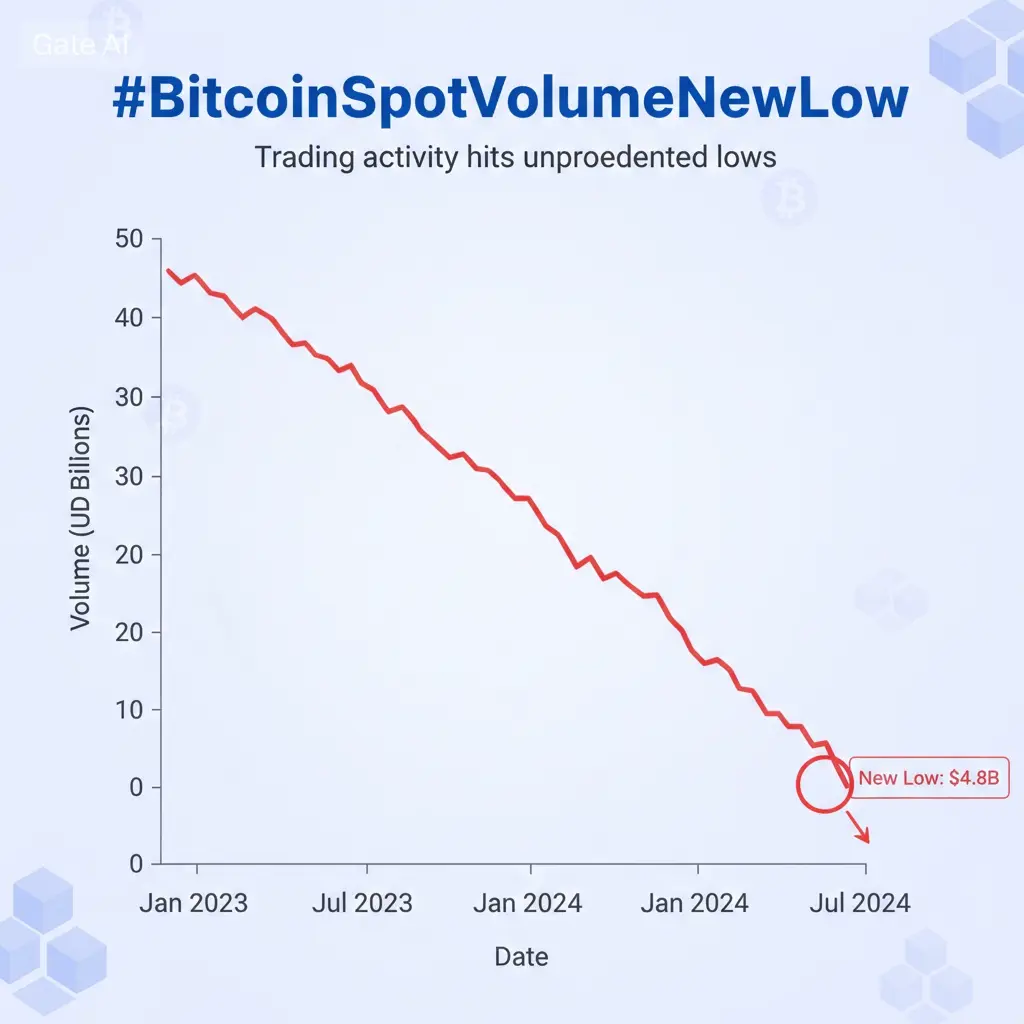
In the derivatives market, activity has cooled significantly. Lower open interest, reduced trading volume, and declining funding rates all point toward a market that is waiting rather than acting. Traders are hedging positions instead of aggressively entering new ones, which contributes to the current low-volatility environment.
Despite these factors, there are strong signs that this is not a bearish breakdown. On-chain data continues to show resilience. Large holders are accumulating rather than distributing, exchange reserves remain relatively low, and overall network activity is stable. These are typically indicators of underlying strength, even when price action appears stagnant.
Additionally, capital rotation is becoming visible. Bitcoin dominance has been gradually increasing, suggesting that investors are moving funds from altcoins into BTC as a defensive strategy. This behavior is common during consolidation phases, where the market prioritizes stability before the next major move.
Looking ahead, several catalysts could define the next direction. Monetary policy decisions from the Federal Reserve remain critical, as interest rate expectations directly impact liquidity across all markets. Leadership transitions and upcoming regulatory developments may further influence sentiment. On the technical side, network upgrades and ecosystem developments—especially around Ethereum—could also act as momentum triggers.
One of the most important observations right now is volatility compression. When price movement tightens and volatility drops, it often precedes a strong breakout. The market is currently range-bound, with Bitcoin finding support near 75,000 and resistance around 80,000. Until one of these levels is decisively broken, the environment favors patience and strategic positioning rather than aggressive trading.
In summary, #CryptoMarketsDipSlightly reflects a healthy consolidation phase, not a structural decline. The market is absorbing macro pressure, digesting recent gains, and preparing for its next move. As history often shows, periods of calm like this don’t last forever—they usually set the stage for the next wave of volatility.
The key now is not reaction, but preparation.
#GateSquare
#ContentMining
#CreaterCarnival
repost-content-media
  • Reward
  • Comment
  • Repost
  • Share
#OilBreaks110
🛢️ What Changes When Oil Crosses $110?
When Brent Crude Oil moves above $110, it’s more than just a price increase—it’s a macro-level signal that impacts the entire financial system. Oil sits at the core of the global economy, so when prices rise sharply, the effects ripple across inflation, monetary policy, and risk assets like crypto.
The first major impact is inflation pressure. Higher oil prices increase transportation, production, and supply chain costs, which pushes overall prices upward. This creates challenges for central banks, especially the Federal Reserve, which may
BTC1.68%
MrFlower_XingChen
#OilBreaks110
🛢️ What Changes When Oil Crosses $110?
When Brent Crude Oil moves above $110, it’s more than just a price increase—it’s a macro-level signal that impacts the entire financial system. Oil sits at the core of the global economy, so when prices rise sharply, the effects ripple across inflation, monetary policy, and risk assets like crypto.
The first major impact is inflation pressure. Higher oil prices increase transportation, production, and supply chain costs, which pushes overall prices upward. This creates challenges for central banks, especially the Federal Reserve, which may respond by keeping interest rates elevated or tightening monetary policy further. Higher interest rates typically reduce liquidity in the market, making it harder for risk assets to perform.
This is why cryptocurrencies—particularly Bitcoin—often face short-term pressure in such conditions. When oil rises and macro uncertainty increases, investors tend to shift toward safer assets. This creates a temporary risk-off environment, where capital flows out of volatile markets like crypto.
Geopolitical factors also play a key role. Oil crossing $110 is often linked to global tensions, supply disruptions, or instability in key regions. These uncertainties increase market caution, leading traders and institutions to reduce exposure to high-risk assets until conditions stabilize.
However, this is only one side of the story.
In the longer term, rising oil prices can actually strengthen the case for decentralized assets. As inflation rises and traditional financial systems face pressure, alternative stores of value become more attractive. This is where Bitcoin’s narrative as a digital hedge starts gaining attention, particularly among institutional investors.
In the current environment, the oil breakout helps explain why crypto markets are consolidating rather than trending strongly. Capital is cautious, waiting for clearer signals. But historically, periods of low volatility and macro tension often lead to sharp market moves once uncertainty begins to fade.
In simple terms:
Oil above $110 → Inflation increases
Inflation increases → Interest rates stay higher
Higher rates → Short-term pressure on crypto
Rising uncertainty → Stronger long-term case for Bitcoin
This is not a contradiction—it’s how market cycles work.
The real question isn’t why oil is rising…
It’s where capital will flow next. 📊
#GateSquare
#ContentMining
#CreaterCarnival
repost-content-media
  • Reward
  • Comment
  • Repost
  • Share
#WCTCTradingKingPK
#WCTCTradingKingPK — The Competitive Edge in Modern Crypto Trading
The WCTC Trading King PK concept represents more than just a trading competition—it reflects the rising culture of performance-driven crypto trading ecosystems, where skill, strategy, and risk management define success more than luck or hype. In today’s fast-moving digital markets, competitions like this highlight how traders are evolving from casual participants into highly analytical decision-makers.
At its core, WCTC Trading King PK symbolizes a battle of strategies. Participants are not just chasing prof
MrFlower_XingChen
#WCTCTradingKingPK
#WCTCTradingKingPK — The Competitive Edge in Modern Crypto Trading
The WCTC Trading King PK concept represents more than just a trading competition—it reflects the rising culture of performance-driven crypto trading ecosystems, where skill, strategy, and risk management define success more than luck or hype. In today’s fast-moving digital markets, competitions like this highlight how traders are evolving from casual participants into highly analytical decision-makers.
At its core, WCTC Trading King PK symbolizes a battle of strategies. Participants are not just chasing profits; they are optimizing execution, timing, and capital efficiency under real market conditions. Every trade becomes a test of discipline, and every decision reflects how well a trader understands volatility, liquidity, and market structure.
One of the key aspects of such competitive trading environments is the focus on risk-adjusted performance. Winning is not about achieving the highest return in isolation, but about sustaining consistent results while controlling drawdowns. Traders who manage risk effectively often outperform those who rely on aggressive, high-leverage strategies that may collapse under pressure.
Another important dimension is real-time adaptability. Crypto markets are highly dynamic, influenced by macroeconomic data, liquidity shifts, and sentiment changes. Successful participants in trading competitions must react quickly to these shifts without abandoning their overall strategy. This balance between flexibility and discipline is what separates top performers from average traders.
Behavioral psychology also plays a major role in competitions like WCTC Trading King PK. Emotional control under pressure is often the deciding factor between profit and loss. Traders who can maintain consistency during volatile swings—without panic selling or revenge trading—tend to achieve more stable outcomes over time. In competitive environments, psychology becomes just as important as technical analysis.
From a broader perspective, trading competitions also reflect the growing gamification of financial markets. Platforms like Gate.io are increasingly turning trading into an interactive, performance-based experience. This shift encourages participation, learning, and strategy development, especially among newer traders entering the crypto space.
At the same time, these competitions highlight the importance of data-driven decision-making. Modern traders rely on advanced analytics, chart tools, and performance dashboards to evaluate their strategies. Success is no longer based on intuition alone, but on measurable metrics such as win rate, Sharpe ratio, and capital efficiency.
Ultimately, WCTC Trading King PK represents a microcosm of the broader crypto trading world. It shows how markets are evolving into highly competitive environments where only disciplined, strategic, and data-focused traders consistently succeed
.#GateSquare
#ContentMining
#CreaterCarnival
repost-content-media
  • Reward
  • Comment
  • Repost
  • Share
#FedHoldsRateButDividesDeepen #FedHoldsRateButDividesDeepen
— A Policy Pause That Hides a Deeper Split in the Global Economy
The latest decision by the Federal Reserve to hold interest rates steady has not brought the clarity markets were hoping for. Instead, it has exposed a deeper fragmentation within monetary policy thinking, both inside the Federal Reserve itself and across global financial systems. On the surface, a rate hold often signals stability, suggesting that inflation is under control and economic conditions are manageable. However, the underlying commentary and forward guidance
BTC1.68%
MrFlower_XingChen
#FedHoldsRateButDividesDeepen #FedHoldsRateButDividesDeepen
— A Policy Pause That Hides a Deeper Split in the Global Economy
The latest decision by the Federal Reserve to hold interest rates steady has not brought the clarity markets were hoping for. Instead, it has exposed a deeper fragmentation within monetary policy thinking, both inside the Federal Reserve itself and across global financial systems. On the surface, a rate hold often signals stability, suggesting that inflation is under control and economic conditions are manageable. However, the underlying commentary and forward guidance reveal something far more complex: policymakers are no longer aligned on what comes next, and that uncertainty is becoming a market force of its own.
The internal divide within the Federal Reserve is becoming increasingly visible. One group of policymakers continues to emphasize persistent inflation risks, arguing that premature easing could reignite price pressures that have not been fully eliminated from the system. Another group is more focused on weakening economic momentum, pointing to slowing credit growth, softer consumer demand, and tightening liquidity conditions in certain sectors. This disagreement creates a situation where policy is technically stable, but strategically unclear. Markets are now forced to interpret not just what the Fed is doing, but what different factions within the Fed might do under changing conditions.
This divergence has direct consequences for global risk assets. Equities, bonds, and digital assets such as Bitcoin all rely heavily on expectations of future liquidity. When rate decisions are consistent but guidance is fragmented, volatility does not disappear—it compresses. This compression often creates a false sense of stability in the short term, while building pressure underneath the surface. Traders begin to reduce conviction, liquidity providers widen caution, and institutional capital shifts into defensive positioning rather than directional bets.
At the same time, global macro conditions are adding another layer of complexity. Energy prices, fiscal deficits, and geopolitical uncertainty continue to influence inflation expectations in ways that monetary policy alone cannot fully control. Even if interest rates remain unchanged, external shocks can still reintroduce inflationary pressure or weaken growth simultaneously, creating a difficult balancing act for policymakers. This is why the current environment feels less like a cycle peak or bottom, and more like a prolonged transition phase where traditional economic signals are less reliable.
In the crypto market, this uncertainty translates into a very specific structure: low directional confidence but high sensitivity to macro headlines. Assets like Bitcoin tend to consolidate during these phases, as participants wait for clearer liquidity signals. However, beneath this consolidation, accumulation patterns often continue, particularly among long-term holders who view uncertainty not as a risk, but as an opportunity to build positions at stable price ranges. This creates a split behavior between short-term traders reacting to volatility and long-term participants quietly positioning for future expansion.
Another important dimension is how markets are interpreting “policy divergence” across regions. While the Federal Reserve maintains a cautious stance, other central banks are already moving at different speeds, creating asynchronous global liquidity conditions. This lack of coordination means capital flows are becoming more selective, moving toward regions or assets perceived as offering better risk-adjusted returns. In such environments, correlation between asset classes weakens temporarily, but systemic risk does not disappear—it simply becomes distributed.
What makes this phase particularly important is that volatility is not showing itself in dramatic price crashes or rallies, but in structural hesitation. Markets are neither fully bullish nor bearish; instead, they are reactive, sensitive, and increasingly dependent on narrative shifts. This type of environment often precedes larger directional moves, because once a consensus finally forms—either toward easing or continued tightening—the reaction tends to be faster and more aggressive than expected.
In conclusion, the “Fed holds rates” headline only captures the surface of the story. The real development is the growing internal and external divide around what monetary policy should do next. This divide is creating a hidden instability in global markets—one that does not immediately break prices, but gradually reshapes positioning, liquidity, and sentiment. Whether the next phase becomes expansion or contraction will depend not just on economic data, but on which policy narrative ultimately gains control.
#GateSquare
#ContentMining
#CreaterCarnival
repost-content-media
  • Reward
  • Comment
  • Repost
  • Share
#DailyPolymarketHotspot The Shift From Opinion to Price-Based Reality Forecasting
The evolution of prediction markets is entering a new phase where sentiment is no longer just discussed—it is priced in real time. Platforms like Polymarket are increasingly acting as live mirrors of global expectations, where political outcomes, macroeconomic decisions, and even financial trends are converted into tradable probabilities. What makes this shift significant is not just the existence of such markets, but the growing accuracy and speed with which they aggregate collective intelligence. Instead of wa
BTC1.68%
MrFlower_XingChen
#DailyPolymarketHotspot The Shift From Opinion to Price-Based Reality Forecasting
The evolution of prediction markets is entering a new phase where sentiment is no longer just discussed—it is priced in real time. Platforms like Polymarket are increasingly acting as live mirrors of global expectations, where political outcomes, macroeconomic decisions, and even financial trends are converted into tradable probabilities. What makes this shift significant is not just the existence of such markets, but the growing accuracy and speed with which they aggregate collective intelligence. Instead of waiting for analysts, polls, or news cycles, markets are now directly expressing what participants believe will happen next, creating a continuous feedback loop between information and pricing.
In recent cycles, one of the most active themes on Polymarket-style prediction platforms has been macroeconomic policy expectations, especially around the Federal Reserve. Traders are no longer just reacting to interest rate decisions after they happen; they are actively positioning around the probability of future cuts, pauses, or tightening phases. This forward-looking behavior transforms prediction markets into a parallel layer of financial forecasting, where probabilities shift minute by minute based on incoming data, speeches, and even geopolitical developments. The result is a dynamic environment where sentiment is continuously recalibrated, often faster than traditional financial instruments can adjust.
Another emerging hotspot in these markets is the intersection between macro risk and crypto assets such as Bitcoin. Instead of debating whether Bitcoin will rise or fall in abstract terms, participants are now pricing specific scenarios: inflation thresholds, liquidity expansion timelines, or ETF flow direction changes. This granular approach allows market participants to break down complex narratives into measurable probabilities. For example, rather than asking whether liquidity will increase, traders are assigning odds to specific policy shifts or economic triggers that could lead to it. This shift from narrative-based analysis to probability-based structuring is redefining how traders think about risk.
What makes the current phase particularly interesting is how prediction markets are beginning to interact with mainstream media narratives. As platforms like Polymarket gain visibility, their probability charts are increasingly being cited alongside traditional financial commentary. This creates a feedback loop where media influences markets, and markets influence media. A small shift in probability on a prediction platform can now trigger broader discussions across financial ecosystems, amplifying its impact far beyond the original trade volume. In this sense, prediction markets are becoming not just analytical tools, but narrative drivers in their own right.
At the same time, participation patterns are evolving. Early prediction markets were dominated by niche users with high analytical focus, but current growth is bringing in a wider range of participants, including retail traders who are already familiar with volatility through crypto markets. This diversification of participants is increasing liquidity and improving signal quality, but it also introduces short-term noise. As a result, the most successful participants are not necessarily those who predict outcomes perfectly, but those who understand how crowd psychology shifts under uncertainty and how probability curves evolve over time.
From a structural perspective, prediction markets are also beginning to reflect broader macro stress conditions more accurately than traditional sentiment indicators. When volatility increases across equities, bonds, and digital assets like Bitcoin, prediction markets often show faster adjustments in expectations than conventional forecasting tools. This makes them a valuable early signal layer for detecting shifts in global risk appetite. However, they should not be interpreted in isolation; instead, they function best as part of a multi-layered analytical framework that includes macro data, liquidity conditions, and behavioral trends.
In conclusion, #DailyPolymarketHotspot represents more than just daily market activity—it reflects a deeper transformation in how information is processed and valued. Prediction markets are gradually turning uncertainty into structured pricing, allowing participants to engage directly with the future rather than passively interpret it after the fact. As adoption increases and liquidity deepens, these systems may evolve into one of the most important real-time forecasting tools in global finance, where every belief has a price, and every outcome is continuously being re-evaluated#GateSquare
#ContentMining
#CreaterCarnival .
repost-content-media
  • Reward
  • Comment
  • Repost
  • Share
#BitcoinSpotVolumeNewLow
What Weak Spot Activity Is Really Telling Us
A decline in spot trading activity for Bitcoin is often interpreted as weakness at first glance, but the reality is more nuanced. When spot volume drops to multi-week or multi-month lows, it does not automatically mean the market is collapsing. Instead, it usually reflects a phase where participants are waiting for confirmation rather than committing capital aggressively. This kind of environment is often described as “low conviction trading,” where neither buyers nor sellers have enough momentum to establish a clear trend.
BTC1.68%
MrFlower_XingChen
#BitcoinSpotVolumeNewLow
What Weak Spot Activity Is Really Telling Us
A decline in spot trading activity for Bitcoin is often interpreted as weakness at first glance, but the reality is more nuanced. When spot volume drops to multi-week or multi-month lows, it does not automatically mean the market is collapsing. Instead, it usually reflects a phase where participants are waiting for confirmation rather than committing capital aggressively. This kind of environment is often described as “low conviction trading,” where neither buyers nor sellers have enough momentum to establish a clear trend.
One of the primary reasons behind declining spot volume is the ongoing shift toward macro-driven hesitation. Market participants are increasingly influenced by broader economic signals from institutions like the Federal Reserve. When interest rate expectations are uncertain or liquidity conditions are unclear, traders tend to reduce activity rather than take directional risk. This leads to quieter spot markets, even if underlying interest in Bitcoin remains structurally intact.
Another important factor is the growing dominance of derivatives trading over direct spot participation. In many recent cycles, liquidity has increasingly moved toward futures, options, and leveraged instruments, where traders can express views with less capital upfront. This reduces visible spot volume while still keeping overall market activity alive. As a result, spot markets can appear weaker even when total exposure to Bitcoin across all instruments remains significant.
At the same time, long-term holders continue to play a stabilizing role. On-chain behavior suggests that large wallets are not aggressively distributing holdings during these low-volume phases. Instead, accumulation patterns tend to persist quietly in the background. This creates a divergence between short-term trading activity and long-term positioning, where price movement slows but structural demand does not fully disappear. In many historical cycles, such conditions have preceded stronger directional moves once volatility returns.
Liquidity conditions also matter significantly. When spot volume decreases, order books often become thinner, meaning that even moderate buy or sell pressure can lead to sharper price movements. This does not necessarily indicate weakness—it indicates fragility in short-term pricing efficiency. In such environments, markets can remain range-bound for extended periods before suddenly breaking out when a catalyst appears.
Another layer influencing current volume trends is the increasing role of macro uncertainty and cross-asset competition. Capital is no longer flowing exclusively into crypto; it is constantly rotating between equities, bonds, commodities, and digital assets depending on risk conditions. When investors perceive higher opportunity or safety elsewhere, spot crypto activity naturally slows down. However, this does not mean capital has left the system—it often means it is temporarily parked or redistributed.
From a structural perspective, low spot volume can actually become a setup for future volatility expansion. When participation compresses, markets often enter a phase of equilibrium where supply and demand are balanced but inactive. Once a trigger appears—such as policy changes, liquidity shifts, or macro surprises—the absence of strong positioning can lead to fast and aggressive price discovery.
In conclusion, is not simply a bearish signal. It is more accurately a reflection of a waiting phase in market structure, where participants are conserving capital, watching macro signals, and preparing for the next decisive move. Whether that move becomes upward or downward will depend less on current volume and more on which side of the market regains conviction first.#GateSquare
#ContentMining
#CreaterCarnival
repost-content-media
  • Reward
  • Comment
  • Repost
  • Share
Good Analysis
MrFlower_XingChen
#Share My Holding Returns#
repost-content-media
  • Reward
  • Comment
  • Repost
  • Share
#Gate广场五月交易分享
BTC Market Structure Reassessment
The current market structure of Bitcoin continues to reflect a post-FOMC reaction phase, where volatility has compressed after the sharp selloff from the $77,000 region down toward the mid-$74,000 area. This drop was fast and event-driven, but what stands out now is not the decline itself—it is the lack of follow-through momentum in either direction. Price action is currently stabilizing within a tight consolidation band, suggesting that the market is temporarily balanced between buyers absorbing supply and sellers gradually exhausting short-ter
BTC1.68%
MrFlower_XingChen
#Gate广场五月交易分享
BTC Market Structure Reassessment
The current market structure of Bitcoin continues to reflect a post-FOMC reaction phase, where volatility has compressed after the sharp selloff from the $77,000 region down toward the mid-$74,000 area. This drop was fast and event-driven, but what stands out now is not the decline itself—it is the lack of follow-through momentum in either direction. Price action is currently stabilizing within a tight consolidation band, suggesting that the market is temporarily balanced between buyers absorbing supply and sellers gradually exhausting short-term pressure.
From a sentiment perspective, prediction market data remains moderately cautious. The probability distribution still favors BTC holding above the mid-$75,000 region, but upside conviction is weakening. The inability to reclaim $77,000 with strength shows that buyers are not yet aggressive enough to initiate a breakout phase. However, there is also no sign of panic or forced liquidation, which indicates that this is a controlled consolidation rather than a distribution breakdown.
Technically, BTC is now forming a well-defined equilibrium range between approximately $74,900 and $77,000. The $75,000 level continues to act as the critical structural support zone, repeatedly absorbing intraday dips. A decisive breakdown below this level would likely expose liquidity pockets near $72,000, followed by a deeper structural support region around $68,800. On the upside, the $78,200–$78,700 zone remains the key resistance cluster where sellers are actively defending trend continuation. A breakout above this zone on expanding volume would shift momentum back toward the psychological $80,000 level.
On the higher timeframe structure, both the daily and 4-hour charts are currently aligned in a neutral-to-recovery configuration. The market is attempting to rebuild strength after the recent correction, but it has not yet formed a strong reversal pattern such as a bullish engulfing sequence or clear accumulation breakout. Momentum indicators reflect this indecision: RSI remains in a mid-range neutral zone, while MACD shows weakening downside momentum but not yet a strong bullish crossover. This suggests the market is in a transitional phase rather than a directional trend phase.
From an on-chain and flow perspective, exchange activity continues to show mixed signals. ETF-related flows have remained inconsistent, with intermittent outflows indicating cautious institutional positioning. At the same time, exchange net inflows suggest that some participants are still taking profits or repositioning during this consolidation. The net effect is not aggressively bearish, but it does cap upside momentum in the short term.
Structurally, the halving cycle context still plays a major role in long-term interpretation. With the most recent halving occurring in April 2024, the market has already moved through the typical expansion phase seen in prior cycles. The current environment therefore resembles a late-cycle consolidation or high-level rebalancing phase rather than a traditional early accumulation bottom. Historically, this stage is characterized by sharp volatility swings, false breakouts, and liquidity-driven rotations rather than sustained directional trends.
Overall, the current BTC market is best described as a compressed equilibrium phase after macro-driven volatility, where neither bulls nor bears have full control. The next major move will likely be triggered not by gradual drift, but by a clean breakout or breakdown from the current $74,900–$77,000 range with strong volume confirmation.
repost-content-media
  • Reward
  • Comment
  • Repost
  • Share
MrFlower_XingChen
May Trading Insight — Expanded 24H Watchlist (BTC Macro + Liquidity + Derivatives Flow)
Bitcoin is in a tight “liquidity compression” phase near $79K, where leverage, sentiment, and macro risks are converging. ETF outflows are slowing, sentiment is cautious, and derivatives positioning is building. This signals a likely volatility expansion ahead. The next move won’t be gradual—it will be triggered by a catalyst hitting key liquidity zones, causing a sharp directional breakout.
repost-content-media
  • Reward
  • Comment
  • Repost
  • Share
#WCTCTradingKingPK
The World Crypto Trading Championship (WCTC) has now entered a decisive phase on April 30, 2026—where the game is no longer about chasing explosive rallies, but about mastering control, timing, and discipline. At this level of competition, the difference between average traders and elite performers becomes crystal clear. This is not a market that rewards speed; it rewards patience and precision.
The current crypto landscape is defined by uncertainty and controlled volatility. Bitcoin is trading within a tight and deceptive range after facing rejection near the $80,000 level
BTC1.68%
ETH1.14%
MrFlower_XingChen
#WCTCTradingKingPK
The World Crypto Trading Championship (WCTC) has now entered a decisive phase on April 30, 2026—where the game is no longer about chasing explosive rallies, but about mastering control, timing, and discipline. At this level of competition, the difference between average traders and elite performers becomes crystal clear. This is not a market that rewards speed; it rewards patience and precision.
The current crypto landscape is defined by uncertainty and controlled volatility. Bitcoin is trading within a tight and deceptive range after facing rejection near the $80,000 level. Instead of a clear trend, the market is forming a classic liquidity trap—where both long and short traders are repeatedly caught in fake breakouts and sudden reversals. With BTC fluctuating between $76,000 and $79,500, the structure signals one thing clearly: this is a range-bound battlefield, not a trending opportunity.
In such conditions, impulsive trading becomes the fastest way to lose capital. The market is actively hunting stop-losses, creating false confidence before reversing direction. These movements are not random—they are engineered to shake out weak positions. Traders who rely purely on momentum are struggling, while those who understand market structure are staying protected.
At the same time, altcoins are showing fragmented behavior. Unlike previous cycles where the entire market moved together, liquidity is now rotating selectively. Ethereum is attempting to stabilize near key levels, while many other assets remain slow, unpredictable, or completely stagnant. This divergence makes it harder to rely on correlation-based strategies and forces traders to be more selective in their entries.
Top competitors in WCTC are adapting by reducing trade frequency and increasing trade quality. Instead of reacting to every move, they are waiting for confirmation. A clean breakout above $79,500 or a strong, validated reaction from the $76,000 support zone are the only scenarios being considered for high-probability trades. Anything in between is viewed as noise. This shift from activity to precision is what separates professionals from the rest.
Another major focus at this stage of the competition is drawdown control. In high-level trading environments like WCTC, survival is more important than aggression. A trader who avoids large losses and maintains consistency will outperform someone chasing high-risk gains. The leaderboard is no longer dominated by those who make the biggest wins, but by those who manage risk the best. Consistency, not intensity, is the winning formula.
Macro awareness is also playing a crucial role in decision-making. The crypto market is no longer isolated—it is deeply influenced by global conditions. Fluctuations in oil prices, geopolitical tensions, and shifts between risk-on and risk-off sentiment are directly impacting price behavior. Professional traders are aligning their strategies with these macro signals instead of relying solely on technical indicators. This broader perspective is giving them a significant edge.
Key levels remain critical in defining the next major move. For Bitcoin, the $76,000 support and the $79,500–$80,000 resistance zone act as the boundaries of the current battlefield. For Ethereum, $2,300 serves as a key support while $2,450 acts as resistance. A breakout or breakdown from these zones will likely determine the next directional trend, but until then, the market remains in consolidation.
This phase of WCTC is a true test of mental strength. The market is designed to frustrate, confuse, and exhaust traders. Overtrading, emotional decisions, and excessive leverage are being punished heavily. On the other hand, patience, discipline, and calculated execution are being rewarded. This is where real trading skill is revealed—not in fast profits, but in controlled decision-making.
April 30 marks a clear separation point in the competition. Weak hands are gradually being eliminated as they fall into market traps, while experienced traders are quietly building their positions and protecting their capital. The leaderboard is shifting—not based on luck, but on discipline and strategy.
In the end, the question every trader must ask is simple: are you reacting to every move, or are you waiting for the right opportunity? In a market like this, doing less is often the smartest move. Precision beats frequency, and patience outperforms emotion.
The battlefield is set. The market is testing everyone. Only those who stay disciplined will come out on top.
repost-content-media
  • Reward
  • Comment
  • Repost
  • Share
  • Pin